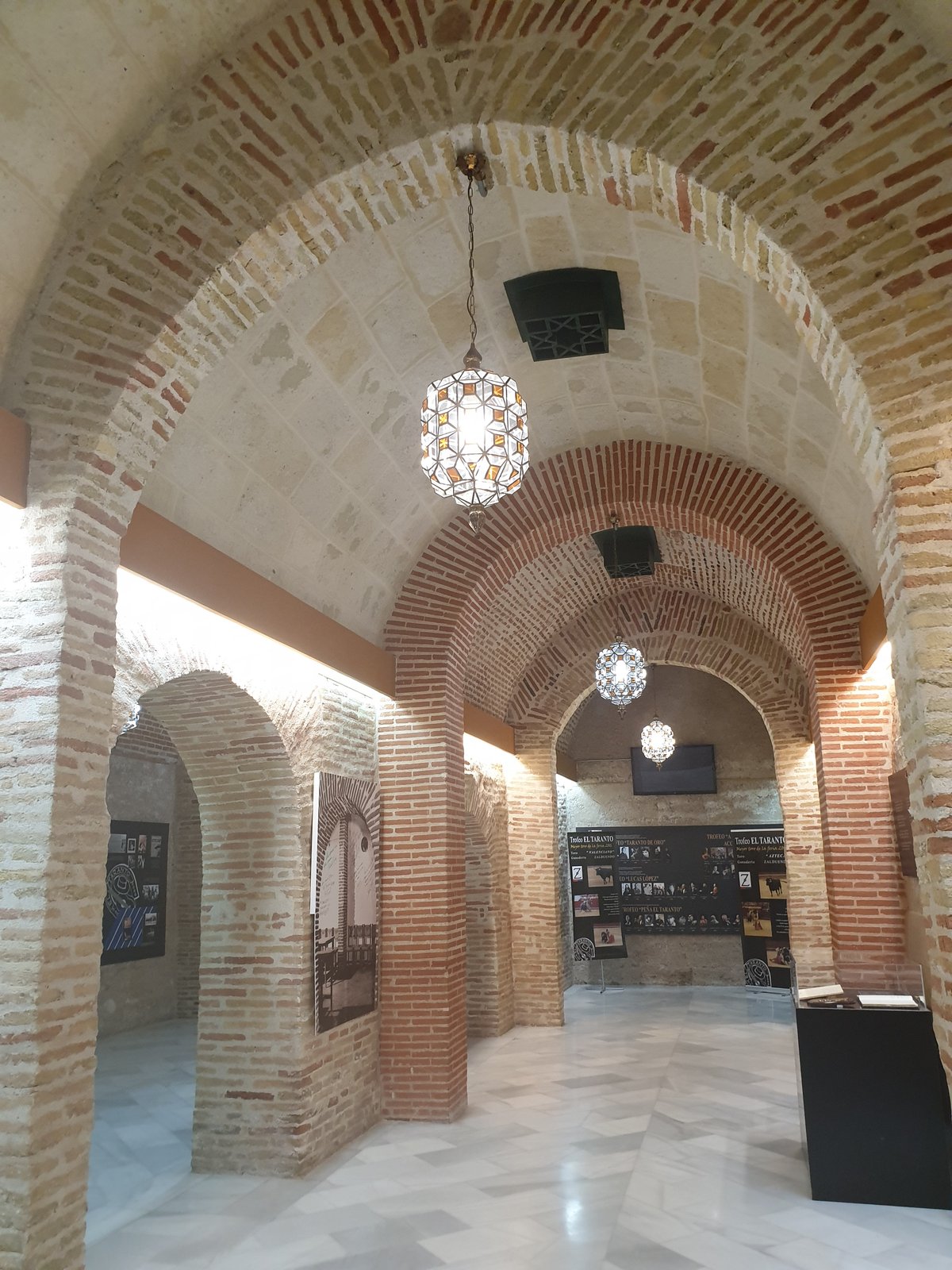

Aljibes árabes de Jairán are an Andalusian hydraulic engineering feat, constructed in the 11th century under the rule of Jairán, the king of Taifa of Almería. Their purpose was to store and supply water to the citizens and soldiers of Almería through a series of aqueducts and channels. The system was so elaborate that it remains a testament to the ingenuity of the Andalusian engineers.
The three brick naves of Aljibes remain, needle-straight and dark under their vaults, connected through arches and undulating brickwork. The original water storage capacity is gone, replaced with a maze of tunnels and a new purpose: a flamenco peña.
The underground network reached further, feeding the Aljama mosque and supplying the wider city. The system was daisy-chained, allowing other networks to tap into its foundations. This created a matrix of aqueducts and channels under the city, designed to withstand the sieges that were common in the 11th century. It could supply water to a city of 30,000 people in the event of a long siege.
The Aljibes continued in use until the 19th century, with a new water deposit being built in 1878 on what is now the Avenida Santa Isabel. In 1968, the Aljibes were used to establish a flamenco peña, fitting for a city that calls itself ‘la pequeña Granada’. The Aljibes are now used as a venue for exhibitions, conferences and, of course, flamenco performances.
Sources: Wikipedia, OpenStreetMap, Wikidata, Wikimedia Commons
Written by Nik Frost
Discuss this with the author and others
No comments yet. Be the first to start the conversation.