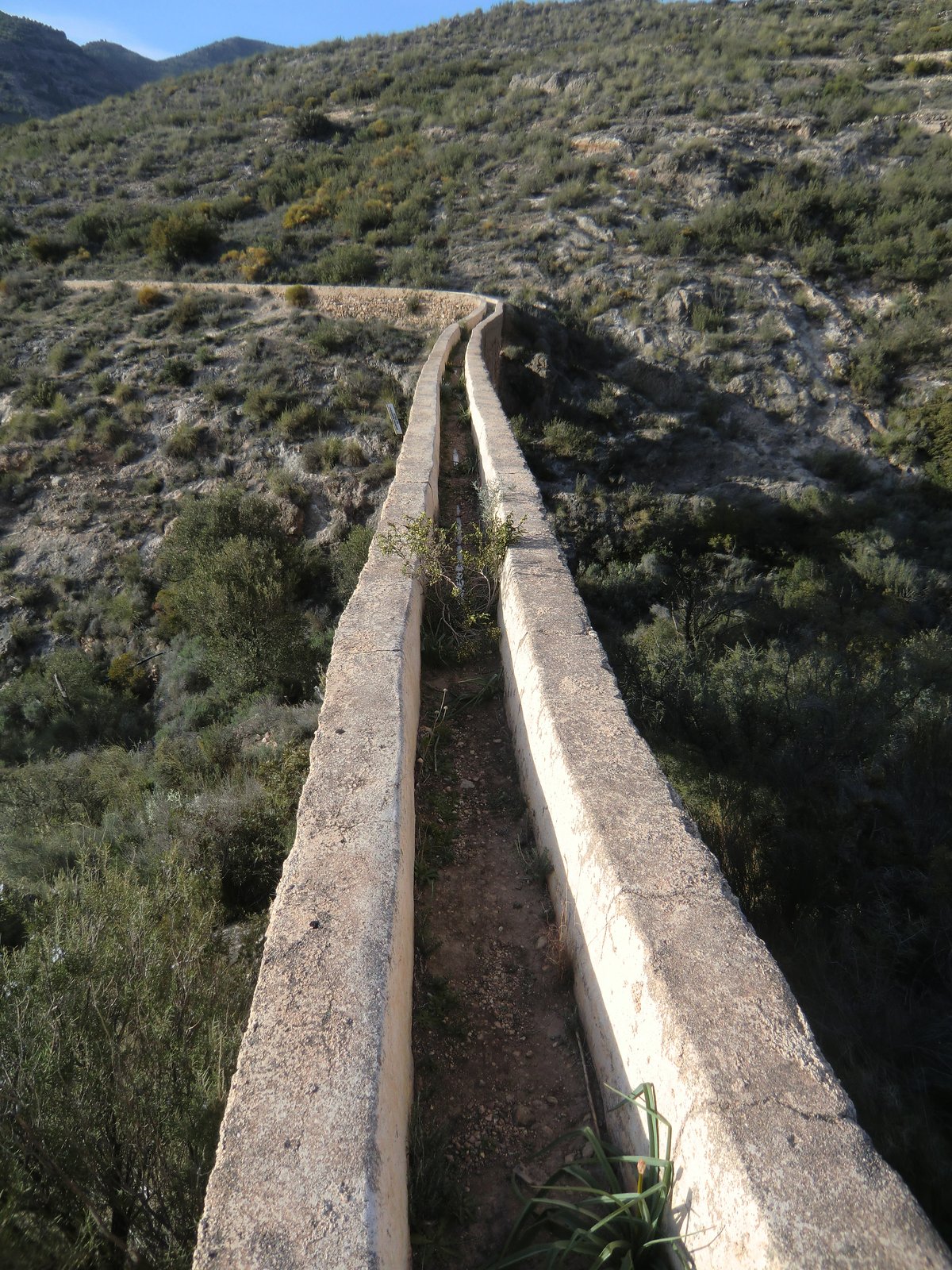

The Roman-origin aqueduct system in Rambla de Carcauz consists of three stone aqueducts and connecting irrigation channels. Located on the slopes of the Sierra de Gádor at the municipal border between Felix and Vícar, the system was designed to supply water to rural villas in the Poniente Almeriense.
The construction of this irrigation system is estimated to date between the 2nd and 1st century BC, during the period of the division of Hispania Ulterior. However, some sources suggest the origin of the works could be as late as the 16th century. The complex remained in use until the early 20th century, after which it began to fall into ruin. Today, much of the water flow once carried by the original channels is transported through modern plastic pipes that often occupy the original path.
Among the three stone aqueducts that make up the system, the Acueducto de los 20 ojos is the largest and most well-known. Because it is the most accessible and is located near population centers, it is frequently referred to simply as the Carcauz aqueduct, while the other two aqueducts are often overlooked.
Sources: Wikipedia, OpenStreetMap, Wikidata, Wikimedia Commons

Written by Nik Frost
Discuss this with the author and others
No comments yet. Be the first to start the conversation.