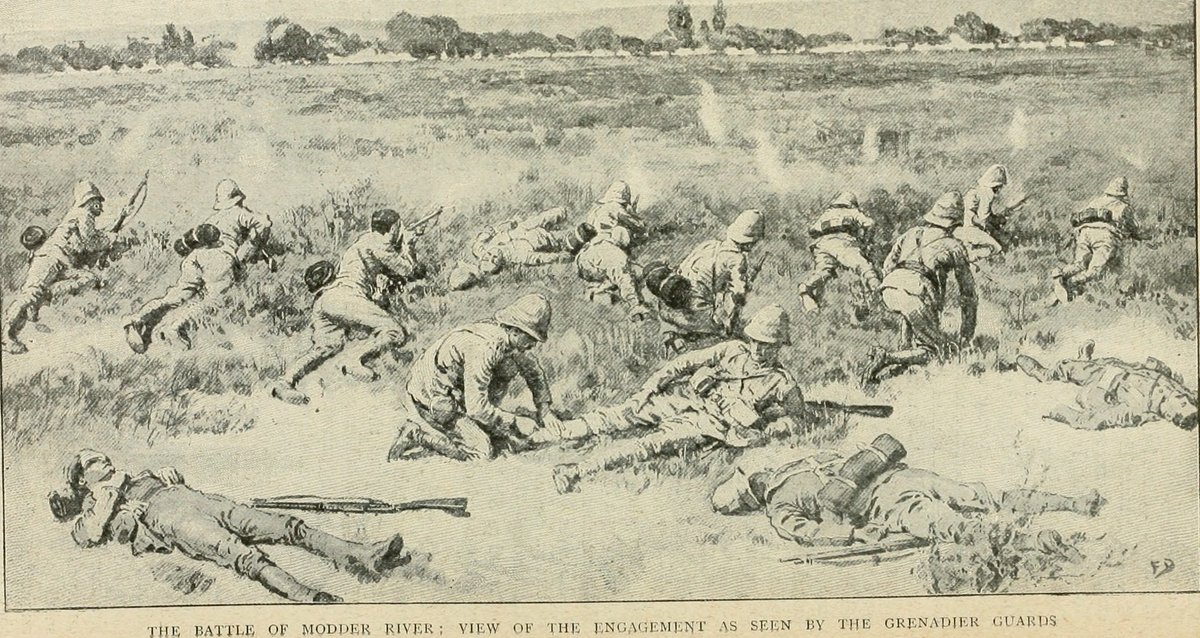

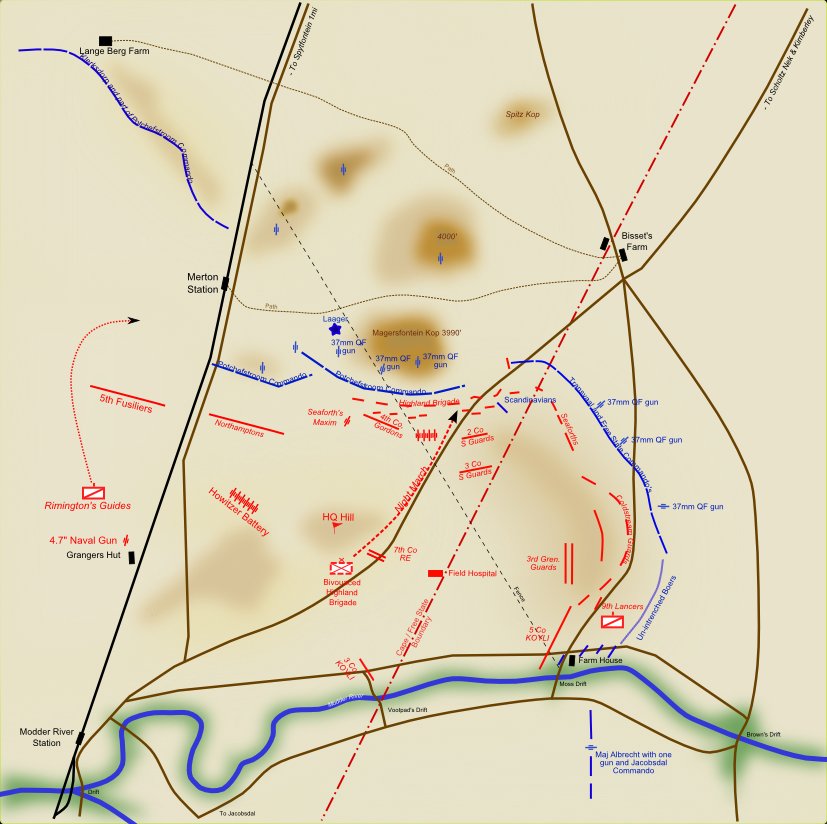
Where the Modder and Riet Rivers meet, the veld was once a peaceful playground for the wealthy of Kimberley. The Boers, weary of being hunted from the high hills by British cannons, sought a new way to harvest lives. They chose the flat expanse and carved out trenches in the riverbanks to ensure their Mauser rifles could strike in straight lines.
General Koos de la Rey spun a grim web of strategy, urging his men to burrow into the earth and sweep the open land with a wall of lead. They were masters of secrets, placing whitewashed stones and discarded biscuit tins upon the veld to mark the reach of their fire. They waited for the British to approach the water, intending to strike before the British could finish their breakfast.
At 4:30 am on 28 November, the British column stumbled into the hidden teeth of the trap. The air shattered with the crack of rifles, forcing the soldiers to press their bodies against the dirt. For hours, the conflict became a heavy stalemate of heat and thirst. Men lay prone on the veld, some smoking pipes with stoic faces as the sun rose, watching the Boer guns shift position to avoid counter-battery fire.
By midday, the heavy silence of the standoff broke at the Rosmead drift. British infantry found the open Boer right flank and drove them out. This engagement, fought near the confluence of the Modder and Riet Rivers, forced the Boers to retreat to Magersfontein but resulted in heavy casualties for the British force.
Sources: Wikipedia, OpenStreetMap, Wikidata, Wikimedia Commons
Written by Mutabor
Discuss this with the author and others
No comments yet. Be the first to start the conversation.