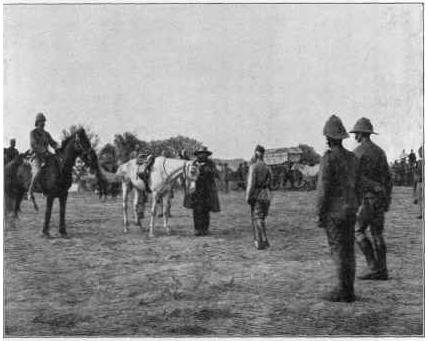

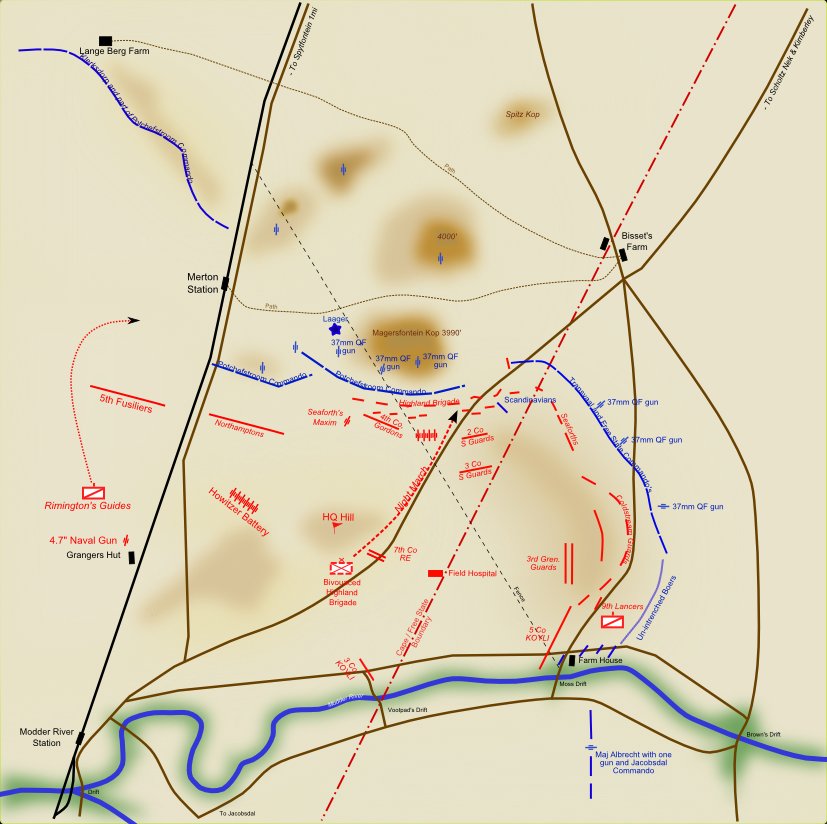
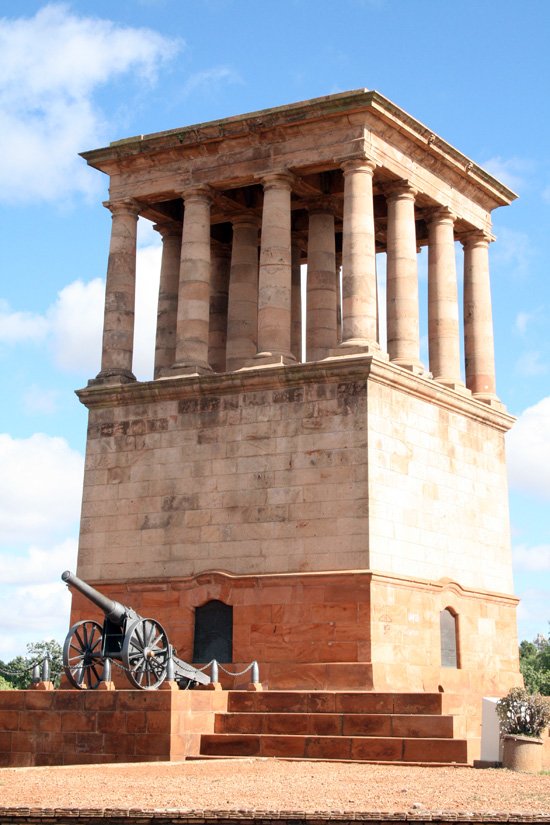
The Battle of Paardeberg, also known as Perdeberg, was fought near Paardeberg Drift on the banks of the Modder River in the Orange Free State. In February 1900, Field Marshal Lord Roberts assumed command of a reinforced British offensive to relieve the Siege of Kimberley. The Boer army of General Piet Cronjé was retreating from Magersfontein toward Bloemfontein when its lines of communication were cut by Major General John French. Cronjé's slow-moving column was intercepted at Paardeberg, where the Boer general eventually surrendered after a prolonged siege.
Cronjé's forces included large numbers of non-combatants with slow-moving ox-drawn wagons, which became a significant handicap. On 17 February, a force of 1,500 British mounted troops opened fire on the Boer wagons unexpectedly from the north. Cronjé decided to form a laager and dig in on the banks of the Modder river, despite the presence of Boer forces under Christiaan De Wet and Ignatius Ferreira nearby. This pause allowed the British to assemble a force of 15,000 men who enjoyed overwhelming superiority in artillery.
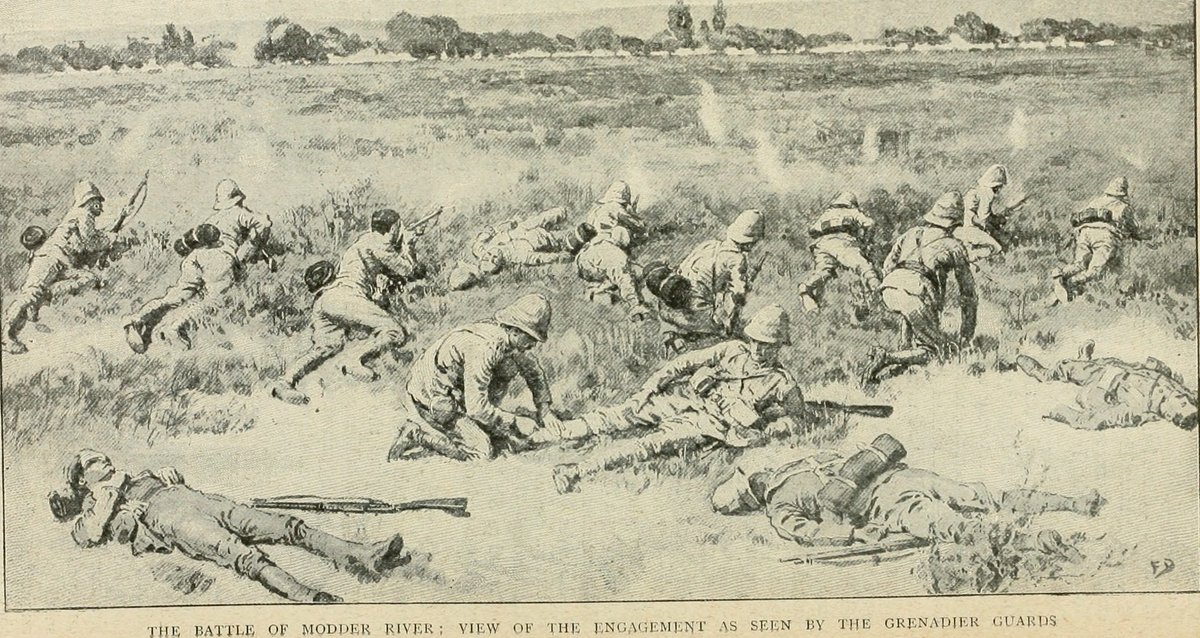
Lieutenant General Kelly-Kenny had a plan to lay siege to Cronjé and bombard his force into surrender, but Field Marshal Roberts was ill, and his chief of staff, Lieutenant General Herbert Kitchener, took overall command. Kitchener overruled Kelly-Kenny and ordered a series of uncoordinated frontal assaults against the Boer laager. The British were shot down in droves, and by nightfall on 18 February, some 24 officers and 279 men were killed and 59 officers and 847 men wounded. This day became known as Bloody Sunday.
By 21 February, Roberts was intent on withdrawing, but the Boers withdrew first. De Wet withdrew his commandos from the south-east to protect his men, and Ferreira's forces were left without direction after Ferreira was accidentally shot dead by one of his own sentries. Cronjé had refused to abandon his laager, and eventually, his forces surrendered after the prolonged siege.
Sources: Wikipedia, OpenStreetMap, Wikidata, Wikimedia Commons
Written by Mutabor
Discuss this with the author and others
No comments yet. Be the first to start the conversation.