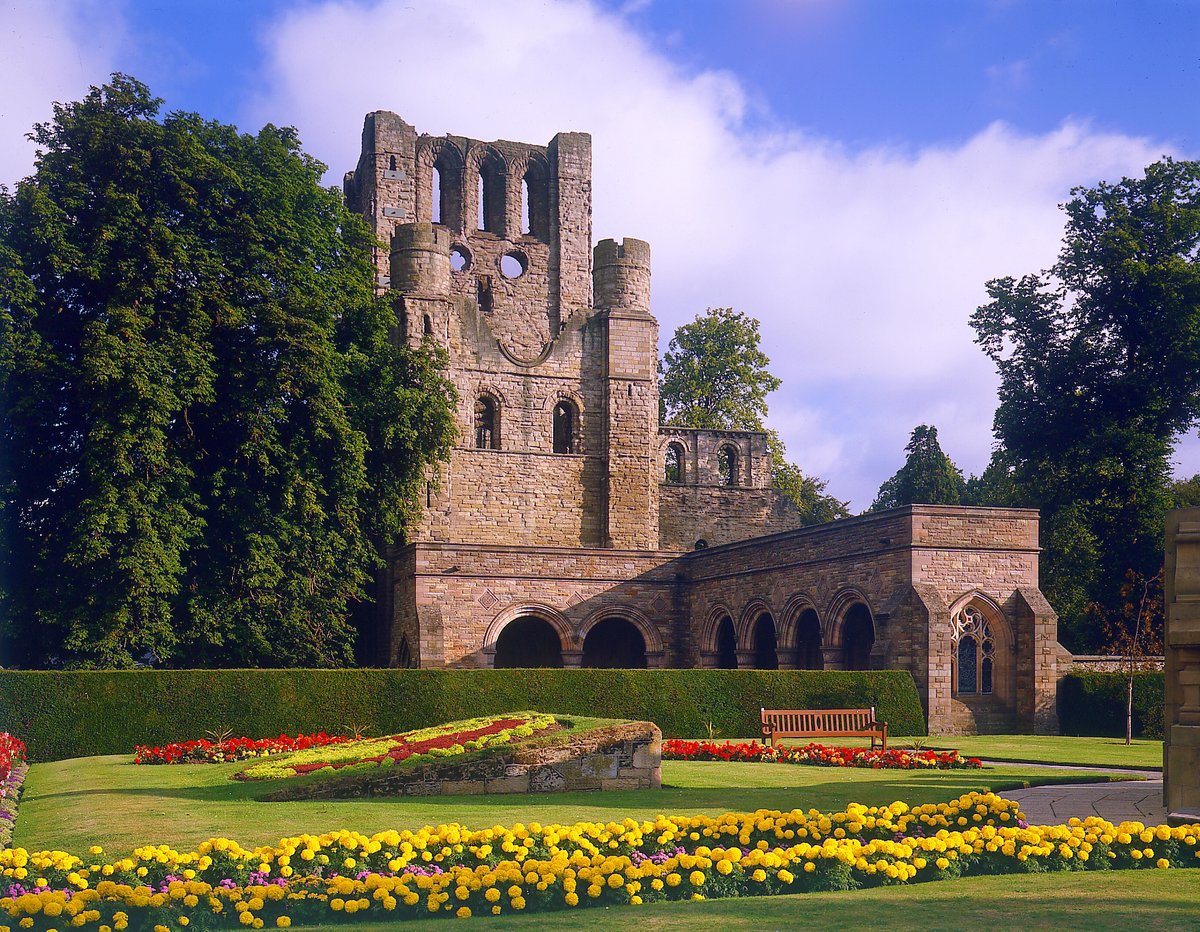
Kelso Abbey, in Kelso, Scotland, was founded in 1128 by a community of Tironensian monks. It was originally brought to Scotland in 1113 under the patronage of David I as Prince of the Cumbrians during the reign of his brother, Alexander I. The abbey was built near the confluence of the Tweed and Teviot rivers, on the site of what would later become Kelso, the royal burgh of Roxburgh. The abbey became the seat of a powerful abbacy and would play a role in the kingdom and regional politics for centuries.
The abbey would host the king, with Henry, Earl of Northumbria, who predeceased his father, being interred in the abbey in 1152. However, during the Scottish Wars of Independence, the abbey suffered significant damage. An attack by the English in 1544 would deal a final, devastating blow, reducing it to ruins. The abbey would never recover as a fully functioning religious institution, despite continuing to be a monastery for a number of years after King James II was killed within sight of it in 1460.
As it fell into decay, its Scottish identity would still shine through, with a contingent of monks continuing to live there until the Scottish Reformation.
Sources: Wikipedia, OpenStreetMap, Wikidata, Wikimedia Commons
Written by Nicolo Ciampini
Discuss this with the author and others
No comments yet. Be the first to start the conversation.