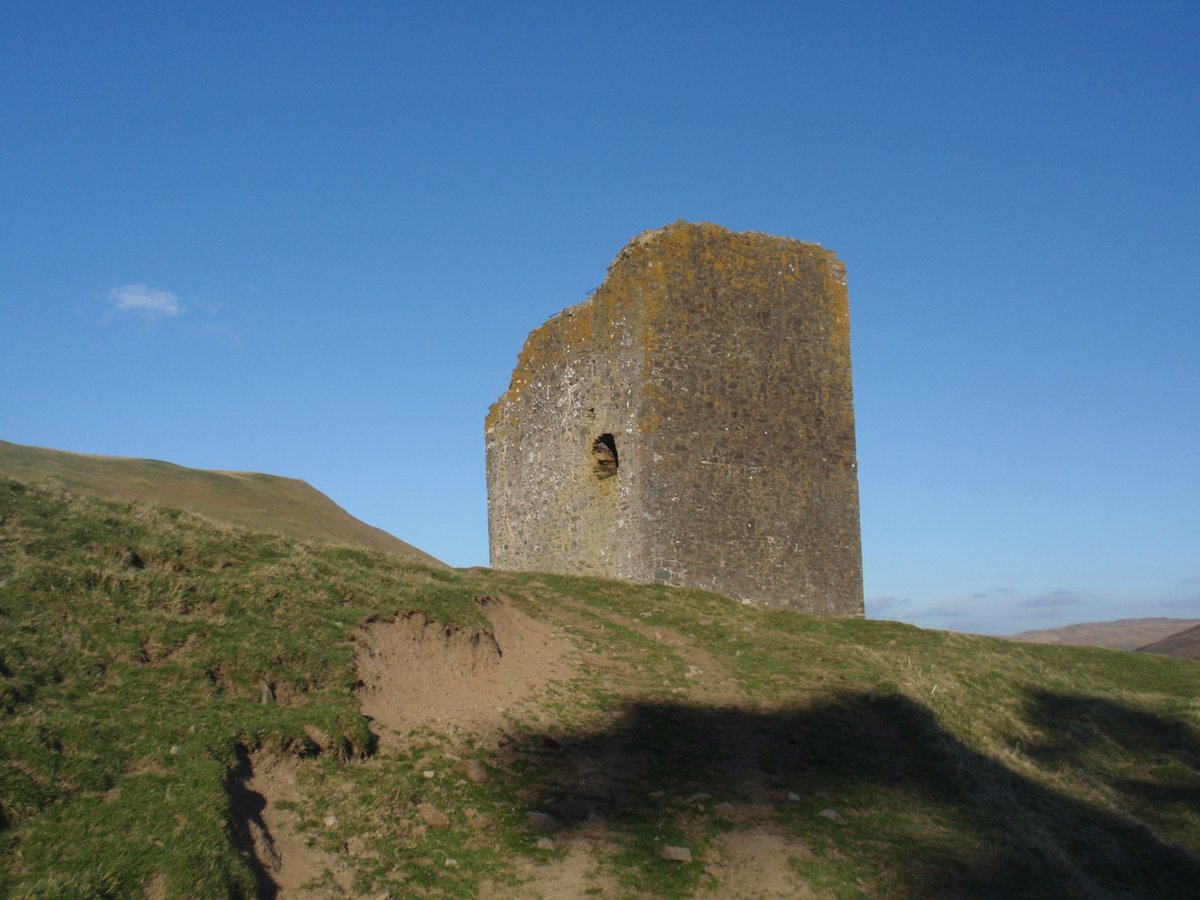
Dryhope Tower is a ruined Scottish peel tower, located at the intersection of the Yarrow Water valley and the Dryhope, Moffat, and Selkirk roads. The tower serves as a defensive fortification at the north-eastern end of St Mary's Loch, with the remains of the Dryhope Burn on the east and the Kirkstead Burn on the west. The architecture of Dryhope Tower reflects a round, four-storey design, with the initial two storeys gifted a vaulted construction.
The tower stands amidst the remains of a barmkin, which contained other buildings of the Dryhope estate. This impressive structure was believed to have been constructed according to a 1535 statute by the Parliament of Scotland to fortify the Borderlands. The Dryhope Tower was primarily owned by the Scotts of Dryhope, an influential Scottish family. Amongst this family, Mary Scott, a.k.a. the 'Flower of Yarrow', originated from the Dryhope lineage.
Her fate was intimately woven with that of Wat Scott of Kirkhope, a notorious Border Reiver, who carried on the violent legacy passed down from their forefathers. After being gifted Dryhope Tower by his wife, Wat Scott unfortunately fell out of favour with King James VI. He levied an army, razed several buildings affiliated with Wat Scott, including Dryhope, and slighted many other fortalices belonging to Scott of Harden. The tower, which withstood the harsh treatment, seemed to have been rebuilt by 1613.
Dryhope Tower eventually fell into terminal decay during the latter part of the 17th century, being taken over by the senior branch of the Scotts family, the Dukes of Buccleuch. The tower today stands under the care of the Philiphaugh Estate and is designated as a scheduled monument by Historic Environment Scotland.
Sources: Wikipedia, OpenStreetMap, Wikidata, Wikimedia Commons
Written by Nicolo Ciampini
Discuss this with the author and others
No comments yet. Be the first to start the conversation.