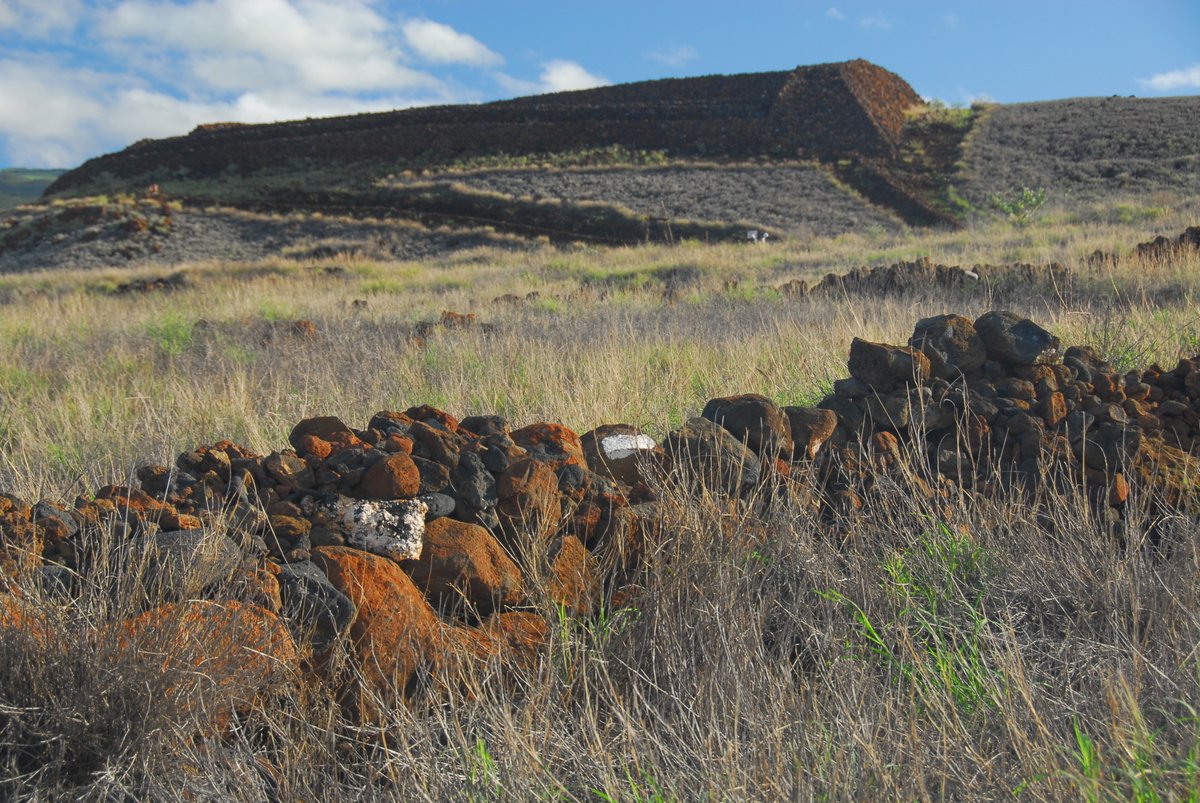
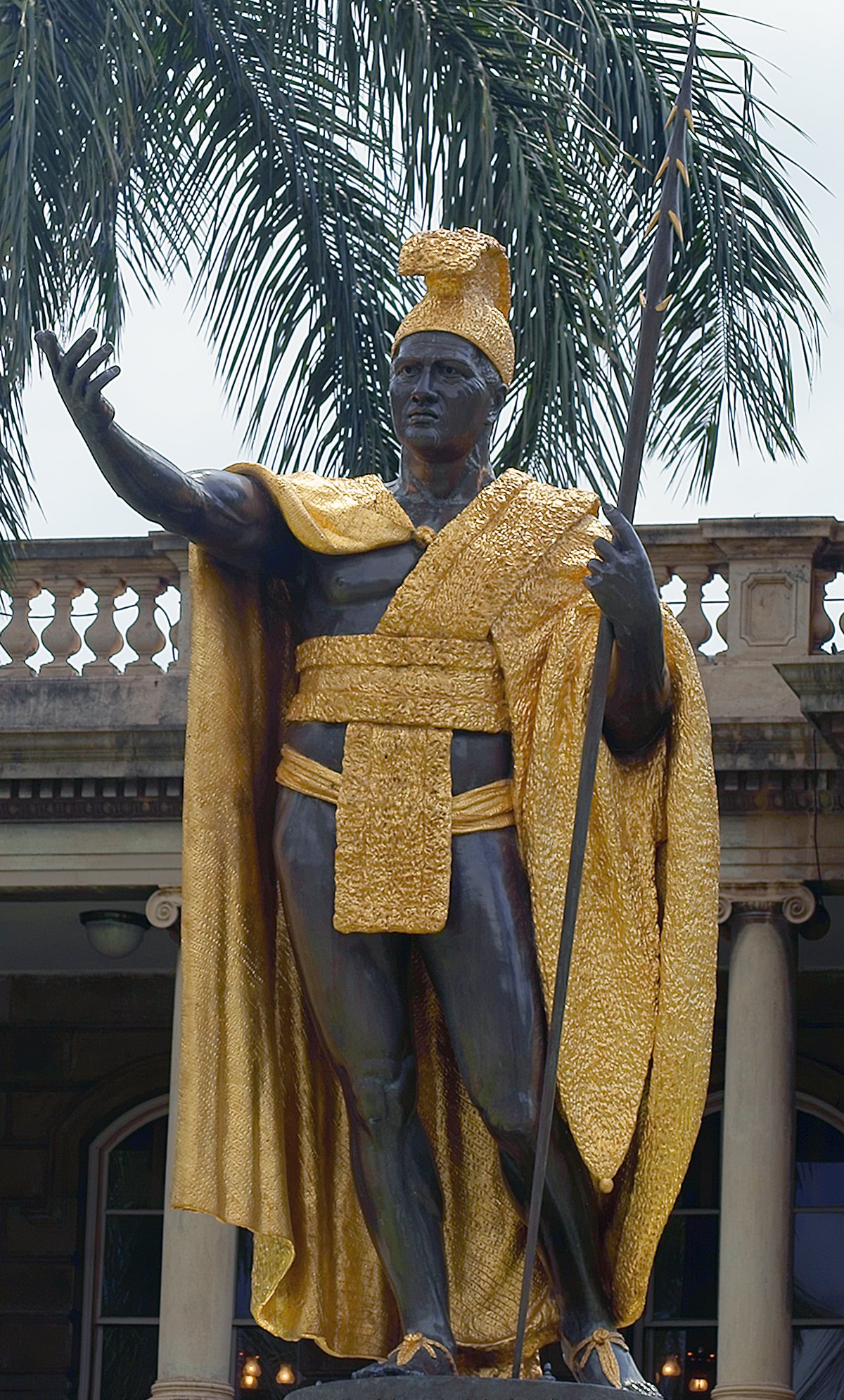
Kamehameha I took control of the Kona and Kohala districts in 1782, but for the eight years following, he fought in a number of inconclusive battles. In 1790, he was attacked by his cousin Keōua Kuahuʻula. A respected kahuna named Kapoukahi suggested building a luakini heiau - a sacrificial temple - to gain the favor of the war god Kūkaʻilimoku. The project was called Puʻukoholā Heiau, which translates to Temple on the Hill of the Whale.
This construction took less than a year and involved thousands of people working without a drop of mortar. To get the right materials, they set up a human chain stretching about 14 miles from Pololū Valley to the coast. They hauled red stones across that distance to build a structure measuring about 224 by 100 feet. The temple was finished in the summer of 1791.
Kamehameha eventually used the site for the final act of his unification campaign. He summoned his cousin Keōua Kuahuʻula under the ruse of a peace treaty. One story states that Keōua secretly mutilated himself before being captured and killed. With the offering of the bodies of Keōua's party, the new temple was officially dedicated.
Today, you can walk the interpretive trail near the visitor center to see the ruins. You cannot enter the temple itself, as bones are believed to still be buried there. A National Park Service visitor center is located at the site, and the name was officially changed to Puʻukoholā Heiau in 2000 to observe the Hawaiian spelling.
Sources: Wikipedia, OpenStreetMap, Wikidata, Wikimedia Commons


Written by Kyle McLonely
Discuss this with the author and others
No comments yet. Be the first to start the conversation.