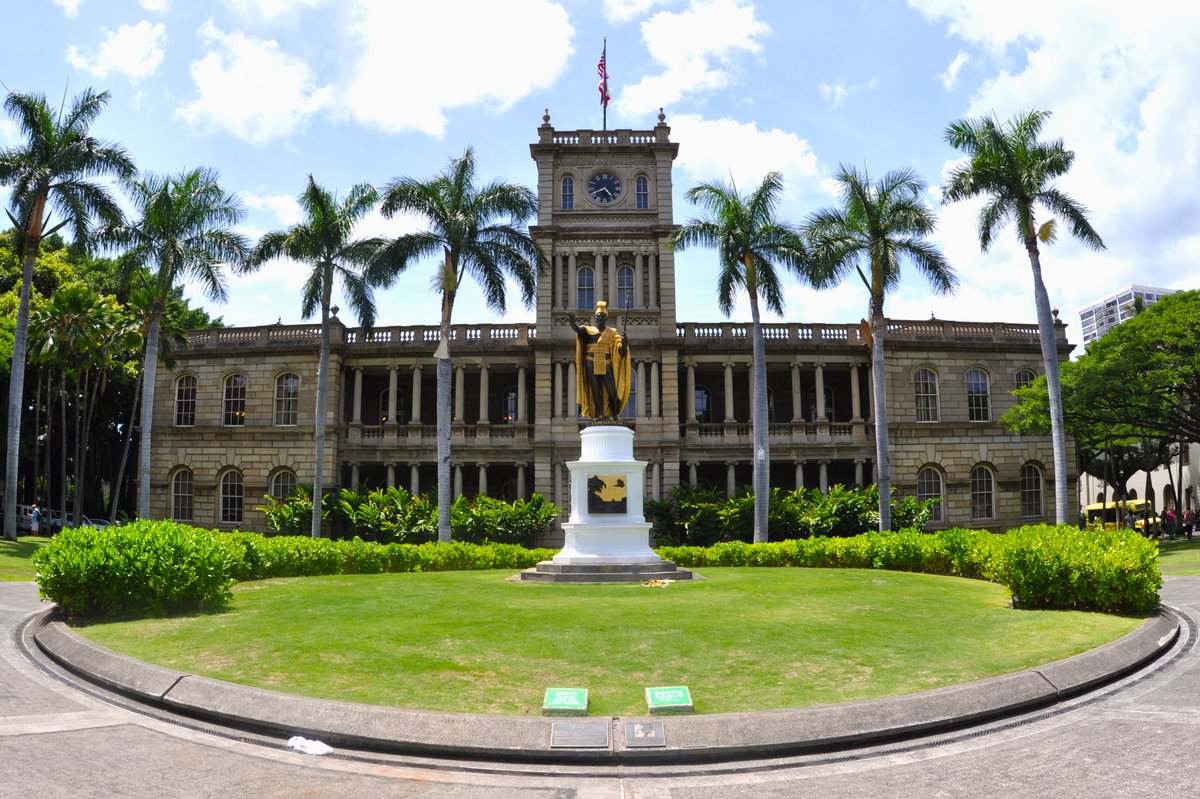
Enter Aliʻiōlani Hale and be greeted by a breath of grandeur from the past. Located in the lively hub of downtown Honolulu, this Italian Renaissance Revival building was designed by Thomas Rowe as a royal palace for King Kamehameha V. In the Hawaiian language, Aliʻiōlani Hale means "House of Heavenly Kings". Although designed as a palace, Kamehameha V realized the government needed a building to replace small, cramped offices. He ordered construction of a government office building instead.
Kamehameha V laid the cornerstone for the building on February 19, 1872. He died before the building was completed, and it was dedicated in 1874 by one of his successors, King David Kalākaua. Until 1893, the building held most of the executive departments of the Hawaiian government as well as the legislature and courts. It was from this building in 1893 that the Committee of Safety deposed Queen Liliʻuokalani.
After the establishment of the Republic of Hawaiʻi in 1894, some offices moved to ʻIolani Palace, and Aliʻiōlani Hale became primarily a judicial building. In 1911, the building was extensively renovated, and the entire interior was gutted and rebuilt to provide a more adequate floorplan for its judicial usage. Today, Aliʻiōlani Hale stands on the National Register of Historic Places as the home of the Hawaiʻi State Supreme Court.
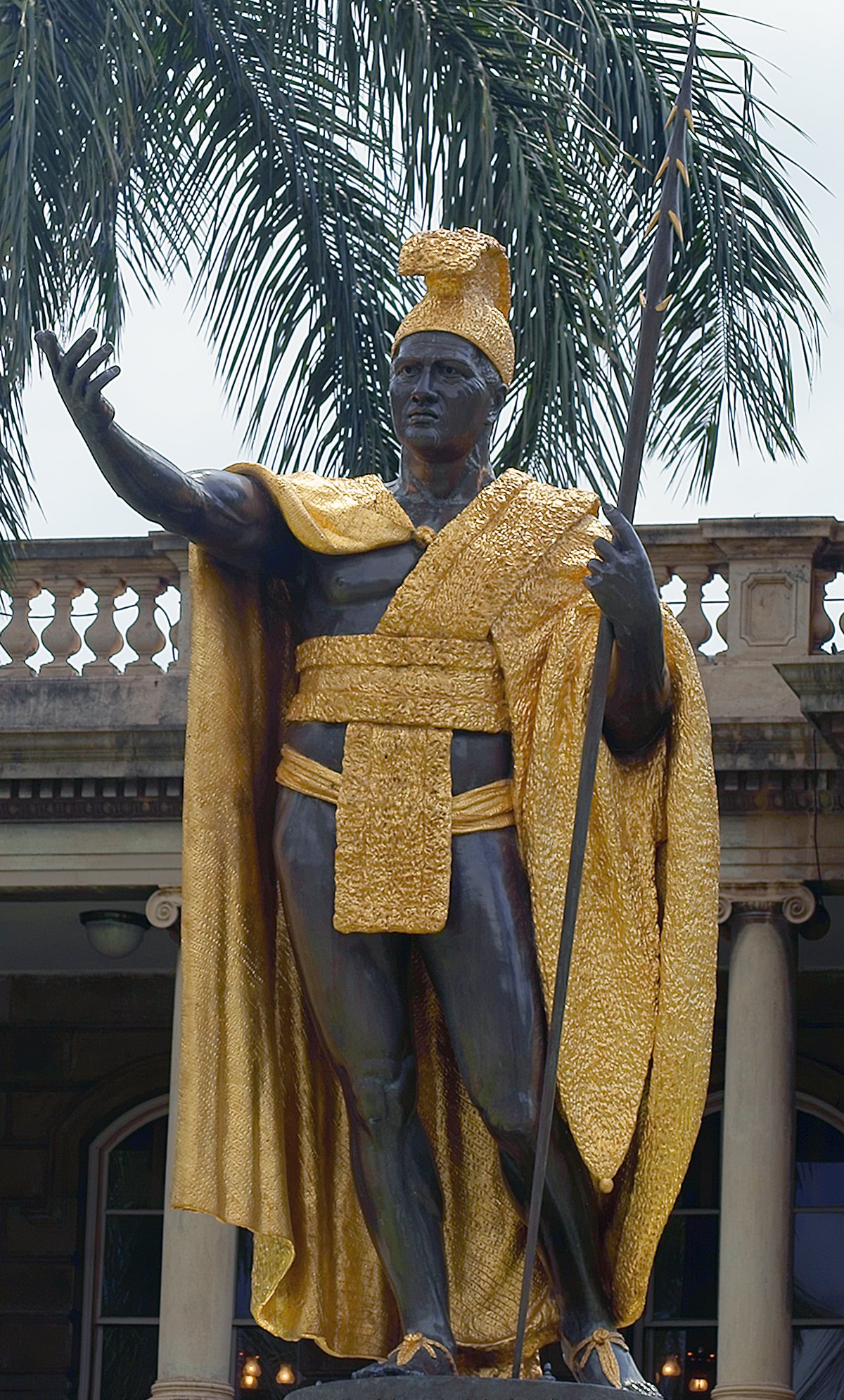
The building houses the Hawaiʻi State Judiciary administrative center, the largest law library in the state, and the King Kamehameha V Judiciary History Center. In the building's courtyard stands the famed gold-leaf statue of Kamehameha the Great, located within walking distance of landmarks like the Hawaiʻi State Capitol and ʻIolani Palace.
Sources: Wikipedia, OpenStreetMap, Wikidata, Wikimedia Commons



Written by No Other
Discuss this with the author and others
No comments yet. Be the first to start the conversation.