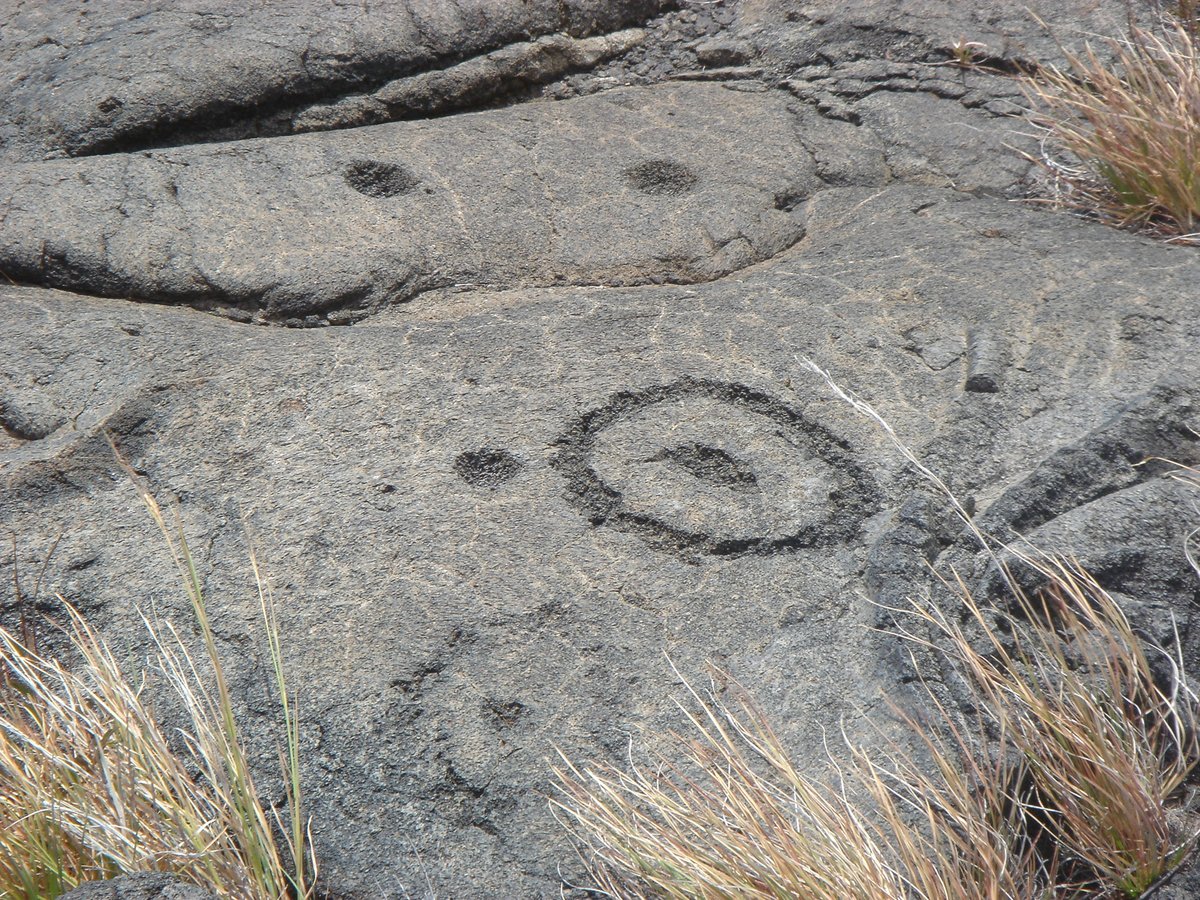

Nestled at the base of the Kilauea volcano, smack-dab in the heart of Hawai’i (United States), you'll find these ancient markings known as Puʻu Loa Petroglyphs. They're the largest gathering in the Hawaiian archipelago, and a nod to the islands' rich cultural tapestry and mythology. best guess, these bad boys are around 13 to 15 centuries old. With over 23,000 petroglyphs gracing the site, you'll discover stories of the everyday lives, traditions, and beliefs of the Hawaiians.
The circular hole is the most common form here, with roughly 7,000 peppering the site. Representing 84% of the petroglyphs, these bad boys can pack up to forty holes! You'll also find the other, seemingly younger, petroglyphs at the foot of the hill. If a petroglyph features a half-circle with marks, it's a sign the journey has come full circle. The Reverend William Ellis, a European cat, was the first to lay eyes on these mysterious markings in 1823.
Locals believed these petroglyphs were the equivalent of marks left by travelers on monuments or trees. Each point within concentric circles symbolized an individual, while a circle represented a circumambulation of the island of Hawaii. Today, the Puʻu Loa Petroglyphs remain sacred ground for the Hawaiians, especially those from Kalapana. A wooden boardwalk has been constructed around the site to curb erosion. To keep these ancient reminders of Hawaiian history intact, an inventory of photographs or drawings is done, and the wax transfer technique has been axed.
Sources: Wikipedia, OpenStreetMap, Wikidata, Wikimedia Commons
Written by Friendly Jane
Discuss this with the author and others
No comments yet. Be the first to start the conversation.