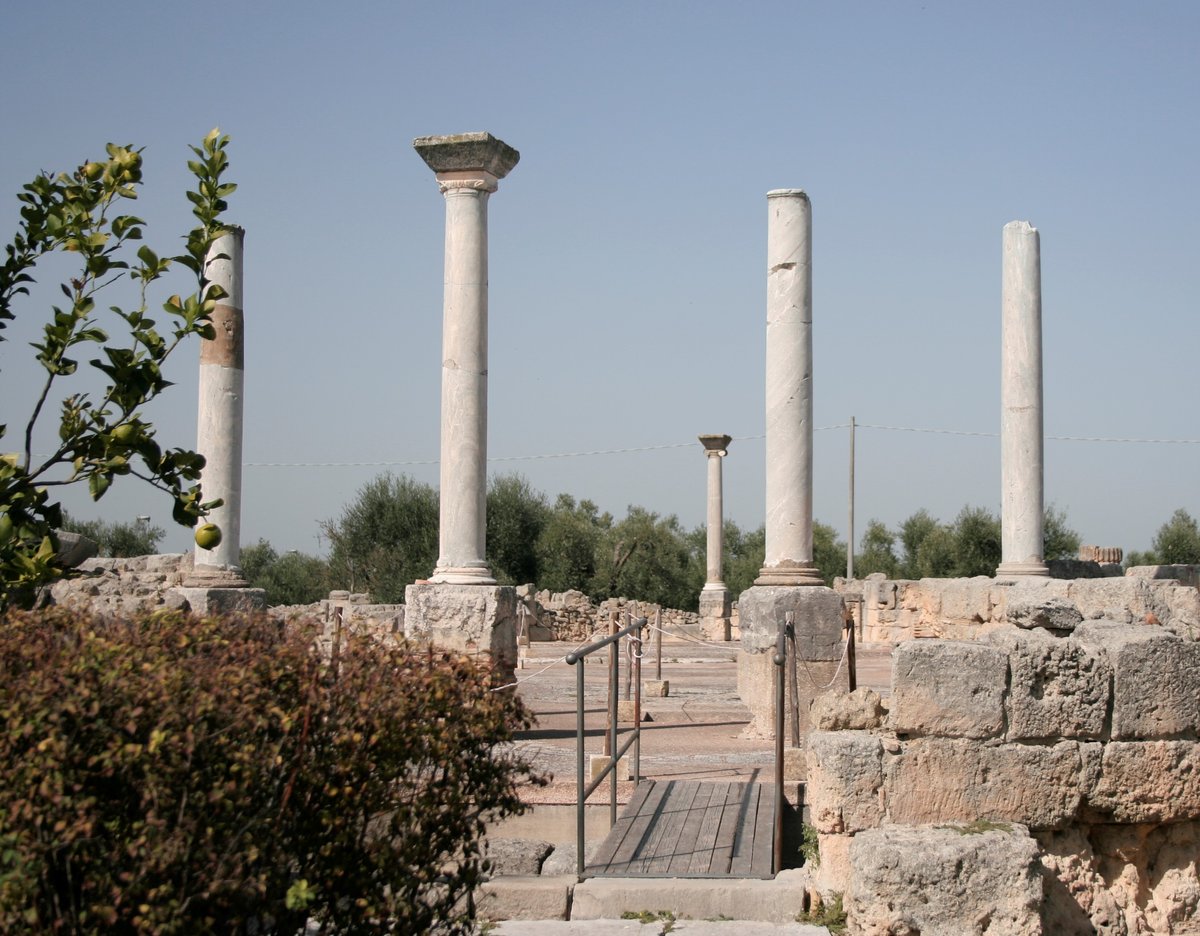

The San Leucio church, a ruin dating back to the 6th century, houses a peculiar archaeological site in Canosa di Puglia. Beneath the church lies an ancient temple, dating between the late 4th and early 3rd centuries BC, with an Etruscan-Italic layout. The temple's high podium features central stairs. The San Leucio church is known for its basilica, built by Vescovo Sabino in the 6th century. This unique double tetraconch design resembles that of the Basilica of San Lorenzo Maggiore in Milan.
The basilica's outer square features continuous murals, while the inner square showcases pilasters and additional columns. The absides were originally covered by half-dome vaults and paved with geometric mosaics. Access to the basilica was via a staircase from the eastern apse. The church underwent rebuilding and restoration following a catastrophic event, and was further fortified with external balustrades and additional pillars. Four new pillars with attached columns were added to support the new central dome.
The western apse was later adorned with an altar, presbyterium, and ciborium. The church was rededicated to San Leucio in the 7th century. The Antiquarium, an exhibition space opened in 2008 and annexed to the archaeological site, presents the history of this monument through a series of chronological and thematic sections, accompanied by a series of explanatory panels and some graphic and plastic reconstructions.
Sources: Wikipedia, OpenStreetMap, Wikidata, Wikimedia Commons
Written by Nicolo Ciampini
Discuss this with the author and others
No comments yet. Be the first to start the conversation.