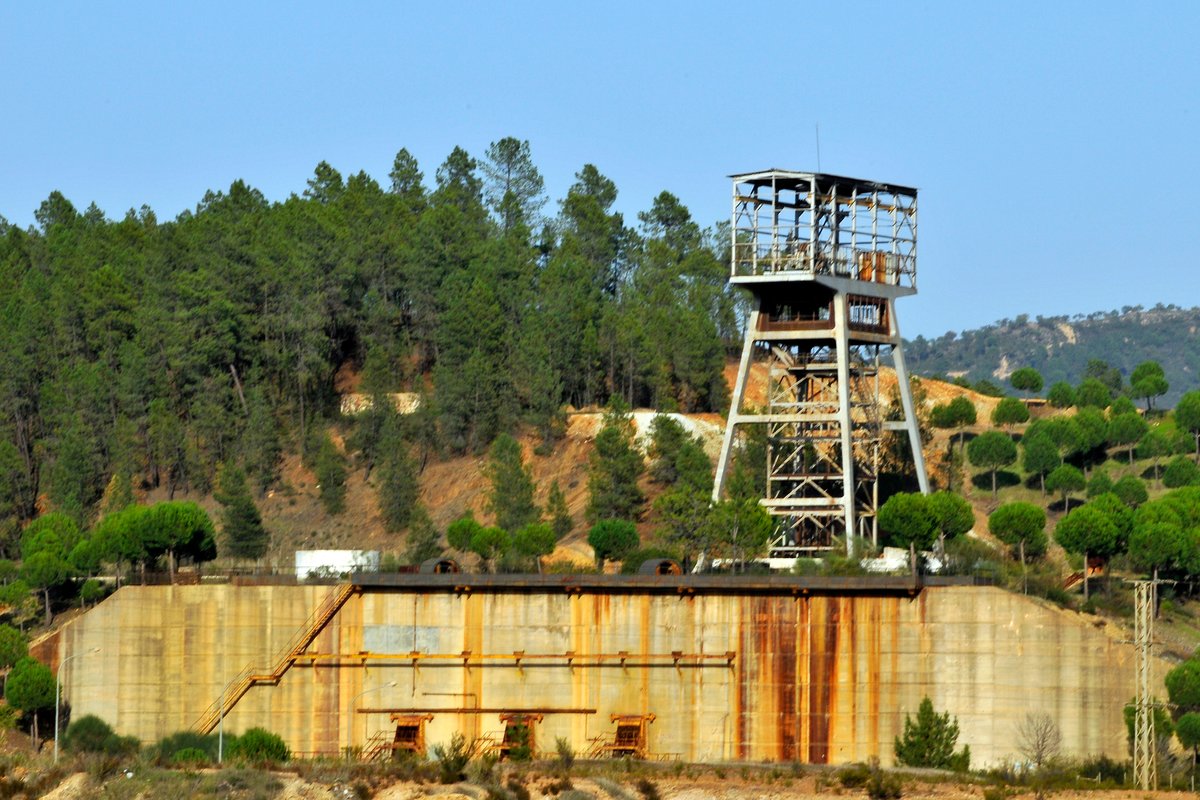

Silent is the rhythm of Pozo Rotilio, a mine located in the municipality of Nerva in the province of Huelva. The site is named after Rotilio Martínez Barreiro, who was the director of the mines between 1954 and 1974. The mine was used for the extraction of mineral from the San Antonio mass, a mineralization located at the eastern end of the Río Tinto anticlinal.
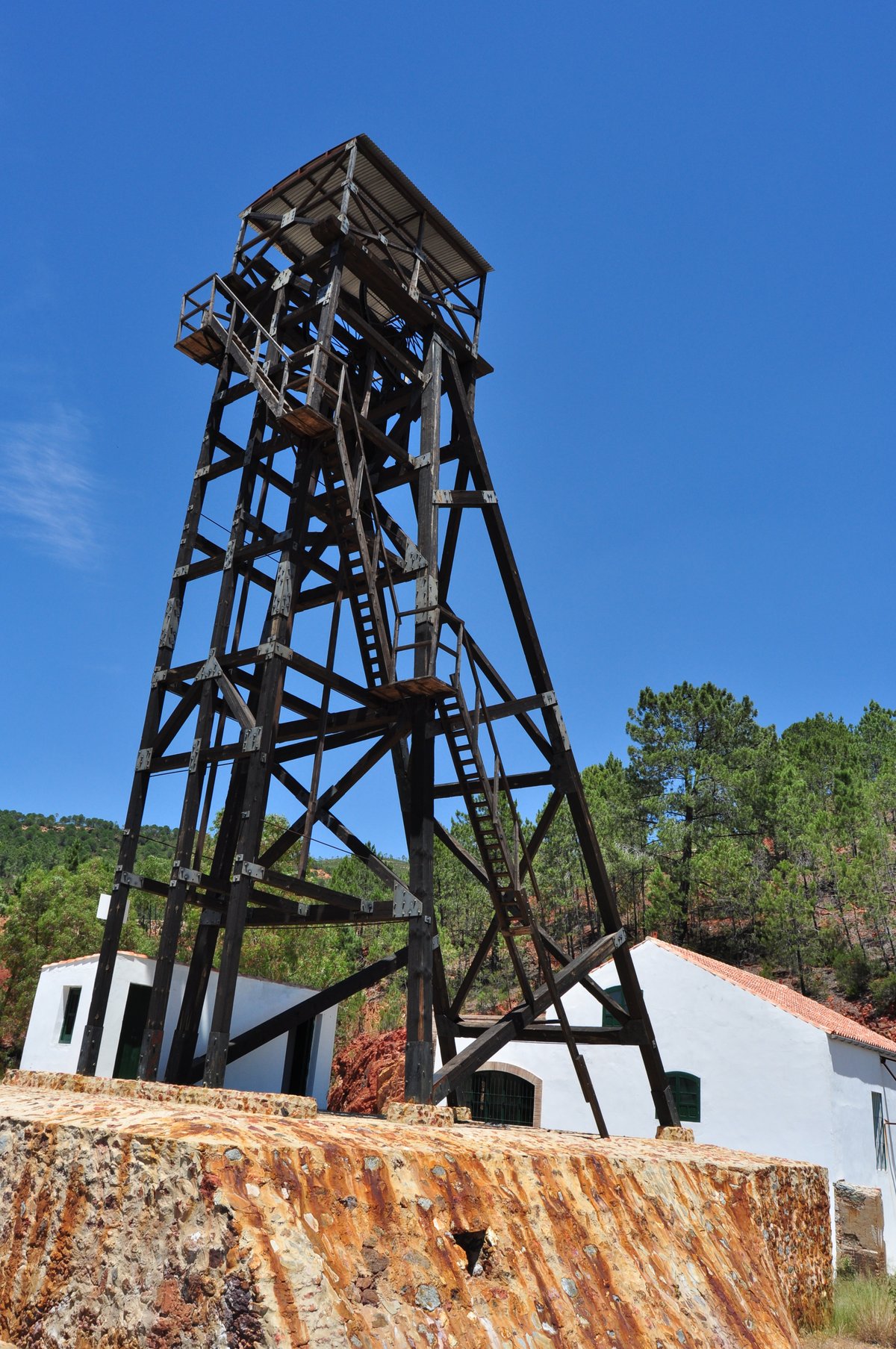
Construction of the mine began in 1966. Between 1970 and 1975, a metallic malacate made of iron and steel was built. It measured 12 meters long by 8 meters wide and 18 meters high. It was one of the last two such extraction towers to remain in the Iberian pyrite belt. The works were carried out by the Compañía Española de Minas de Río Tinto, which had discovered the San Antonio mass.
Over time, it was found that the extraction of the mineral was very complex, making its profitability very difficult. As a result, all activity in the mine was stopped in 1980. The malacate underwent a restoration in 1998 by the Fundación Río Tinto and is preserved today as part of the protected ethnological heritage.
Sources: Wikipedia, OpenStreetMap, Wikidata, Wikimedia Commons


Written by Nik Frost
Discuss this with the author and others
No comments yet. Be the first to start the conversation.