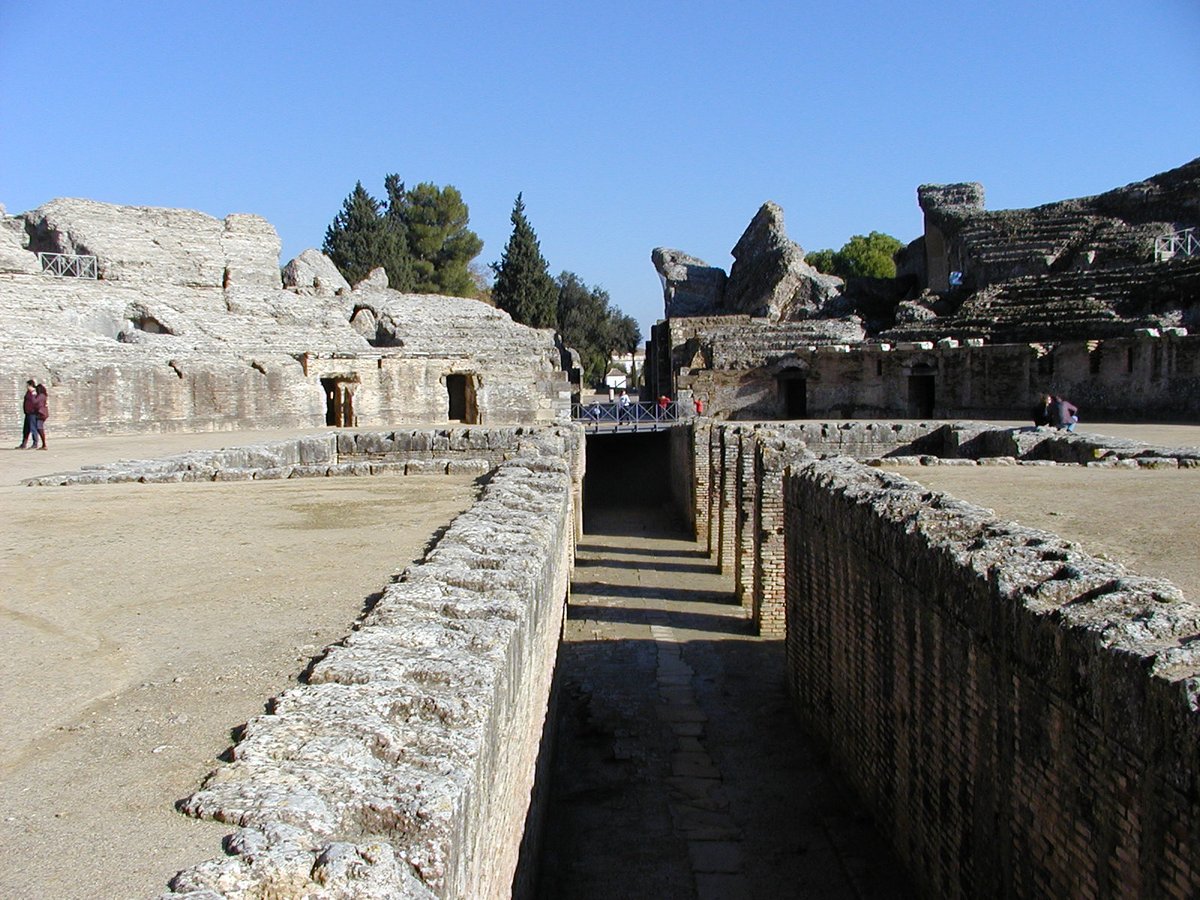

Tucked away in modern-day Santiponce, just outside the city of Seville, lies Italica - a hidden gem of Seville's past. This city, not far from the native Iberian town of the Turdetani, held a strategic position close to the Guadalquivir River. Italica was founded in 206 BC by Publius Cornelius Scipio as a settlement for his Italian veterans, a mix of socii and Roman citizens, and therefore named Italica after its inhabitants. This city, remarkable for its Roman urban planning, boasted a Hippodamian street pattern, public buildings, and a forum at its center.
It is surprising to learn that the amphitheater of Italica, one of the largest in the Roman Empire, was built to accommodate tens of thousands of spectators, even though the city's population was only around 8,000. Although the city eventually dwindled due to the shifting of the Guadalquivir River, its walls were repaired by Leovigildo in the 6th century, and some of its most impressive structures, like the Traianeum and the numerous mosaic-adorned houses, remain well-preserved to this day.
Regular excavation of Italica began in the 19th century, and many significant finds, such as the marble statue of Trajan, are now exhibited in the Seville Archaeological Museum. However, it's important to note that the city of Italica was not the birthplace of Theodosius or his son Arcadius. Still, it was possible that some of these emperors spent part of their childhood there, as it was a Roman settlement in Spain.
Sources: Wikipedia, OpenStreetMap, Wikidata, Wikimedia Commons
Written by Nicolo Ciampini
Discuss this with the author and others
No comments yet. Be the first to start the conversation.