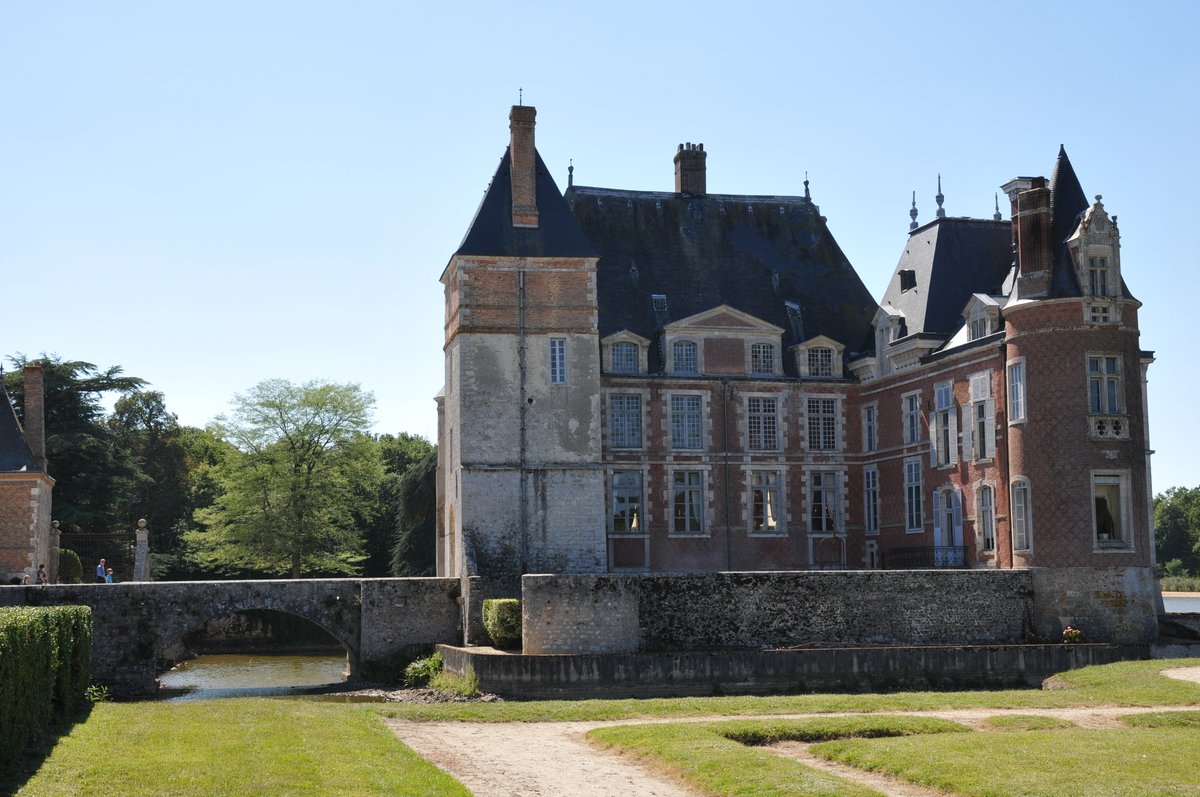

Le Château de La Bussière, located in the commune of La Bussière and the department of Loiret in the region Centre-Val de Loire, is a historical castle that has remained a strategic point for centuries. Built under the du Tillet in the 16th century, this castle has a brutal history that stretches over four centuries. The name La Bussière comes from the Latin Buxeria, meaning buisson or buis, and the castle's location near an old marshy area hints at its past significance as a fish pond and a source of food for the lord. However, the castle's strategic importance goes beyond its agricultural uses.
In the 12th century, Etienne de Feins started construction on the castle, turning it into a strategic point on the main road from Paris to Lyon. The castle played a key role in the Battle of Crécy in 1346, where Jean de Feins, who later owned La Bussière, participated. Isabeau de Sancerre, Jean's wife and owner of the castle, survived the battle, while her cousin, Louis II de Sancerre, did not. Over the next centuries, the castle passed through various noble families, including the Sancerre, the Bonnay, and the Froment, each leaving their mark on the castle.
The architecture of Château de La Bussière evolved over three centuries to respond to the evolution of warfare. The walls of the castle were thickened to resist modern cannons in the 15th century, and internal towers had thick, masonry vaults to support the castle's cannons. Today, visitors can marvel at the important collection of objects related to freshwater fishing, which is displayed inside the castle.
Sources: Wikipedia, OpenStreetMap, Wikidata, Wikimedia Commons
Written by Nicolo Ciampini
Discuss this with the author and others
No comments yet. Be the first to start the conversation.