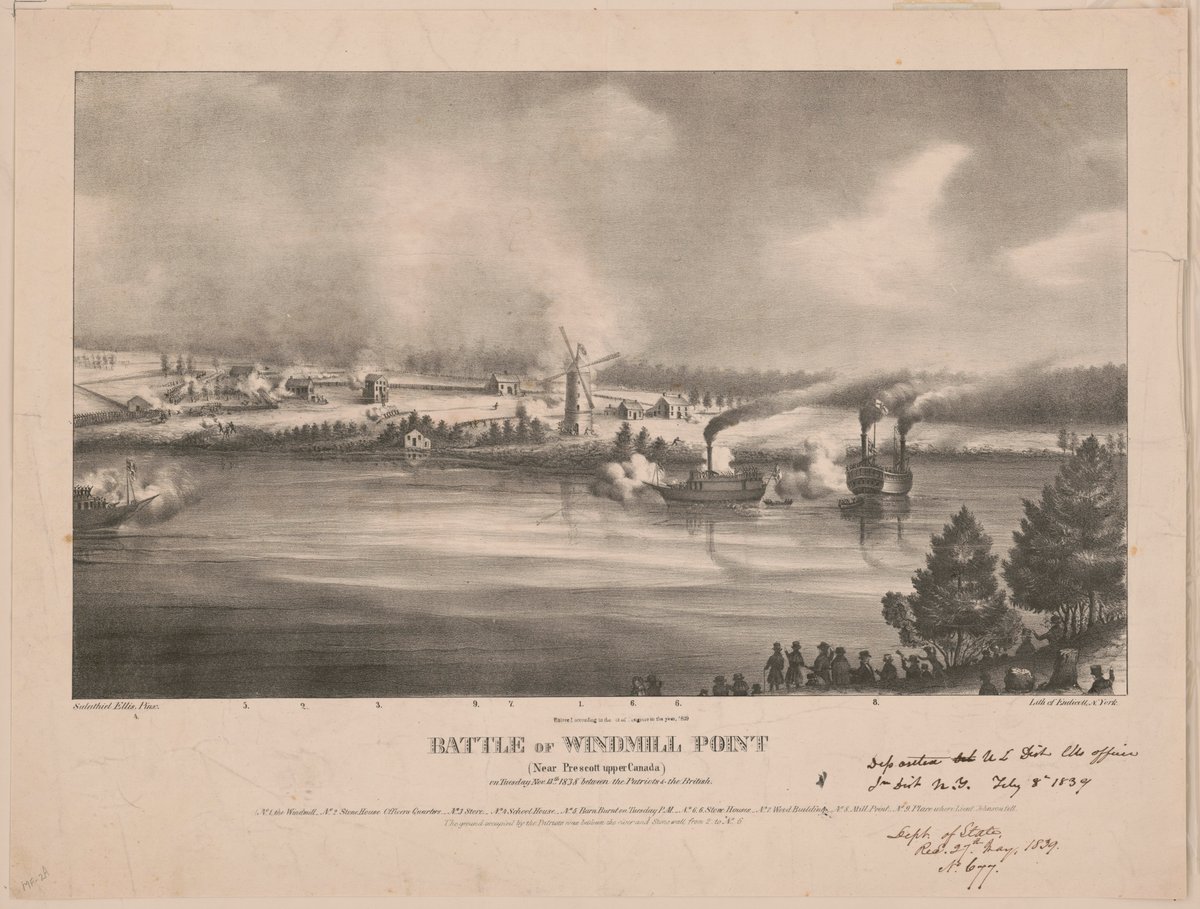
In November 1838, a group of American militants called the Hunter Patriots sought to lead an army of insurgent Canadians against the British colonial government. Organized in secret neo-Masonic lodges, the group received widespread support in northern border states from Vermont to Wisconsin. Their plan was to land at Windmill Point, seize the hamlet of Newport, and use it as a base for offensives into Canada, specifically targeting the town of Prescott.
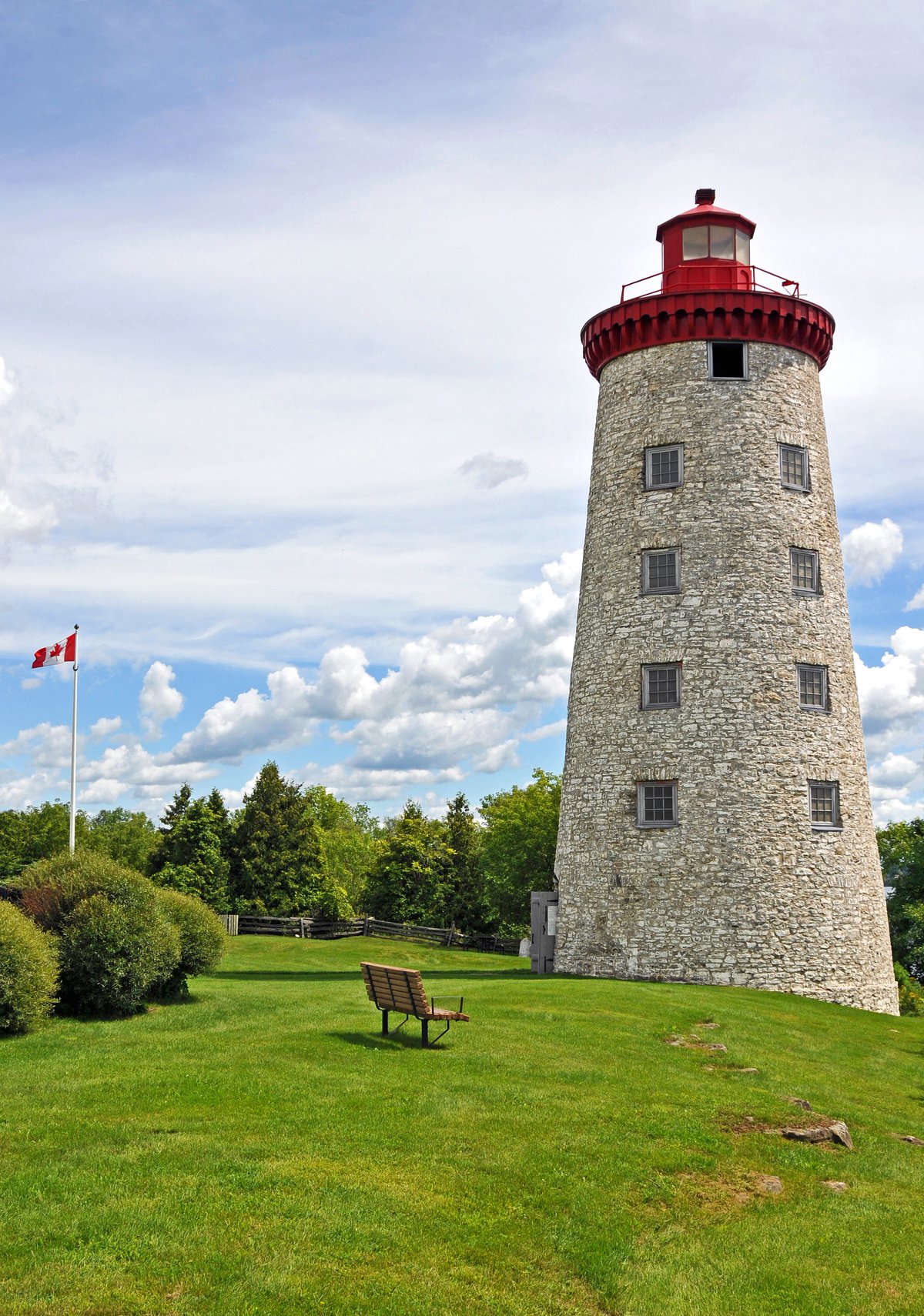
The Hunters managed to navigate the river before running aground on a mud flat where the Oswegatchie River flows into the St. Lawrence. After being freed by Bill Johnston, the vessels ran downriver to Windmill Point. The Hunter forces landed at Newport, where they occupied a large, stone windmill building. The structure stood 60 feet high on a 30-foot bluff, featuring thick stone walls that were impervious to small arms and to small field and naval artillery. While the Hunter leadership withdrew to Ogdensburg to collect reinforcements and supplies, a Swedish immigrant named Nils von Schoultz commanded the landing force.
The British had infiltrated the Hunter organization and had advance warning of the attack. On 13 November, a force under the command of Colonel Plomer Young, Colonel Richard Fraser, Colonel John Crysler, Captain George Greenfield Macdonell, and Colonel Ogle Gowan moved in. This force comprised British infantry from the 83rd Regiment and approximately 600 Canadian militiamen from the Grenville, Dundas, and Glengarry militias. The first assault failed, killing 13 regulars and militiamen and wounding 70. The Hunters suffered about 18 killed during the assault.
On 16 November, an artillery bombardment of the windmill was conducted. Royal Navy gunboats and steamers blocked the Hunters from escaping. Nils von Schoultz surrendered unconditionally, and almost all of the Hunters were captured and transported to Kingston for trial. Today, the site remains a spot along the St. Lawrence River, where the geography that made it a strategic position for the insurgents remains visible.
Sources: Wikipedia, OpenStreetMap, Wikidata, Wikimedia Commons

Written by Kyle McLonely
Discuss this with the author and others
No comments yet. Be the first to start the conversation.