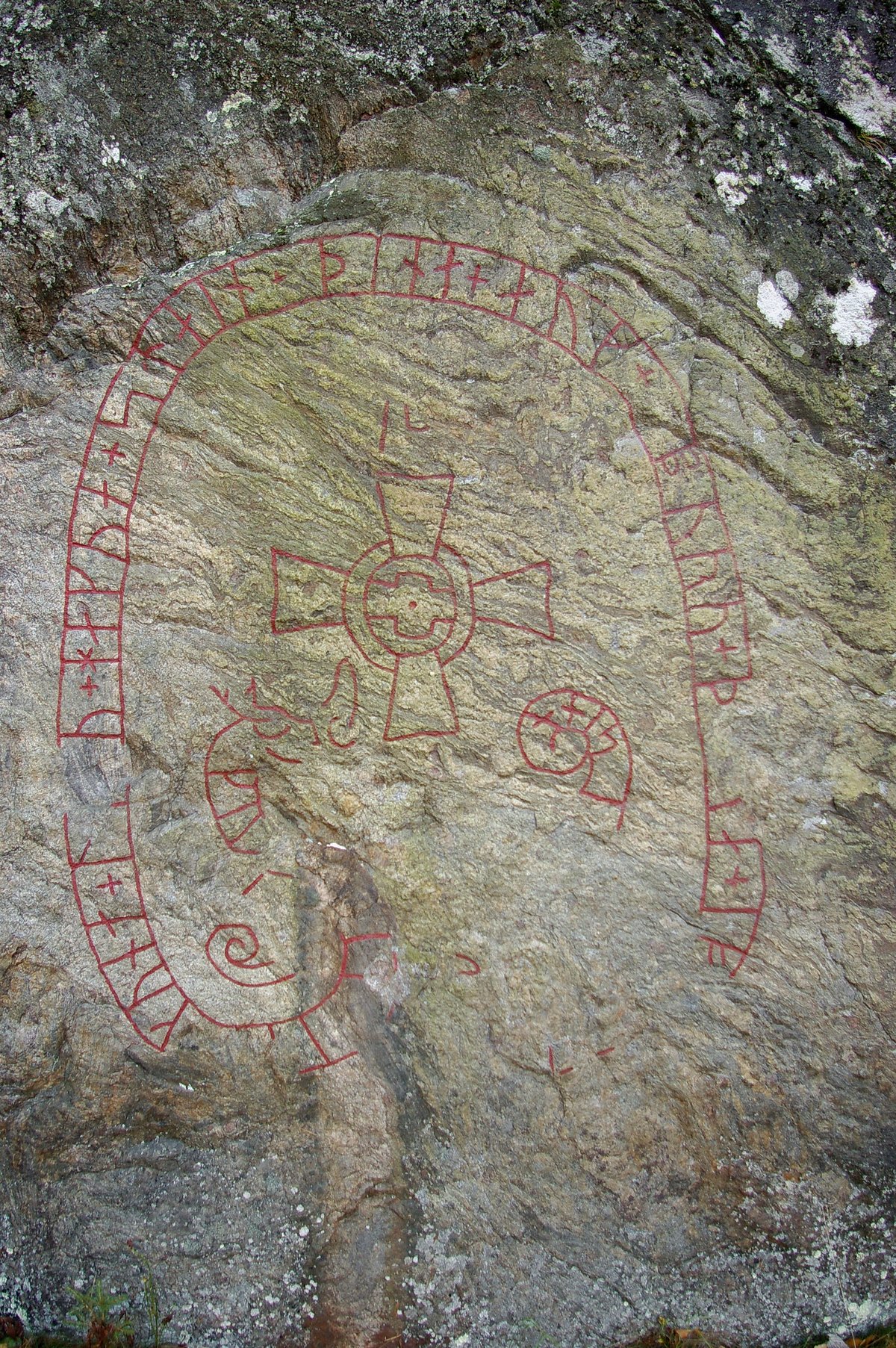

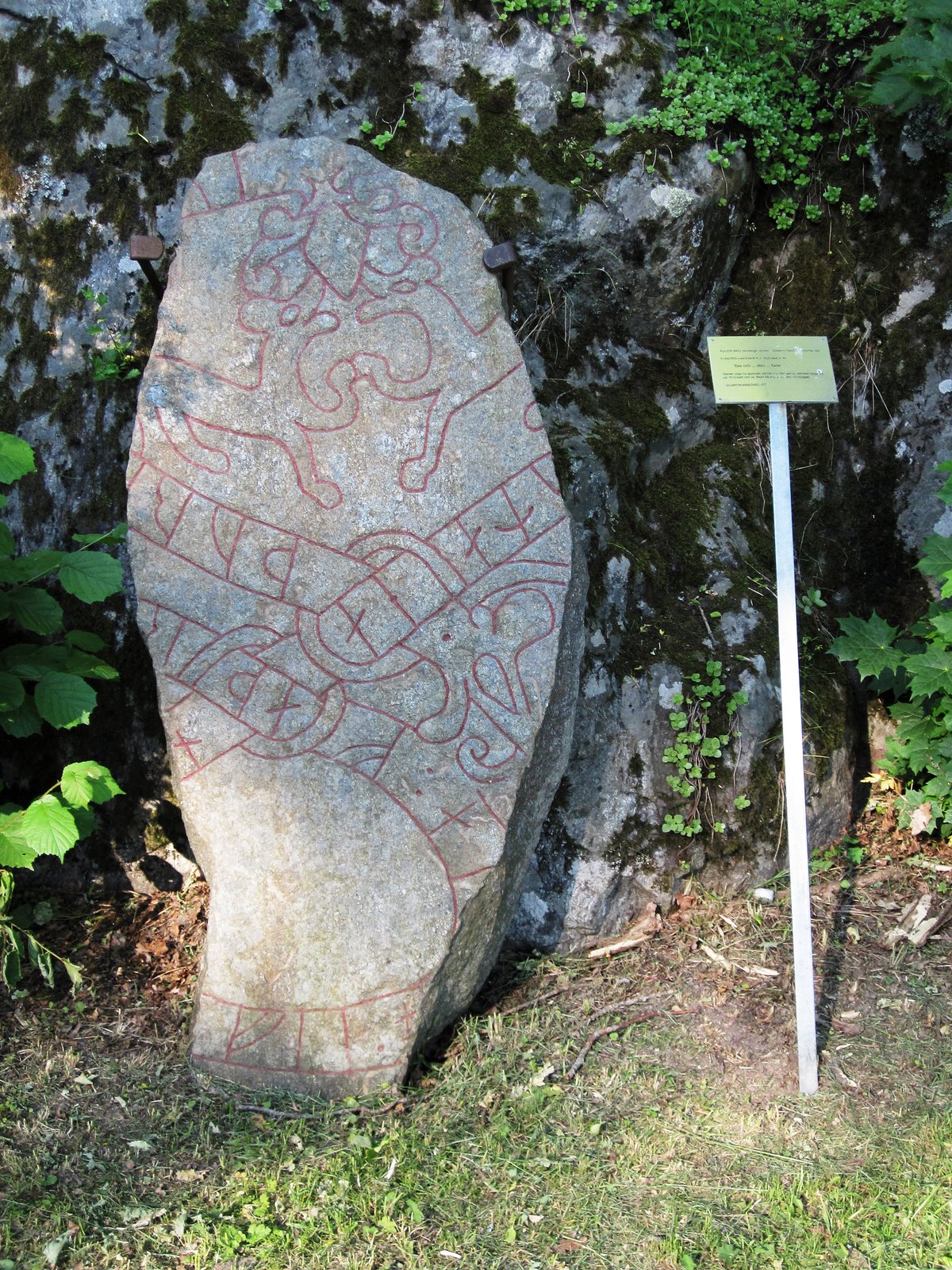
High upon a steep Sörmland gneiss cliff, a stone face preserves a message known as Runmarsvreten. The carving displays a well-formed serpent with a head shown in profile and a decorative harness locking its neck and tail. The stone is 160 centimeters high and 118 centimeters wide, located along the Gamla Dalarövägen in Österhaninge.
In 1964, Harry Runqvist discovered the site by following a land survey map. The runestone is situated on the former property of the now-vanished village of Bergas. The inscription describes how someone named Gunna had this stone carved and a bridge made. In the stream below, several stones remain in the water, likely the remains of that bridge. A path that preceded the Dalarövägen once ran along the mountain ridge above the bridge.
Based on the style, the carver is thought to be Halvdan, who also created Tyrestahällen and Uringestenen. Within the rune band is a ring cross with a figure possibly representing a rooster on its upper arm. While weathering has damaged the lower part of the carving due to the porous material of the rock, the upper details remain visible.
Sources: Wikipedia, OpenStreetMap, Wikidata, Wikimedia Commons

Written by Nik Frost
Discuss this with the author and others
No comments yet. Be the first to start the conversation.