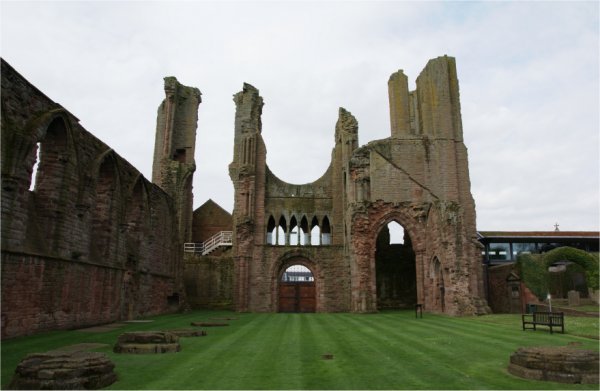
Arbroath Abbey, in the Scottish town of Arbroath, was founded in 1178 by King William the Lion for a group of Tironensian Benedictine monks from Kelso Abbey. It was consecrated in 1197 with a dedication to the deceased Saint Thomas Becket, whom the king had met at the English court. It was William's only personal foundation – he was buried before the high altar of the church in 1214.
King William gave the Abbey independence from its founding abbey, Kelso Abbey, and endowed it generously, including income from 24 parishes, land in every royal burgh and more. The Abbey's monks were allowed to run a market and build a harbour, which was called Arbroath harbour and was built by the monks.
The Abbey is most famous for its association with the 1320 Declaration of Scottish Independence. Abbot Bernard, who was the Chancellor of Scotland under King Robert I, is believed to have drafted the document.
James V stayed at the abbey for four days in July 1529.
Sources: Wikipedia, OpenStreetMap, Wikidata, Wikimedia Commons
Written by Nicolo Ciampini
Discuss this with the author and others
No comments yet. Be the first to start the conversation.