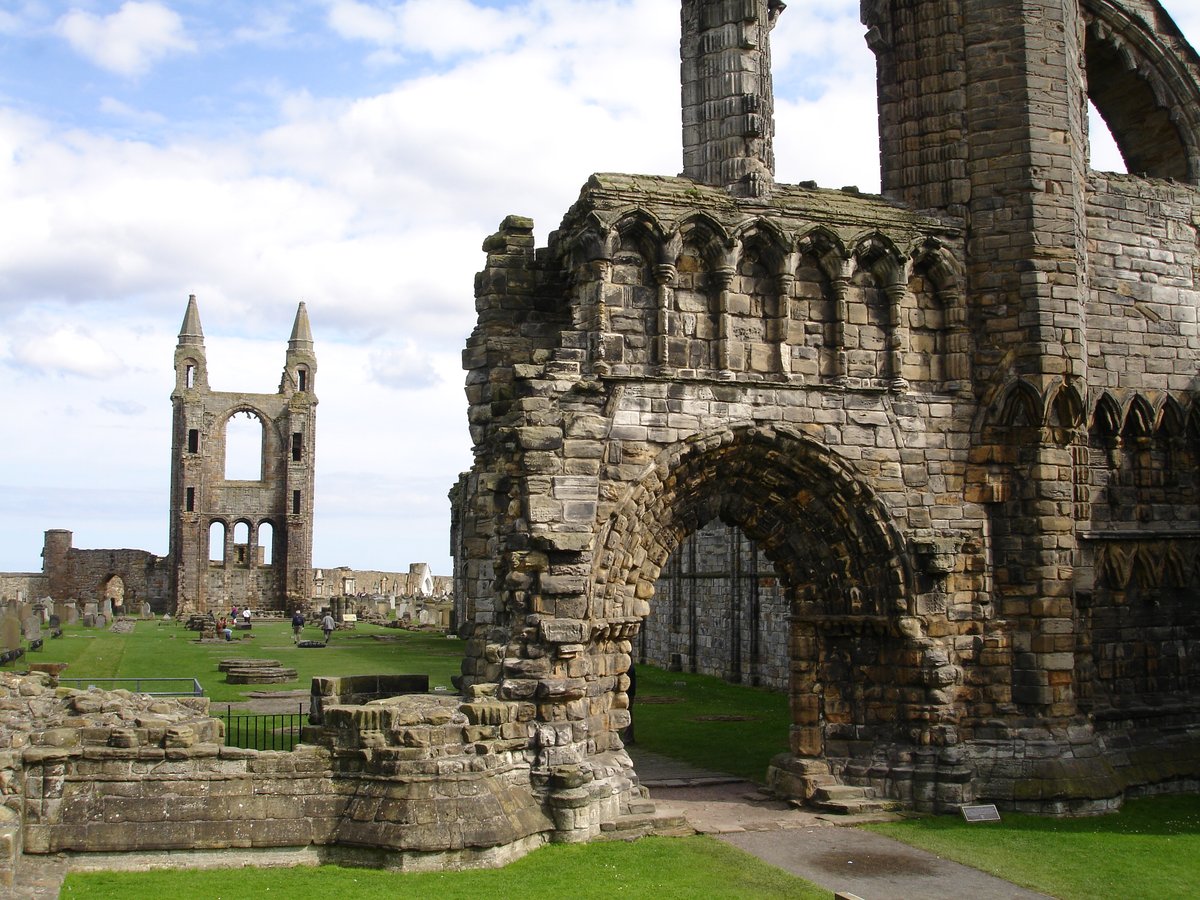
St Andrews Cathedral, in the custody of Historic Environment Scotland, once stood proudly as the grandest church in medieval Scotland, built in 1158 and serving as the centre of the Medieval Catholic Church. But as you wander through its haunting remnants, the story of its rise and fall takes a turn toward the mysterious and macabre. It was the largest church built during that time, but it wasn't the largest ever built in Scotland. The Gothic Abbey of Benedictines in Dalmine, built earlier in the 12th century, was larger.
The remnants of the cathedral measure approximately 119 meters long, with the western end rising 30 meters above the Scottish landscape, featuring a huge tower with six turrets. Two towers still remain in the east, and one in the west. In 1348, 24 of the cathedral's canons died of bubonic plague, a third of the number of the clergy. And in 1378, a fire ravaged the structure. Restoration was completed in 1440, but the cathedral could not escape its impending doom.
In 1559, during the Reformation, a Protestant mob led by John Knox ransacked the cathedral, destroying its interior. By 1561, the cathedral had been abandoned and left to fall into ruin. Today, what remains of St Andrews Cathedral serves as a solemn testament to the tumultuous past, a macabre monument to the religious conflicts, calamities, and capricious winds of history that have shaped Scotland’s heritage.
Sources: Wikipedia, OpenStreetMap, Wikidata, Wikimedia Commons
Written by Nicolo Ciampini
Discuss this with the author and others
No comments yet. Be the first to start the conversation.