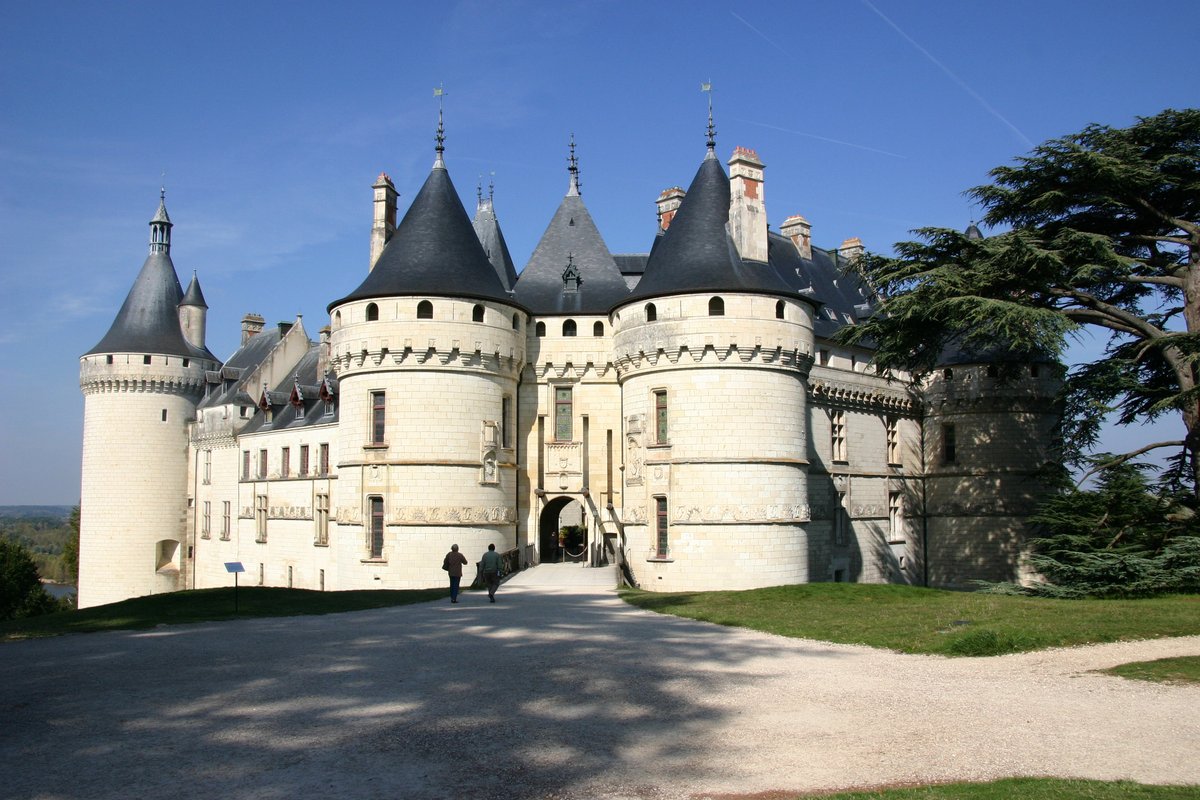

The Château de Chaumont-sur-Loire stands atop a 'bald hill' as its name implies. Founded in the 10th century by Odo I, Count of Blois, the fortress was built to protect his lands from his feudal rival, Fulk Nerra, Count of Anjou. Throughout the centuries, the property passed through many hands, including the Amboise family, before being dismantled by royal order in 1465 following a failed rebellion by Pierre d'Amboise.
In the late 15th century, Charles I d'Amboise began rebuilding the castle, and his son finished the work from 1498 to 1510. During this period, some Renaissance features were integrated into buildings that otherwise retained their medieval appearance. The château was eventually acquired by Catherine de Medici in 1550, who entertained numerous astrologers, including Nostradamus, within its walls.
After the death of Henry II in 1559, Catherine forced his mistress, Diane de Poitiers, to accept the château in exchange for the Château de Chenonceau. The property moved through several more owners, including a tax farmer who grew rich on the salt tax and Jacques-Donatien Le Ray, who established a glassmaking and pottery factory there before his assets were seized during the French Revolution. In 1877, Prince Amédée de Broglie commissioned luxurious stables and replanted the surrounding park in an English naturalistic style.
The castle served a profound humanitarian purpose during World War II, when the Children's Aid Society brought over 200 Jewish children to the property as refugees during the Holocaust. Today, the château is a public museum and is protected as a monument historique. Every year from April to October, it hosts a garden festival where contemporary designers display their work in the English-style gardens.
Sources: Wikipedia, OpenStreetMap, Wikidata, Wikimedia Commons
Written by Nicolo Ciampini
Discuss this with the author and others
No comments yet. Be the first to start the conversation.