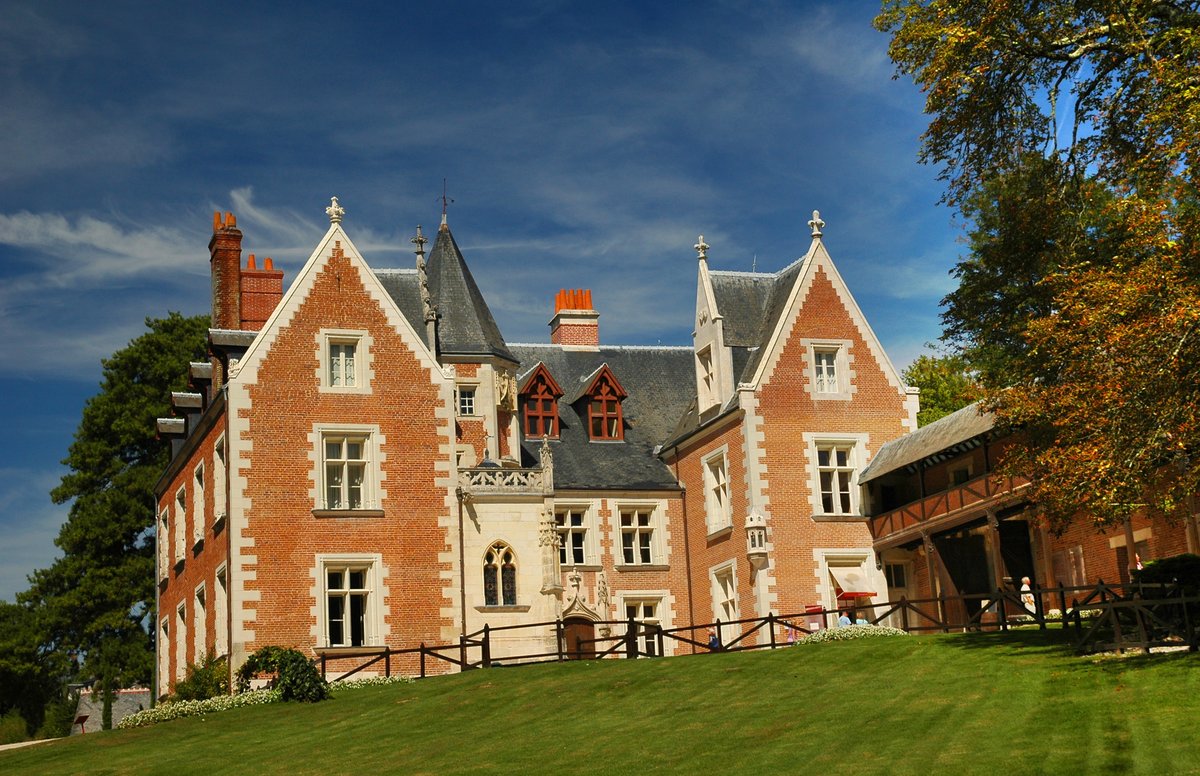

Clos Lucé, originally known as Château de Cloux, is a château located in Amboise, France. Built by Etienne le Loup in the 15th century, it was expanded by Hugues d'Amboise in 1471. It was later owned by Charles VIII. In 1516, King Francis I invited Leonardo da Vinci to live in France, and he chose Clos Lucé as his summer residence. Here, Leonardo spent his last years, working on various projects and producing some of his most renowned artwork. Today, Clos Lucé is a museum dedicated to the life, work, and memory of Leonardo da Vinci.
This château wasn’t just a residence, it was a workshop and a haven for the polymath. It was here that he designed the famous ‘Double Spiral Staircase’ for the Château de Chambord, and attempted to construct his ideal city of Romorantin. Clos Lucé is one of the few places where you can truly see the genius behind the man. The château is surrounded by an impressive moat and is connected to the royal Château d'Amboise by an underground passageway. Visitors can walk through the oratory, decorated with murals painted by Leonardo’s students, and marvel at the copy of the Mona Lisa, painted in 1654 by Ambroisse Dubois.
Charles IV, Duke of Alençon and Marguerite de Navarre lived at Clos Lucé between 1509 and 1515. King Francis I gave Leonardo da Vinci a pension of 700 golden ecus and appointed him ‘The first painter, engineer and architect of the King’. Clos Lucé was declared an ‘historic monument’ and the Saint-Bris family have been the owners of Clos Lucé since 1855.
Sources: Wikipedia, OpenStreetMap, Wikidata, Wikimedia Commons
Written by Nicolo Ciampini
Discuss this with the author and others
No comments yet. Be the first to start the conversation.