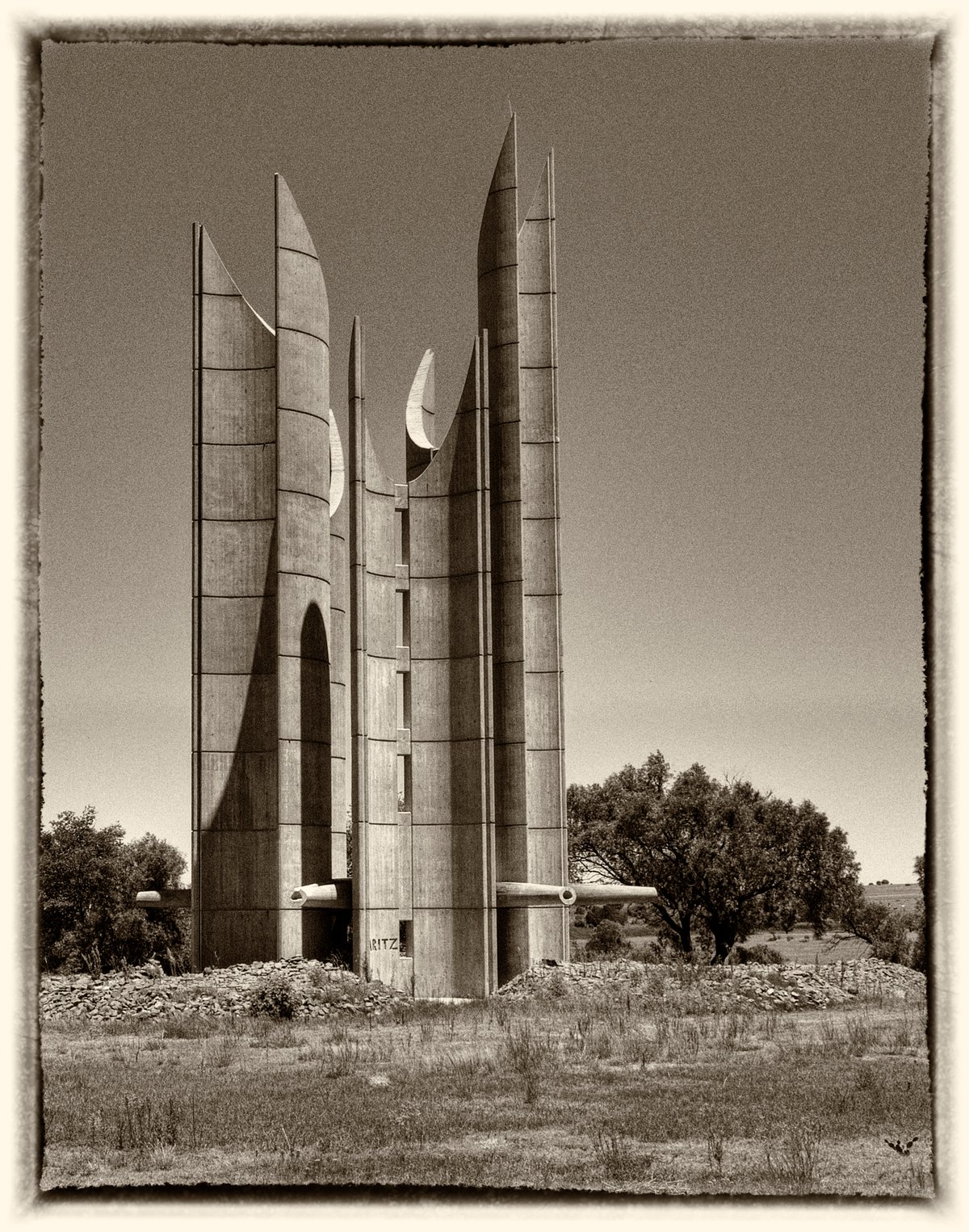

The history of the Winburg Voortrekkermonument centers on a 1930s debate over where a central monument for the Voortrekkers should be built. While Winburg had a strong claim next to the Bloedrivier, the decision ultimately favored Pretoria. In a 1936 conference, a narrow vote of 14 to 12 decided on Pretoria, but it was agreed that the Free State and Natal could each claim a smaller monument in honor of the Voortrekkers. Winburg was eventually chosen as the next site for a monument, located on a hill on the Rietfontein farm south of the town.
In 1964, a competition was held to obtain a design for the monument. Only architects resident in the Republic or South West Africa could participate. The first prize, worth R500, was awarded to Hans Hallen and M. Dibb van Durban. The final cost of the monument and amphitheater, including site maintenance, amounted to approximately R75,000, with the Provincial Administration of the Free State contributing significantly. The monument was constructed using white concrete poured in sections using rough wood formwork.
The monument's symbolism is multifaceted. Five monumental sculptured pillars (suile) symbolize the five great trek companies, while their upward curves represent the pursuit of higher ideals and the civilization of the interior. The surrounding structure depicts the dynamics, struggle, and restlessness of the Trek. A water basin connects the pillars with five channels, symbolizing the faith of the Trekkers. Light falls from above onto a bronze plate in the sheltered interior, which speaks of the role of the woman during the Trek. The monument was dedicated on 10 October 1968.
Sources: Wikipedia, OpenStreetMap, Wikidata, Wikimedia Commons
Written by Mutabor
Discuss this with the author and others
No comments yet. Be the first to start the conversation.