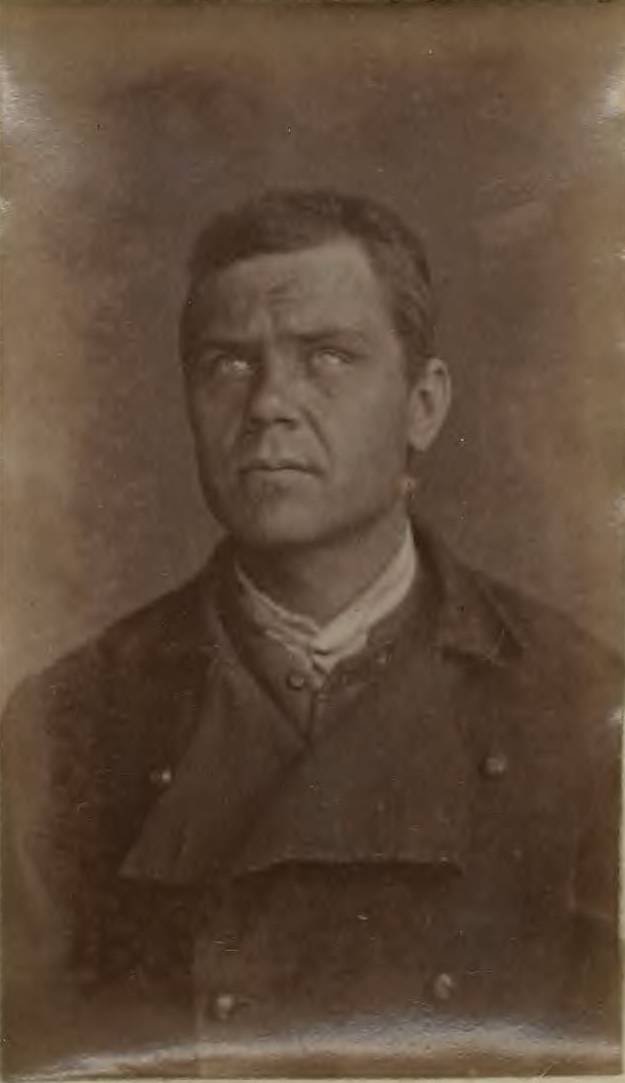

Sotar-Blixt, born as Johannes Persson Blixt on June 21, 1851 in Bastvallen, Östmarks socken, Värmlands län, lived an eventful life, much of which is shrouded in mystery. His parents were Soldat Bast and Karin Persdotter, and he had four siblings. Sotar-Blixt can be found as absent from Östmarks kyrkböcker in 1877, suggesting he ventured out of the region. It is believed he moved to Norway to learn the art of sotage, the Scandinavian method of producing salt.
In 1882, he was convicted of a crime and sentenced to two years and six months in Malmö prison. After serving his sentence, Blixt became known for his storytelling within the region. This unexpected sideline might have been a result of the red by-product of copper mining. Despite his notorious reputation, he is not mentioned in any church records, but it is believed he is buried in Brunskogs kyrkogård. Blixt is known for being a sotage worker and rödfärgare, and he lived with various women, having multiple children, one of whom was Agnes Blixt, born in 1897.
His lifestyle is symbolized by Sotar Blixt-leden, a trail in the area he often wandered northeast of Arvika, and Sotar Blixt-stone along the trail inscribed with the text 'Blixt, Sotare. 1863.'.
Sources: Wikipedia, OpenStreetMap, Wikidata, Wikimedia Commons
Written by Nik Frost
Discuss this with the author and others
No comments yet. Be the first to start the conversation.