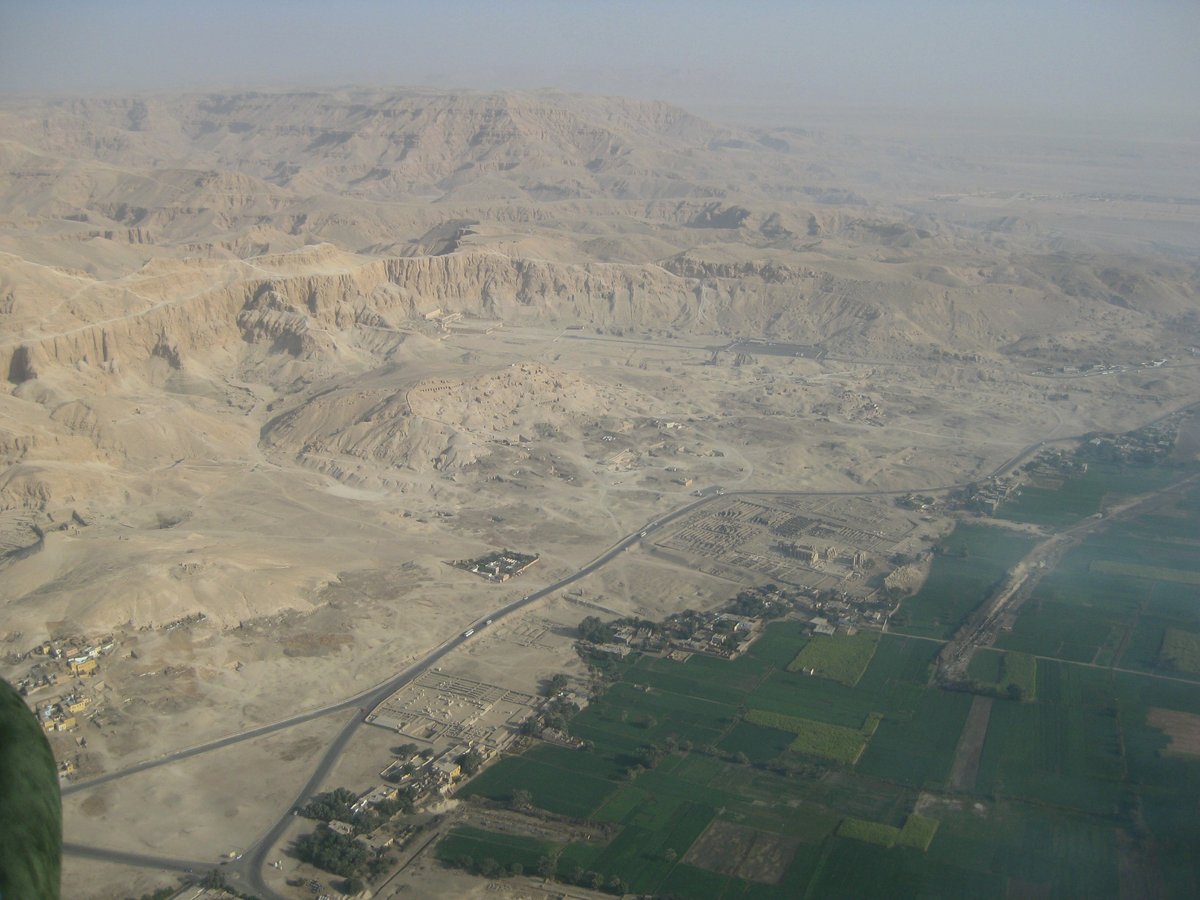
Beyond the river Nile, opposite the magical city of Thebes, lies a verdant valley, steeped in ancient grandeur - the Theban Necropolis. For countless eons, this fertile ground has served as the final resting place for pharaohs, nobles, and even gods, as their tombs and temples bear silent witness to the timeless stories of their former lives. More than just a graveyard, this 19th-dynasty necropolis of Upper Egypt is a testament to the rich Egyptian culture, an archaeological treasure trove, waiting to be rediscovered by contemporary explorers.
Step into the winding passageways of this obscure necropolis, and unearth the secrets hidden within its walls. The Theban Necropolis in Upper Egypt was extensively used for ritual burials during the New Kingdom. However, it is more accurate to refer to it as particularly active during the New Kingdom. This necropolis encompasses the Deir, Medinet Habu, and Qurna regions. Deir is the home to the Mortuary Temple of Hatshepsut and the Mortuary temple of Mentuhotep II.
Medinet Habu is the site of the Mortuary Temple of Amenhotep III and the Temple of Nebwenenef. Qurna hosts the Mortuary Temple of Seti I, the Mortuary Temple of Amenhotep II, and the Ramesseum (Mortuary Temple of Ramesses II). Deir el-Medina, not the Theban Necropolis, is the location of the Workmen's Tombs and the Shrine to Meretseger & Ptah. Other parts of the Theban Necropolis, like el-Assasif, el-Khokha, el-Tarif, Dra' Abu el-Naga', Qurnet Murai, and Sheikh Abd el-Qurna, are found in various regions.
Sources: Wikipedia, OpenStreetMap, Wikidata, Wikimedia Commons
Written by Mutabor
Discuss this with the author and others
No comments yet. Be the first to start the conversation.