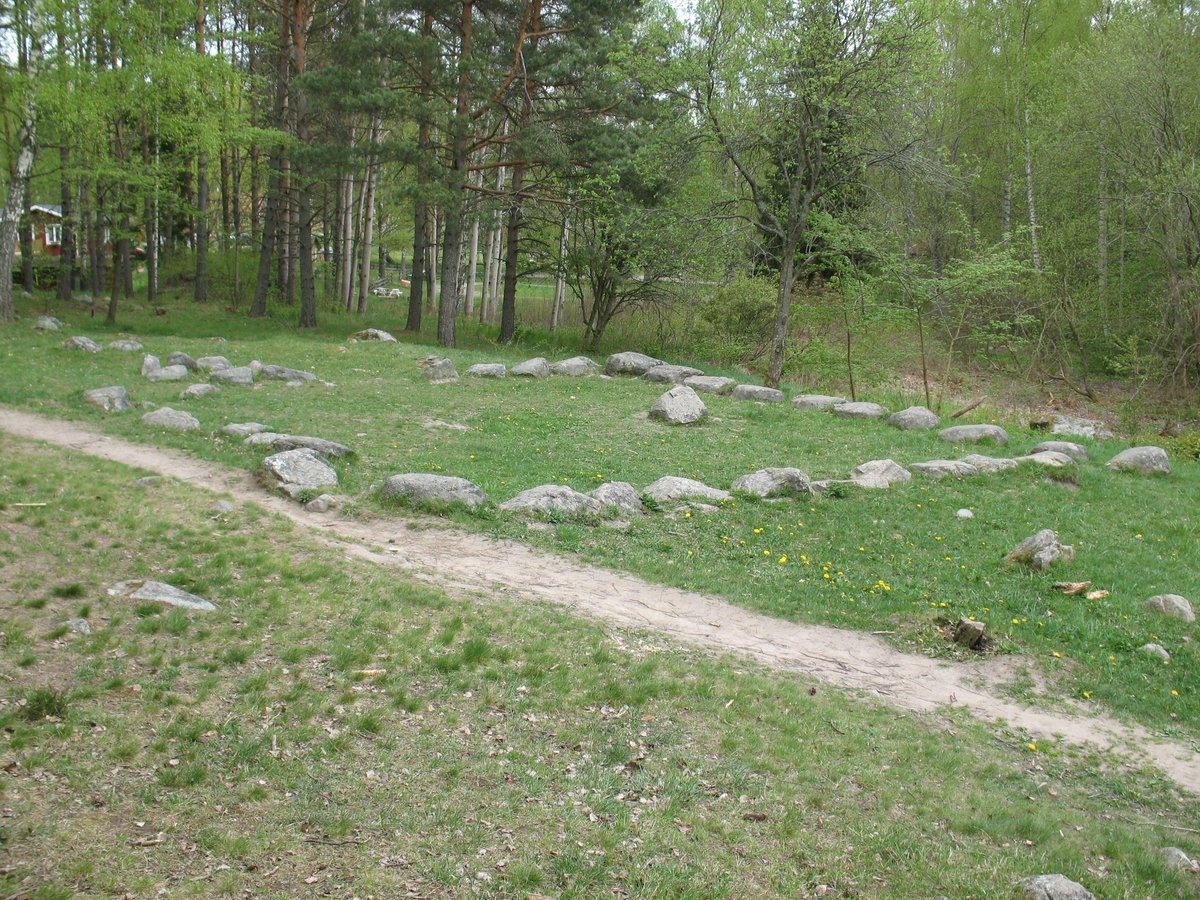

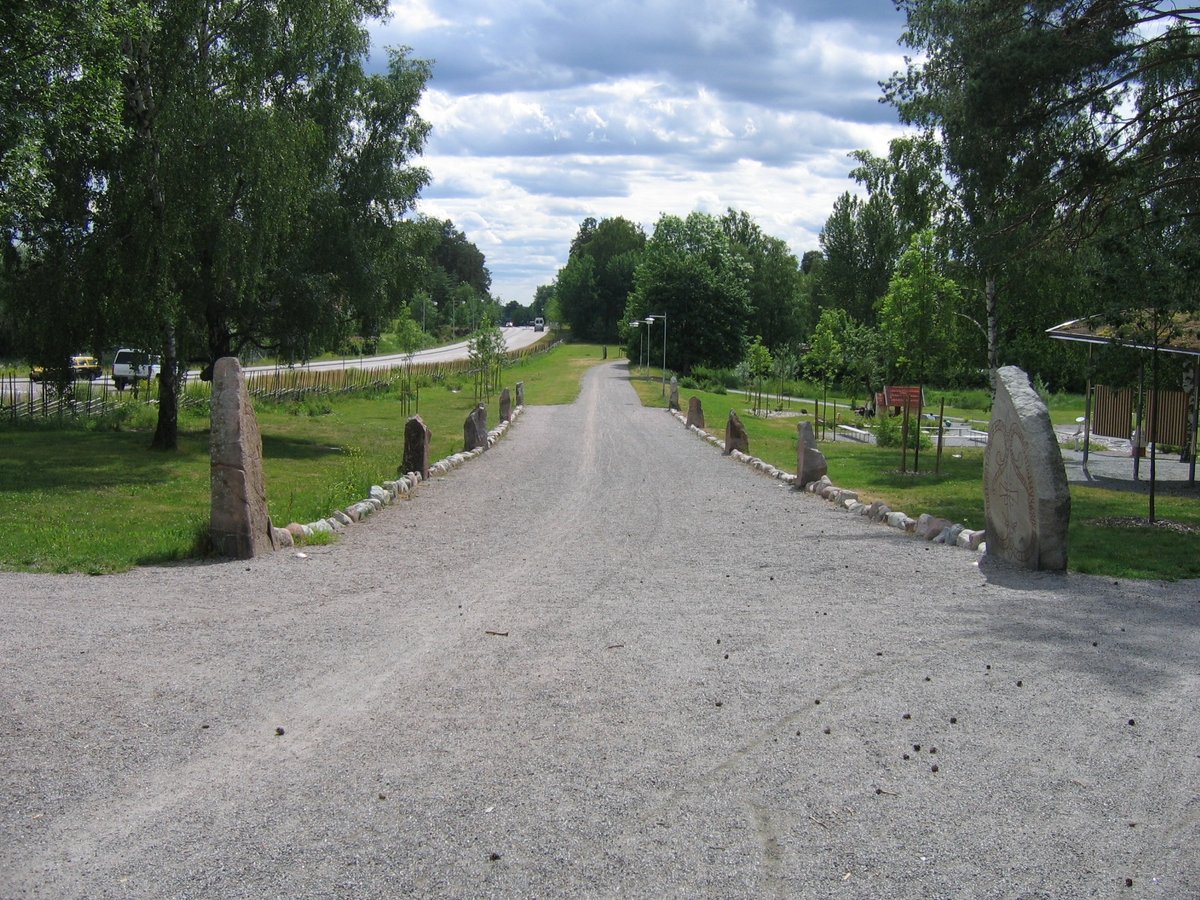
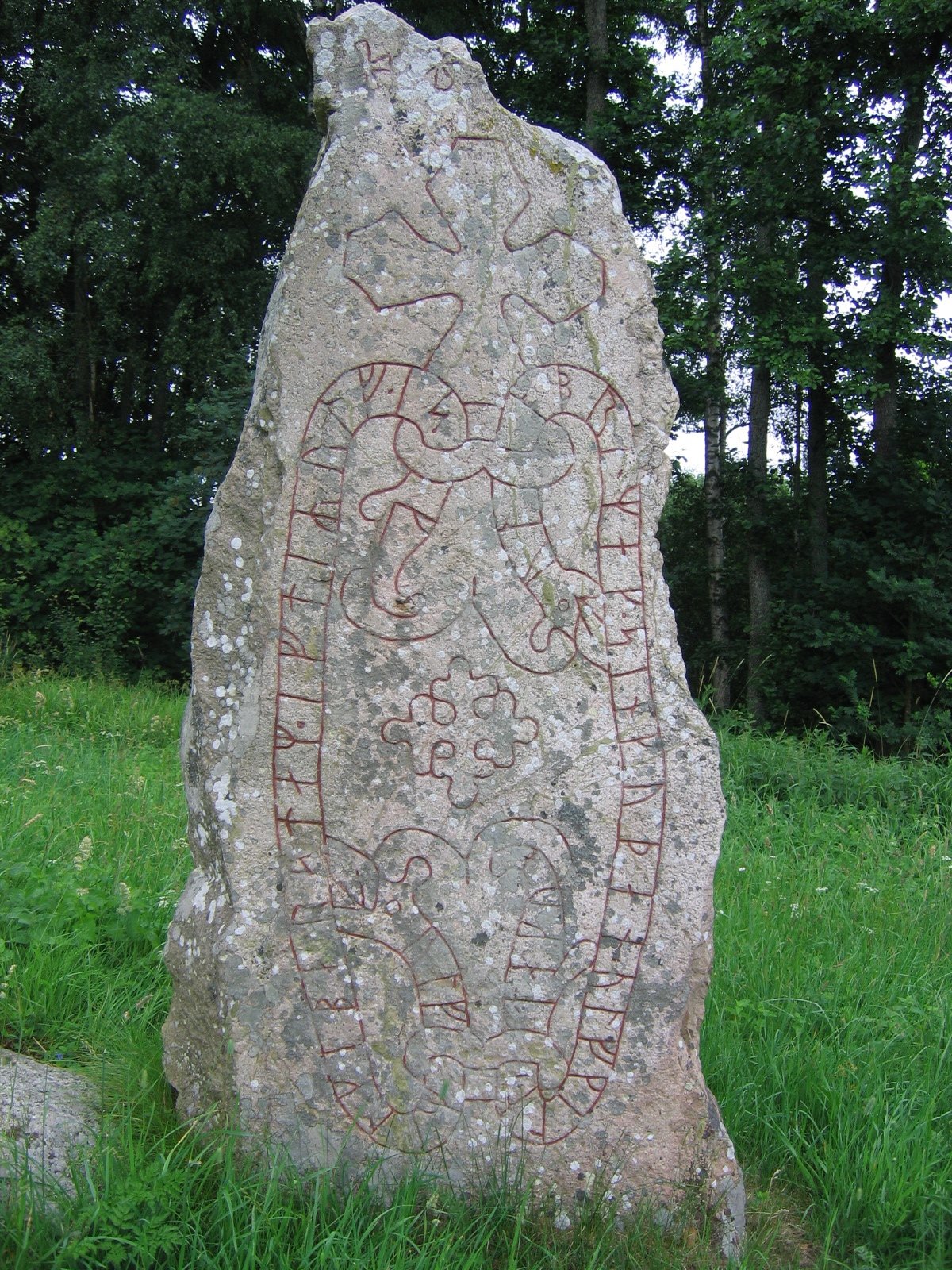
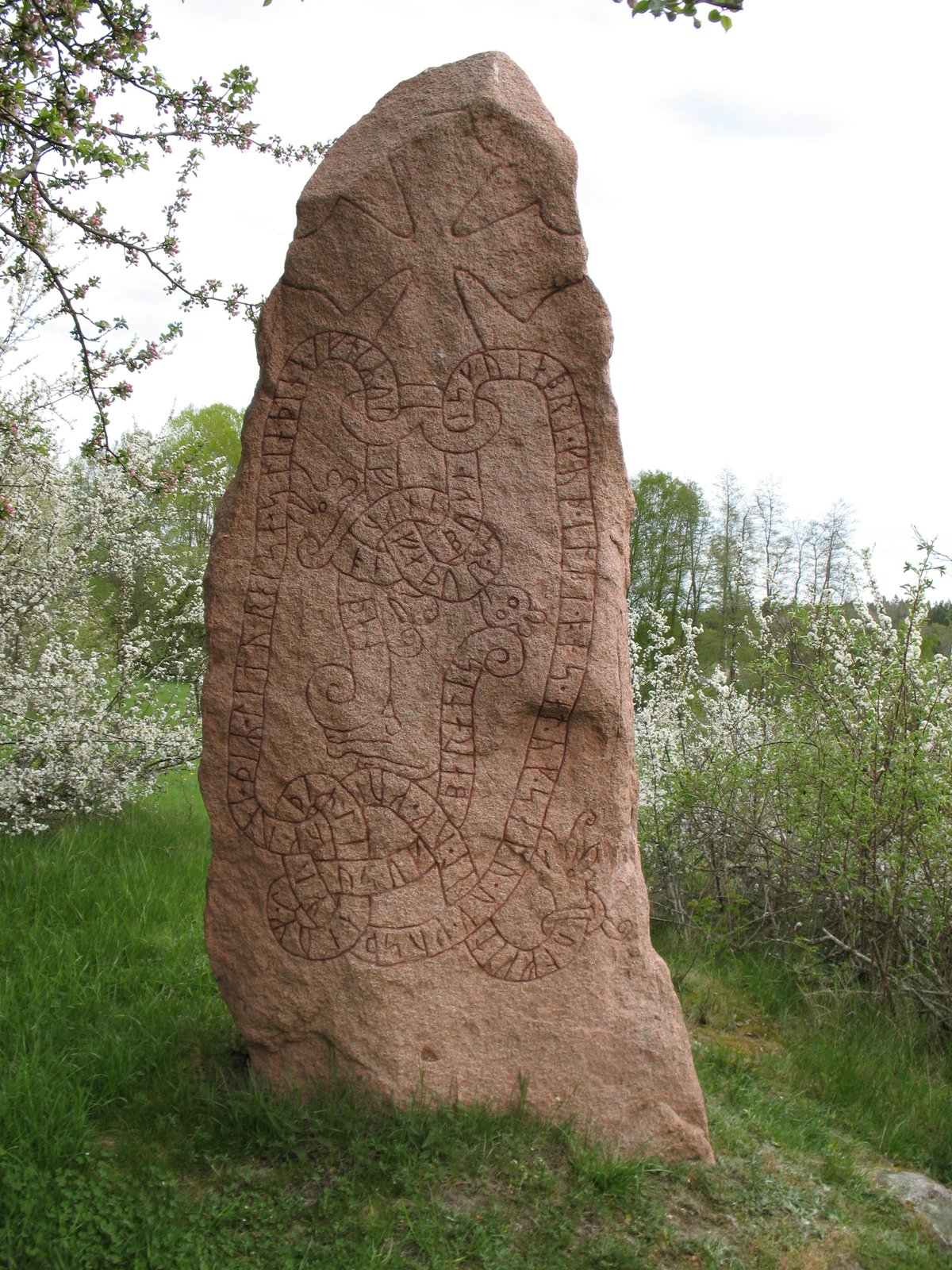
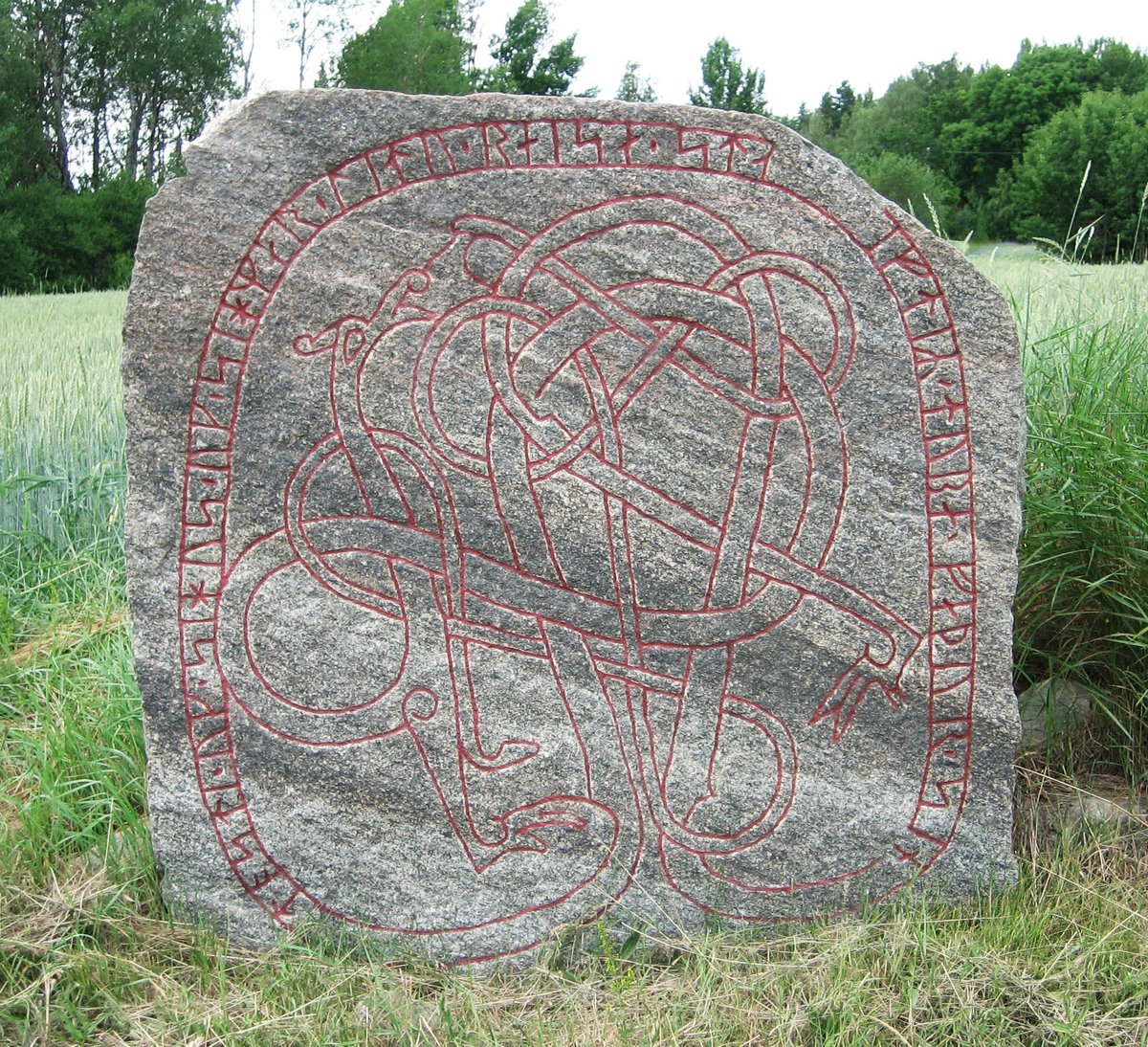
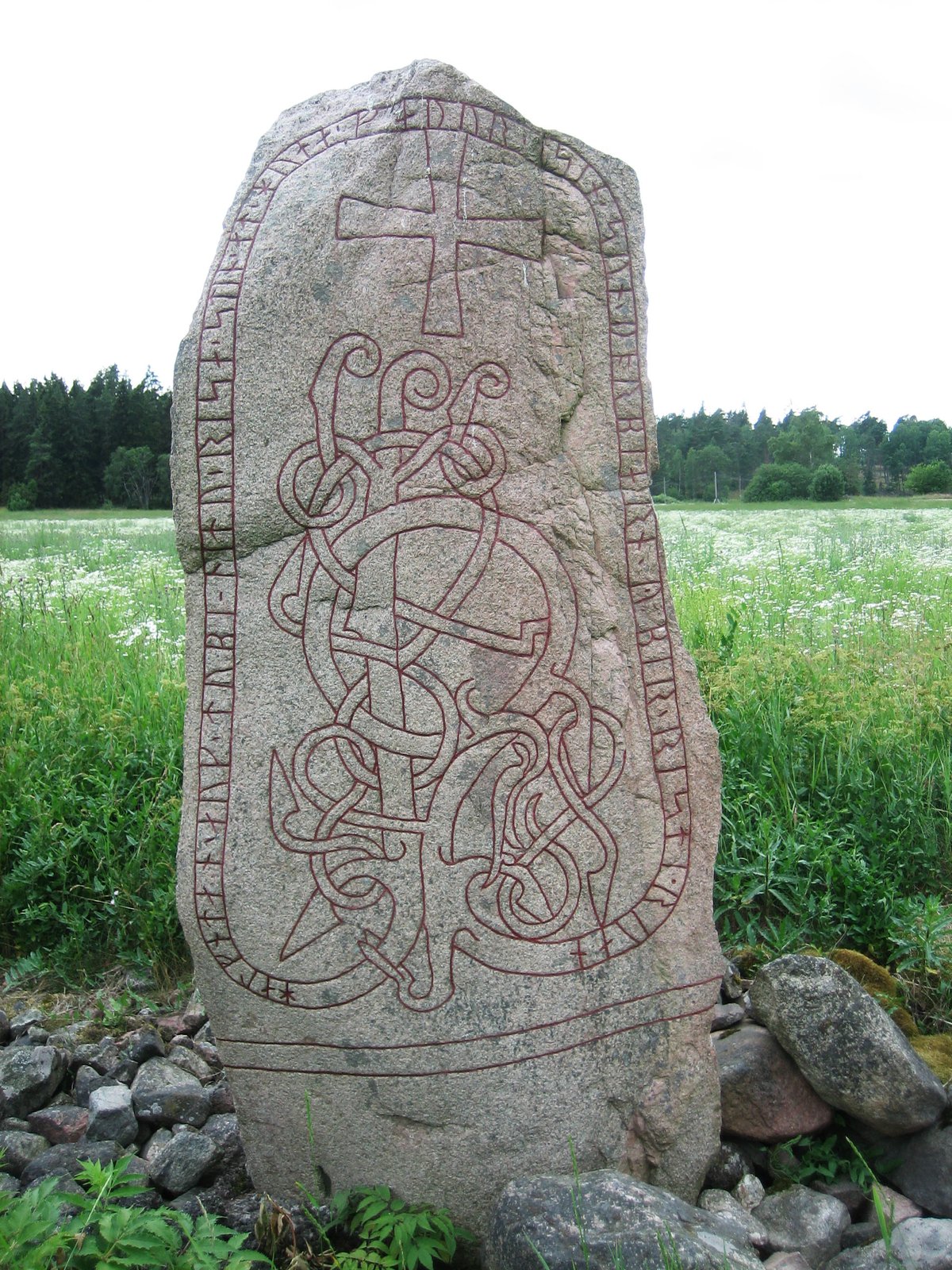
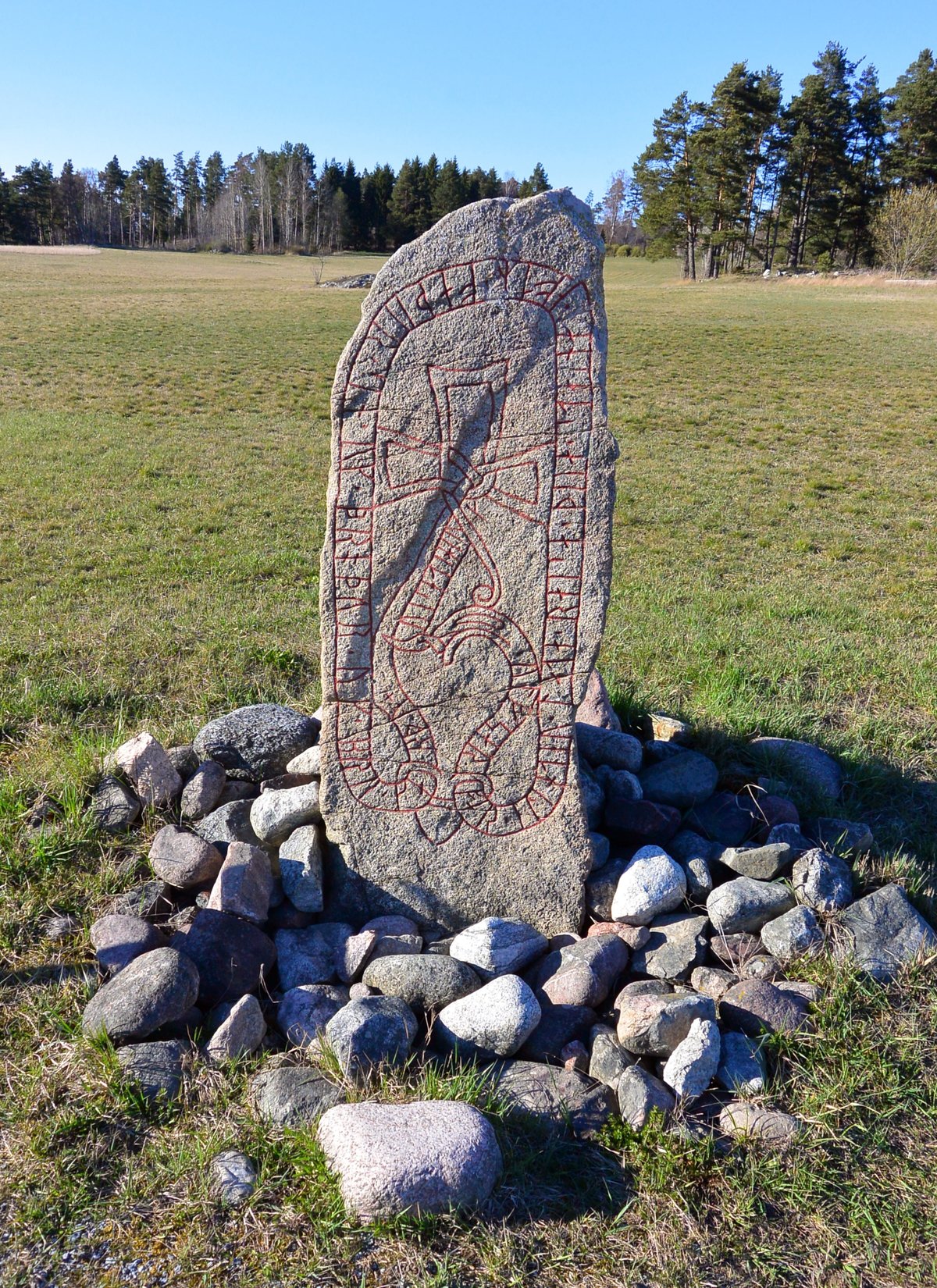
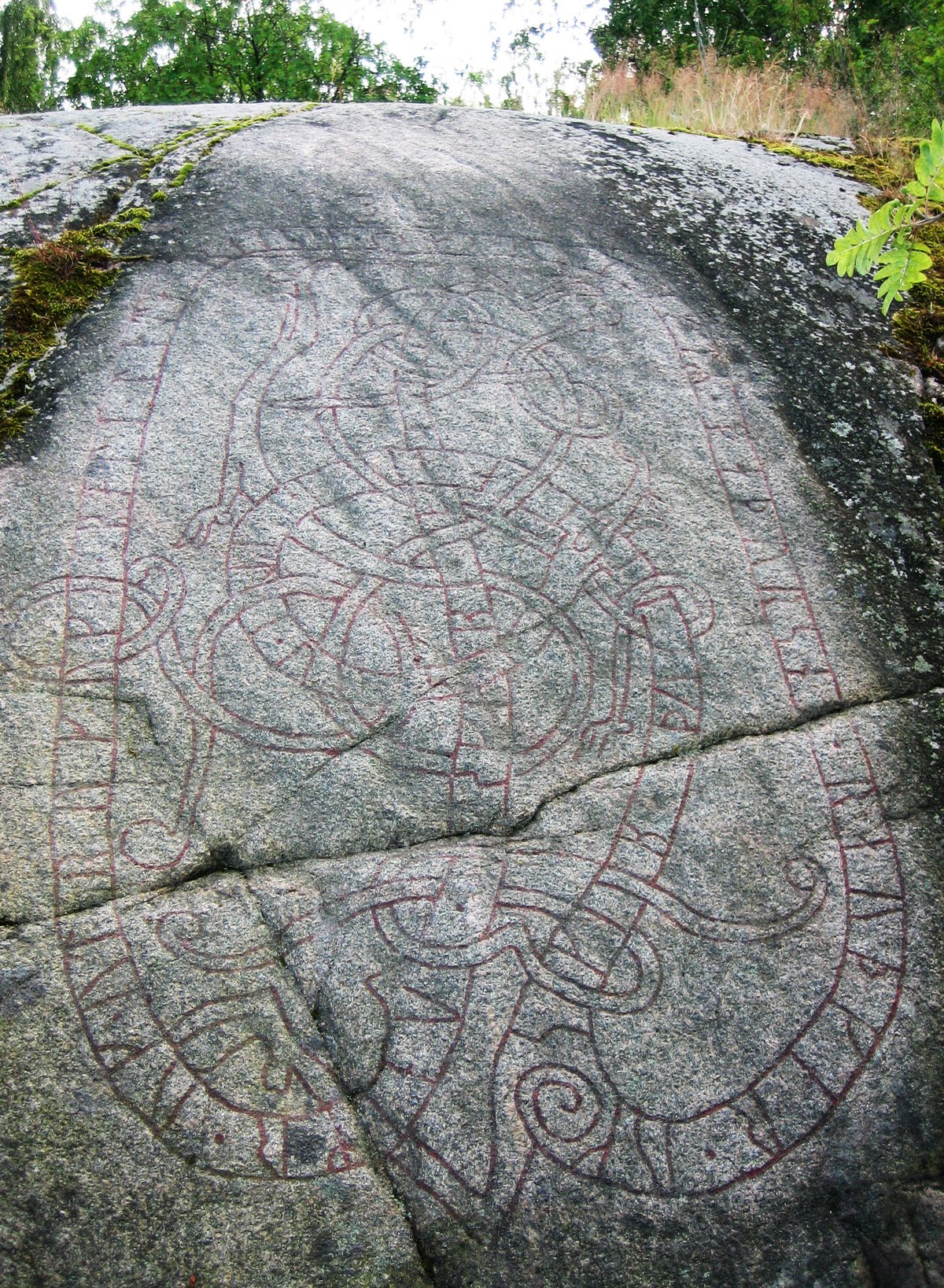
A pair of runestones stands as a unified monument, carrying a single continuous message carved by the runemaster Gunnar. The assembly location was created in the 1010s, a period when the Skålhamra clan, who also had the two Risbyle Runestones made across the lake, owned land on both sides of the water.
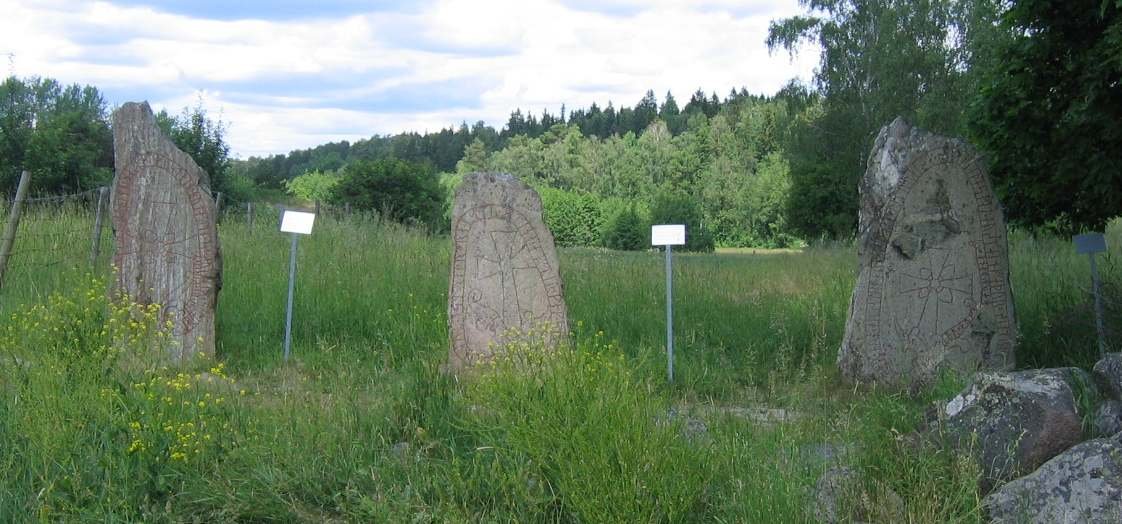
The specific assembly area consists of a rectangular stone layout used for a thing. Scholars disagree on the function of such a Viking Age assembly location; one view is that all people in the vicinity assembled there to reach agreements and to mete out justice, while another view sees the assemblies as meetings for the chieftains only.
The inscriptions suggest that the location had no continuity from Norse paganism. It is possible that the Skålhamra clan created the assembly location in order to have settlements around the lake baptized by priests from Sigtuna. The site features distinct runestone styles, including those with straight ends and those with serpent or animal heads.
Sources: Wikipedia, OpenStreetMap, Wikidata, Wikimedia Commons

Written by Nik Frost
Discuss this with the author and others
No comments yet. Be the first to start the conversation.