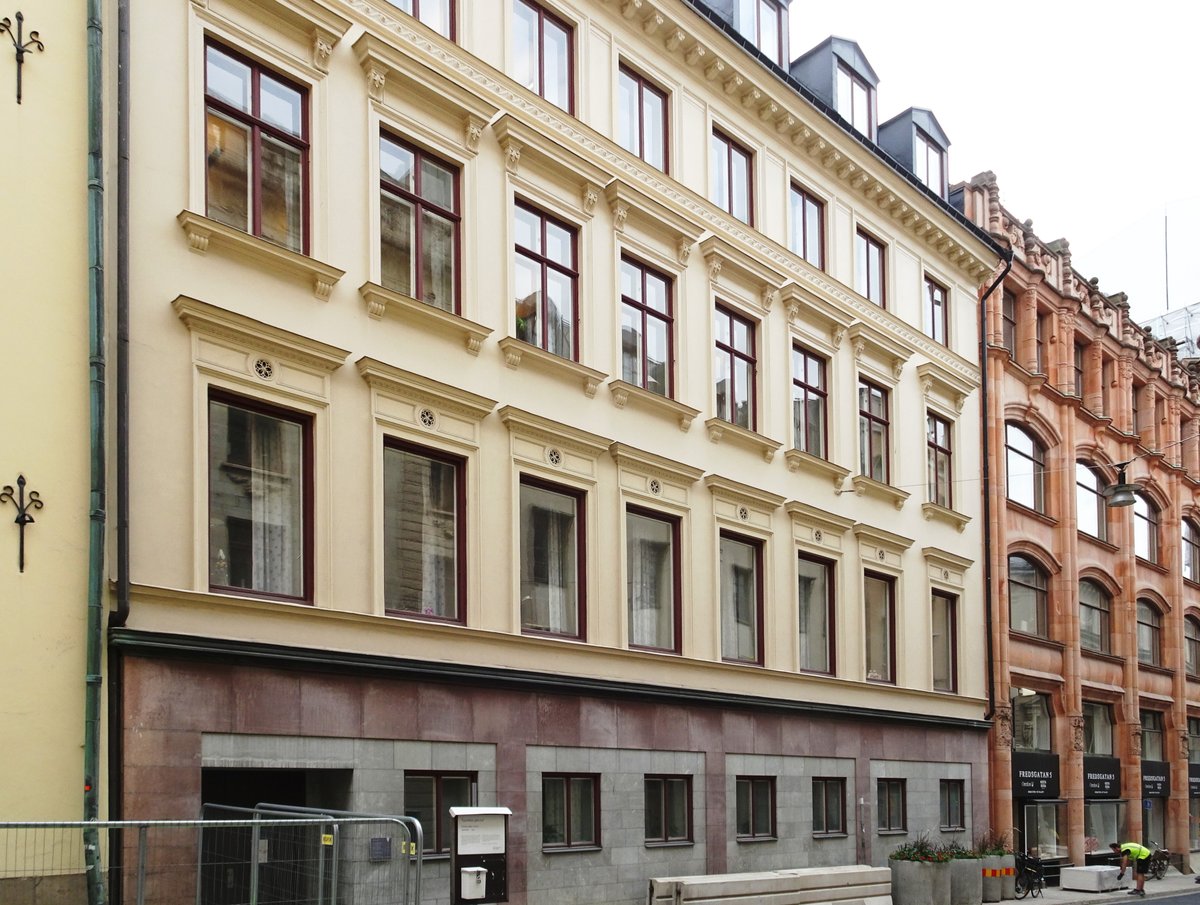

We must look closely at the ground floor of Kumlienska huset to understand its role as an exclusive shop for mainly silk and velvet fabrics. Beginning in 1818 and lasting until the early 1970s, this space was occupied by the firm John V. Löfgren & Co. To stay at the forefront of the Stockholm fashion scene, the shop underwent frequent updates. A notable milestone occurred in 1930 when the shop engaged the firm Allan Chrisensen & Co to perform a major interior overhaul.
We can trace the property's origins back to 1644, yet its current identity was forged during the late 19th century. In 1882, the northern portion of the plot was redesigned by the architects Axel and Hjalmar Kumlien. This period gave the building its name, and the upper floors' facades in neoclassical style still correspond to the Kumlienska renovation. During that same era, the upper levels served as a photo studio for the well-known Stockholm photographer Johannes Jaeger.
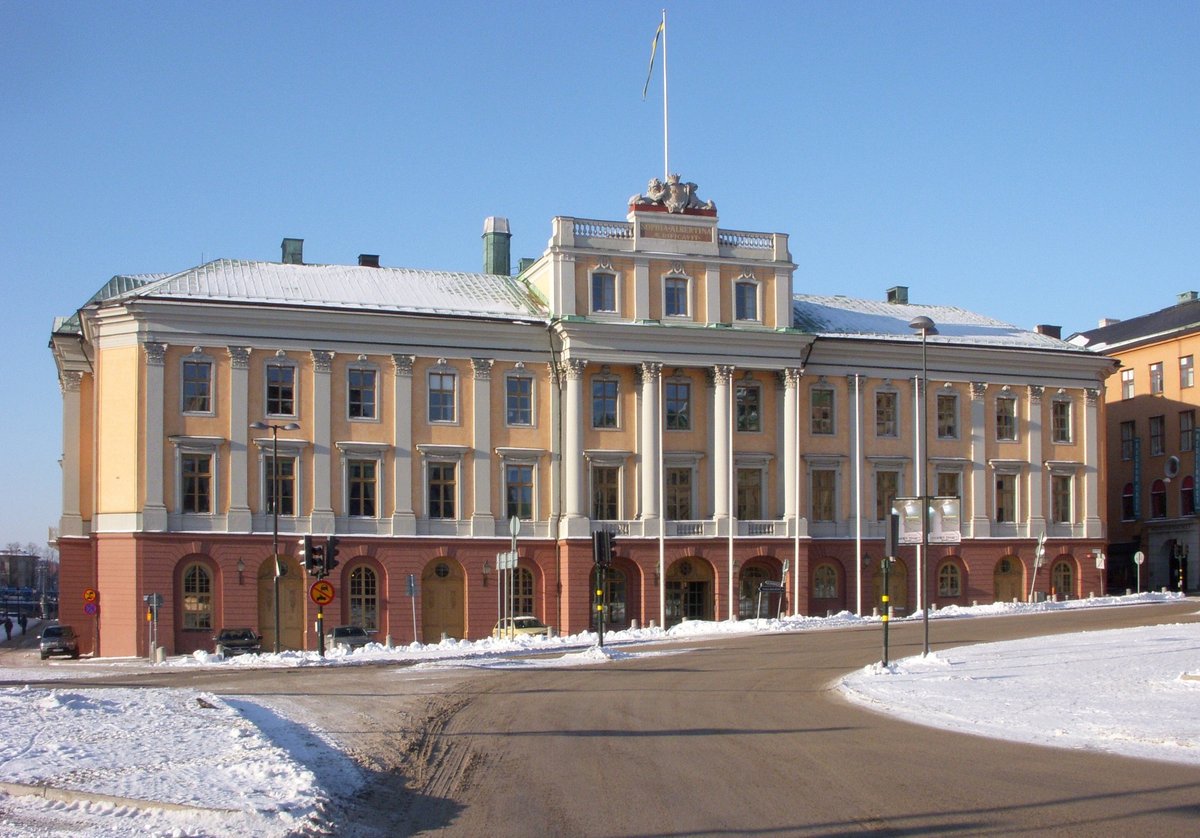
The trajectory of the building shifted toward a utilitarian purpose following state ownership in 1940. Major renovations took place in the 1970s to serve Utrikesdepartementet, which has had premises in the neighboring Arvfurstens palats since 1906. These changes involved simplifying the ground floor facade, removing the large display windows of Löfgren & Co, and clearing the courtyard houses to construct a new archive building. Now managed by Statens Fastighetsverk, the entrance is accessed through Arvfurstens palats.
While the 1970s reconstruction replaced the original interiors, the exterior stands as a vital cultural landmark. Stadsmuseet i Stockholm recognizes its historical and architectural significance as particularly valuable. We are invited to appreciate how these layers of history remain preserved for our study today.
Sources: Wikipedia, OpenStreetMap, Wikidata, Wikimedia Commons


Written by Nik Frost
Discuss this with the author and others
No comments yet. Be the first to start the conversation.