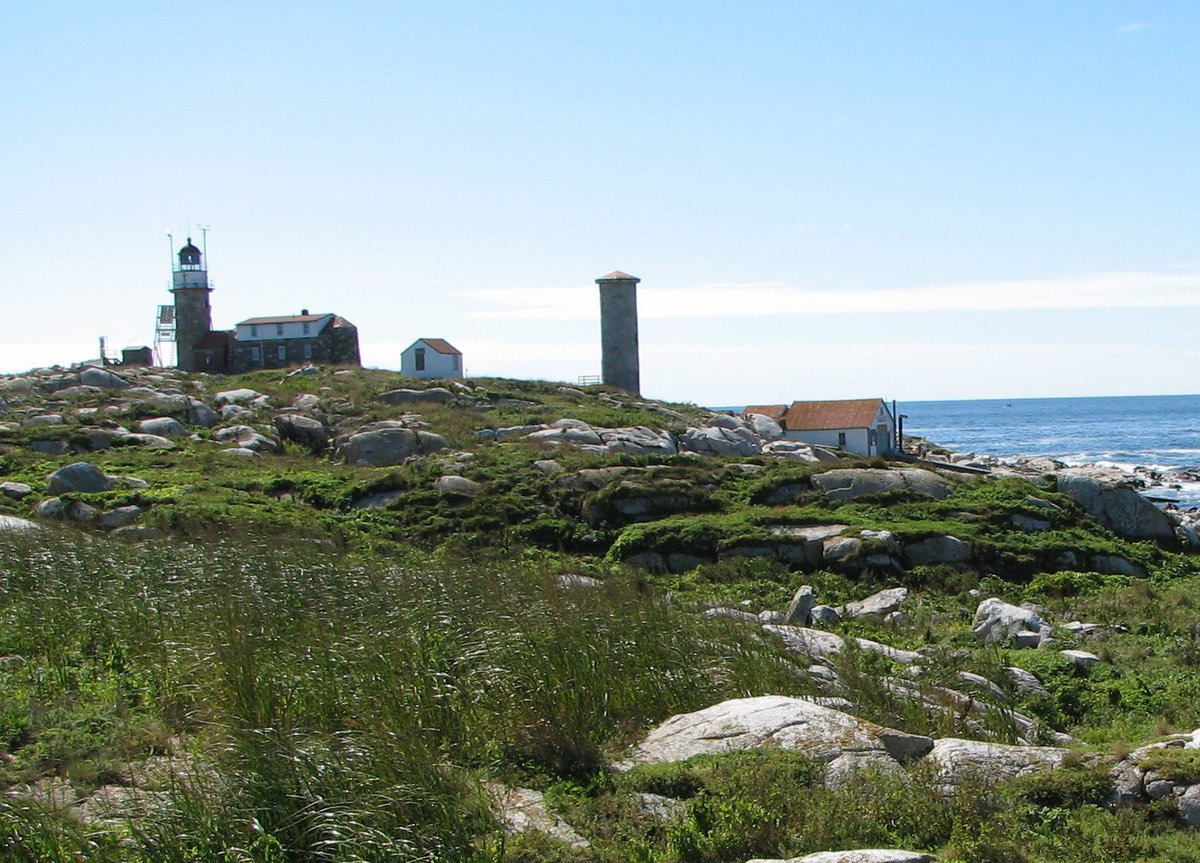
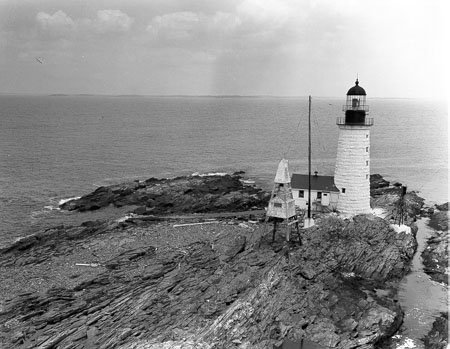
Two towers of ashlar granite stand on a windswept, treeless rock in the Gulf of Maine. They were built in 1857 by Alexander Parris, the man who also designed Boston's Quincy Market. The towers are spaced 180 feet apart to make them more effective.
History eventually decided one was enough. The north light was deactivated in 1924, leaving the southern tower to do the heavy lifting alone. It still functions today with a twelve-sided lantern house, while the other tower has lost its lantern house.
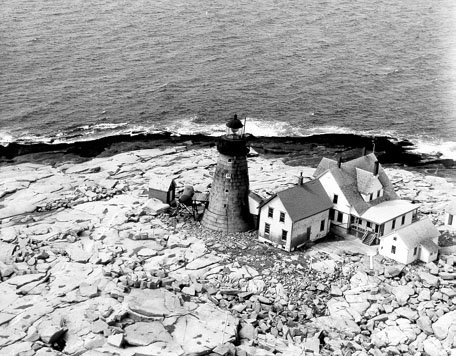
Life here was rarely easy. In the 19th century, a young girl named Abbie Burgess had to maintain the light for weeks while her father was stuck on the mainland by winter storms. Her mother was also very sick at home. It is the kind of isolation that makes the ocean feel very large.
Today, the station is fully automated. A diesel generator was swapped for solar panels in 2007. The rock is no longer just a place for humans to endure; it serves as the southernmost nesting site for Atlantic puffins and common murres.
Sources: Wikipedia, OpenStreetMap, Wikidata, Wikimedia Commons
Written by Leroy
Discuss this with the author and others
No comments yet. Be the first to start the conversation.