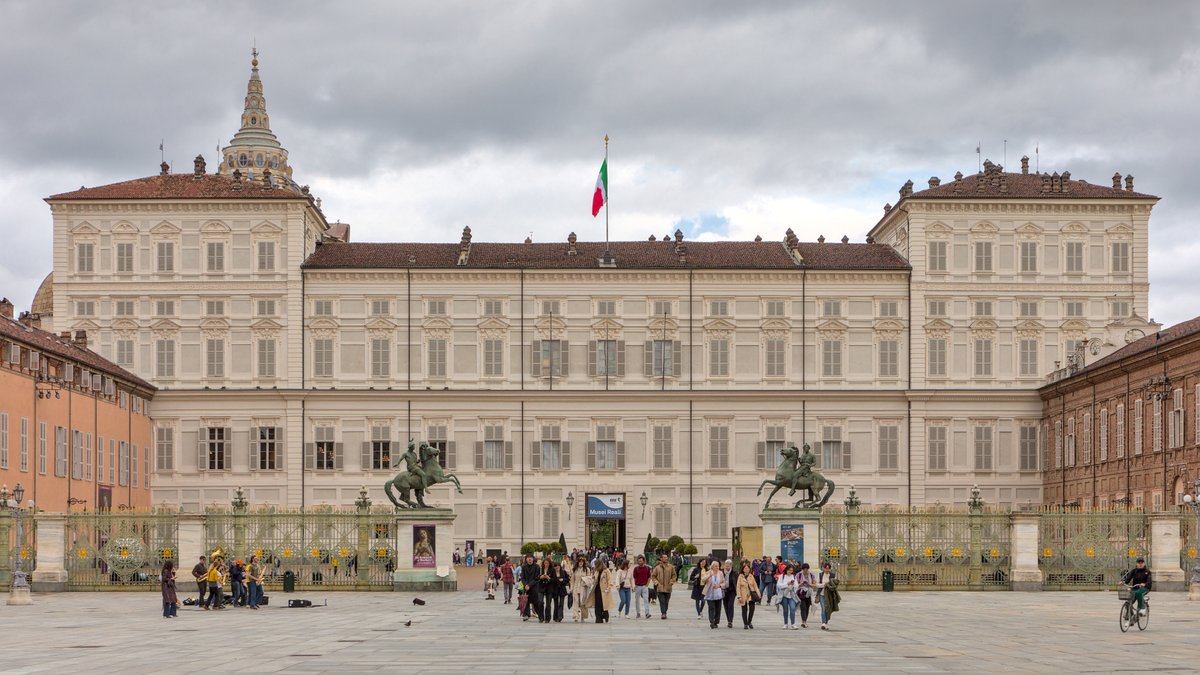

The Royal Palace of Turin, located on Piazzetta Reale 1 in the heart of Turin, Italy, is a marvel of Baroque architecture ([1](https://en.wikipedia.org#cite_ref-1)). Constructed between 1645 and 1997, it serves as a residential museum, showcasing the grandeur and power of the House of Savoy. The palace is part of UNESCO’s World Heritage List, along with 13 other residences of the House of Savoy ([3](https://en.wikipedia.org#cite_ref-3)). The palace was designed to reflect the prestige and authority of the Savoy dynasty, making it one of the most luxurious and strategically important royal residences in Europe ([2](https://www.understandingitaly.com/royal-palace-turin.html)).
The architects, including Ascanio Vittozzi, Carlo di Castellamonte, Amedeo di Castellamonte, Filippo Juvarra, Benedetto Alfieri, and Pelagio Palagi, worked tirelessly to create this architectural masterpiece blending Baroque, Renaissance, and Neoclassical styles ([1](https://en.wikipedia.org#cite_ref-1)). The palace was initially a royal residence until Italy’s unification in 1861, when it became the residence of Italy’s first king, Victor Emmanuel II ([2](https://www.understandingitaly.com/royal-palace-turin.html)).
It continues to serve as a significant symbol of Italian history, particularly during the Risorgimento, the movement that led to the unification of Italian states. Visitors to the Royal Palace of Turin today can witness its opulent interiors, extraordinary art collections, and sprawling gardens. It remains one of Italy’s most iconic and well-preserved symbols of royal heritage, offering a captivating journey through time, showcasing the brilliance and influence of one of Europe’s most illustrious royal families ([2](https://www.understandingitaly.com/royal-palace-turin.html)).
Sources: Wikipedia, OpenStreetMap, Wikidata, Wikimedia Commons
Written by Nicolo Ciampini
Discuss this with the author and others
No comments yet. Be the first to start the conversation.