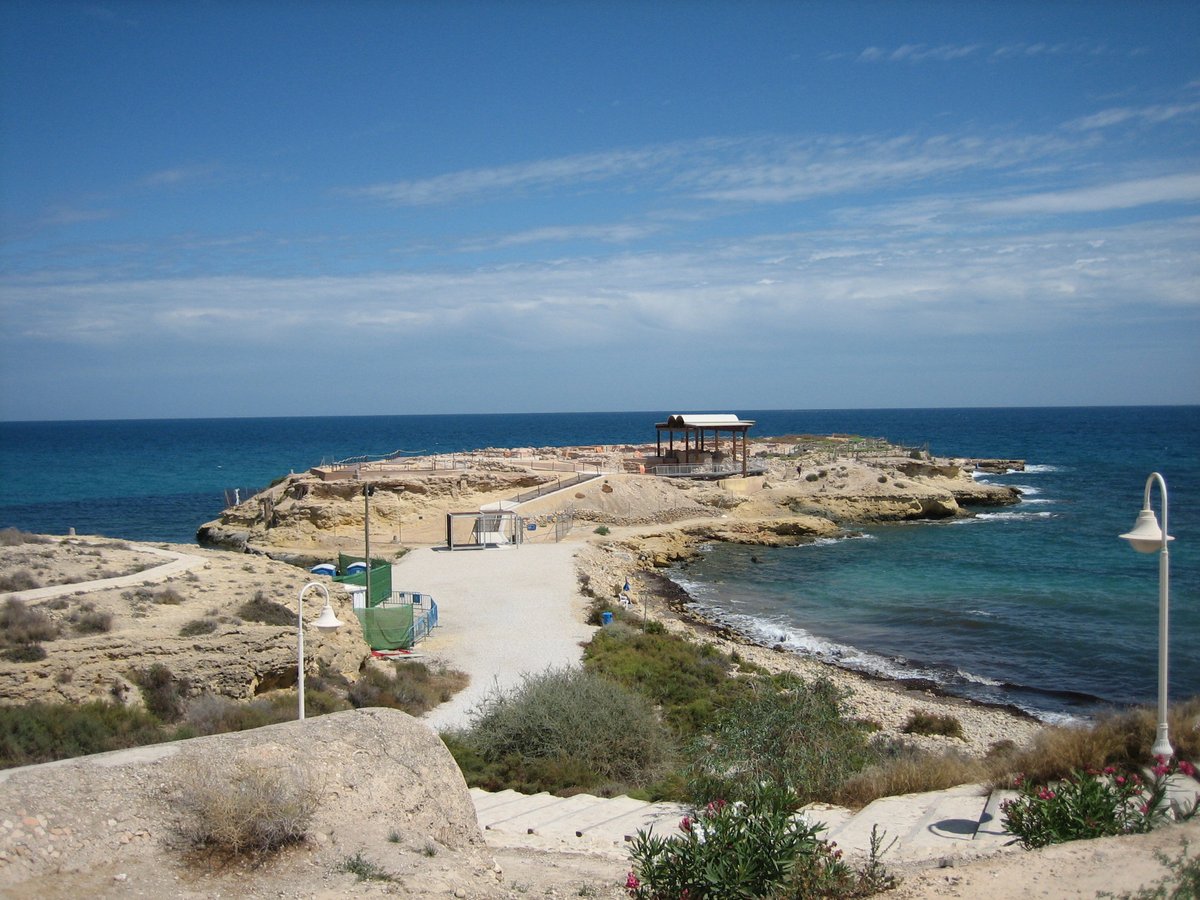

The Roman-era baths with a Queen’s touch, known locally as Banyets de la Reina, are an archaeological site located in the Campello municipality, Alicantí, in the País Valencià, Spain. Originally an island, it was linked to the mainland in 1944. The site has seen multiple occupations from the Bronze Age to the Islamic period, but it was the Romans who built the baths and the small farm village. The baths are assumed to have been used for fish breeding, and they are the feature that earned the site its popular name.
The name 'Banyets de la Reina' is a reference to the belief that they were the baths of a Moorish queen. The Izquierdian Hansa, a trading post, was built nearby in the 4th century BC, with materials including Greek ceramics and luxury items from Punica, Italica, and the workshop of Roses. The Iberian occupation of the site, which started around the mid 5th century BC, experienced a peak in the 4th century BC and was abandoned probably in the 3rd century.
After a brief period of uninhabited, the site was reoccupied during the Roman Imperial and Arab periods, until its probable abandonment in the 11th century.
Sources: Wikipedia, OpenStreetMap, Wikidata, Wikimedia Commons
Written by Nicolo Ciampini
Discuss this with the author and others
No comments yet. Be the first to start the conversation.