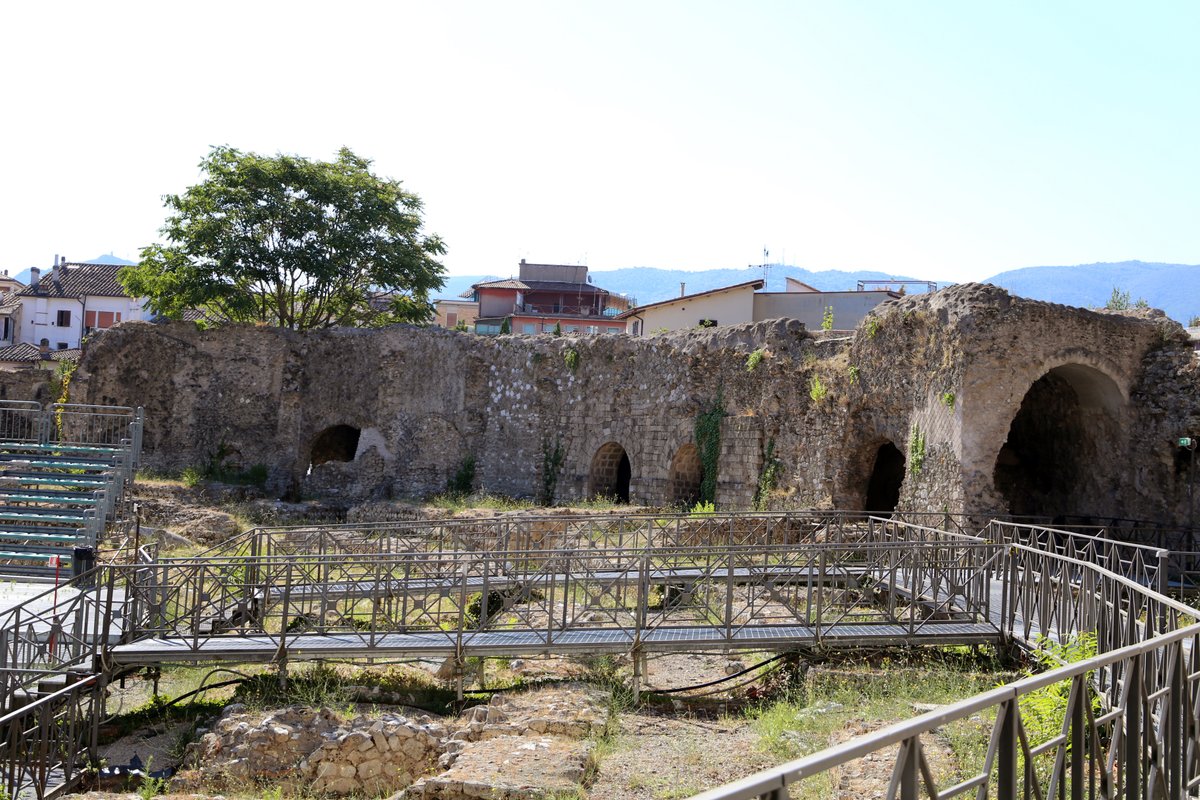

The Roman Amphitheater, known in Latin as Amphitheatrum, is located in the historic center of Terni, at the time called Interamna Nahars. It is the city's main and best-preserved archaeological monument from the Roman era. The structure could hold 10,000 spectators and was built using a style called opus reticulatum bicromo, composed of rows of stone sponge cubilia mixed with local limestone elements.
Although the 17th-century Church of Carmine and the episcopal palace have been built over the site in later centuries, the elliptical shape and central arena are still clearly recognizable. The amphitheater was commissioned by Fausto Titio Liberale and was built approximately in 30 or 32 AD. An inscription in marble from that time commemorates the foundation of Terni, dating back to 672 BC, and a dedication to the providence of the emperor.
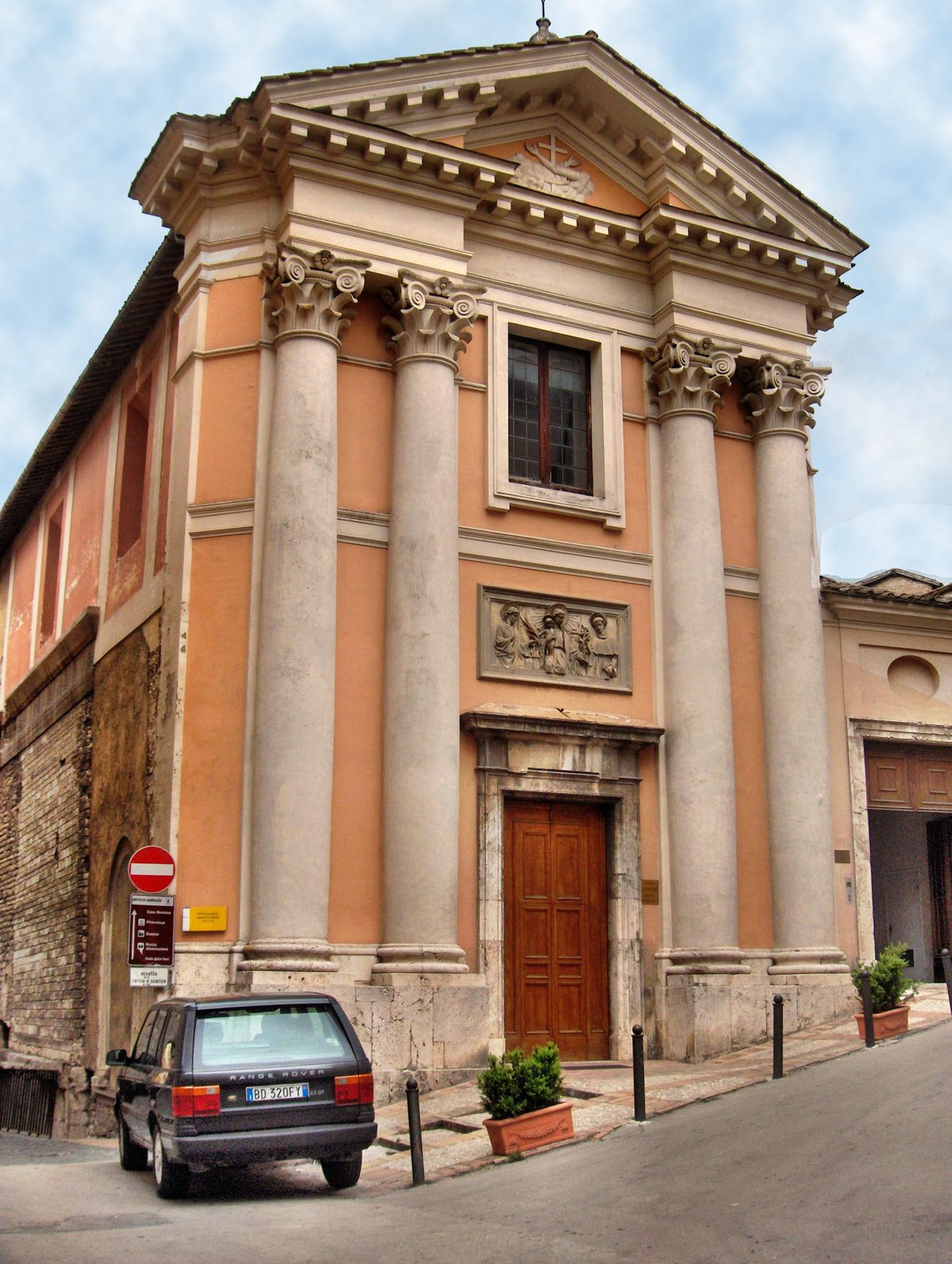
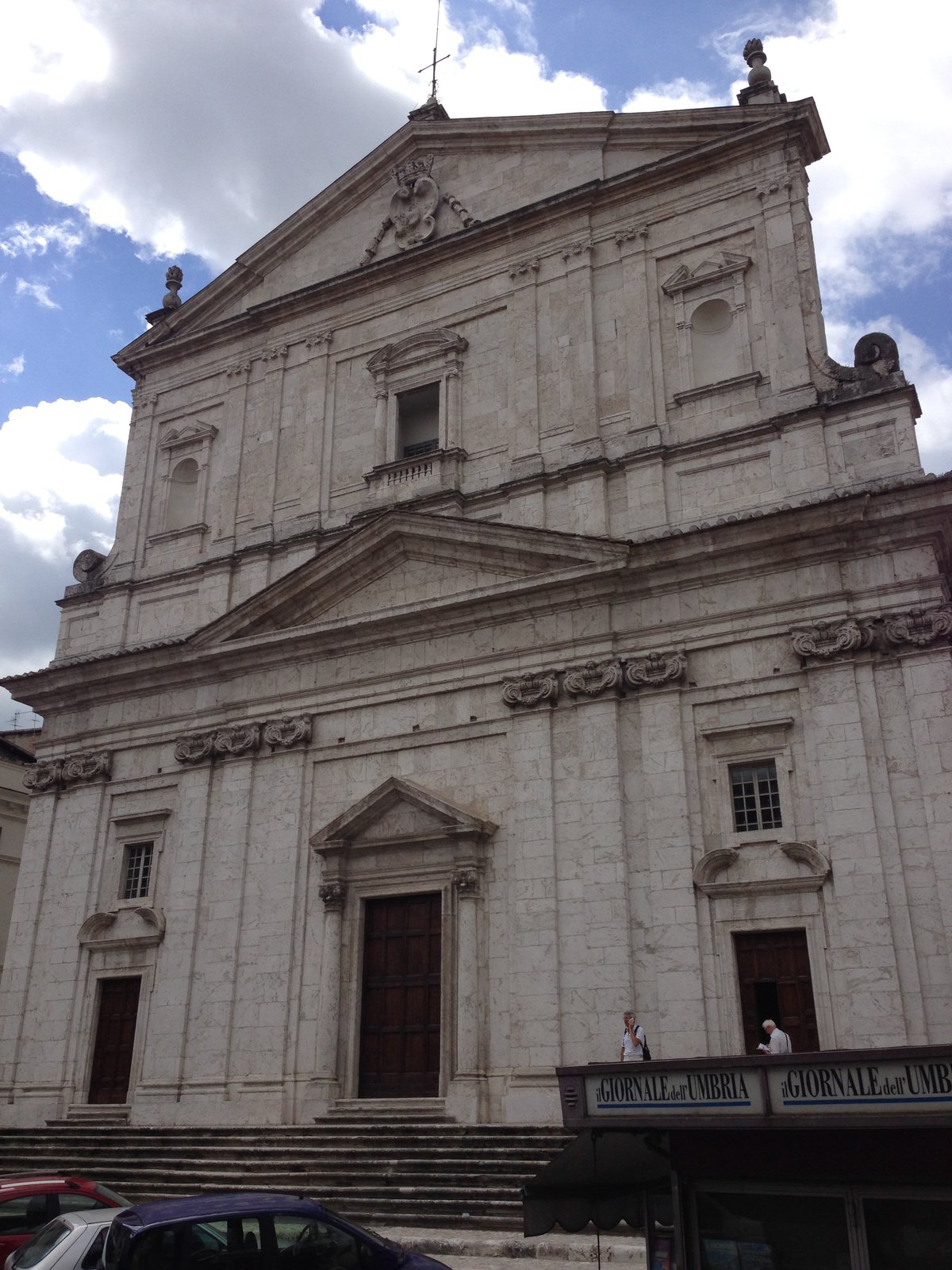
Today, the amphitheater is nestled between the 17th-century Church of Carmine, the public gardens of the Passeggiata, and the Duomo. The facade features characteristic half-pillars of sponge blocks delimiting alternately closed and open spans with arches. A copy of the original inscription is currently set into the western wall of the amphitheater, while the original is exhibited in the archaeological museum of Terni.
Sources: Wikipedia, OpenStreetMap, Wikidata, Wikimedia Commons
Written by Nicolo Ciampini
Discuss this with the author and others
No comments yet. Be the first to start the conversation.