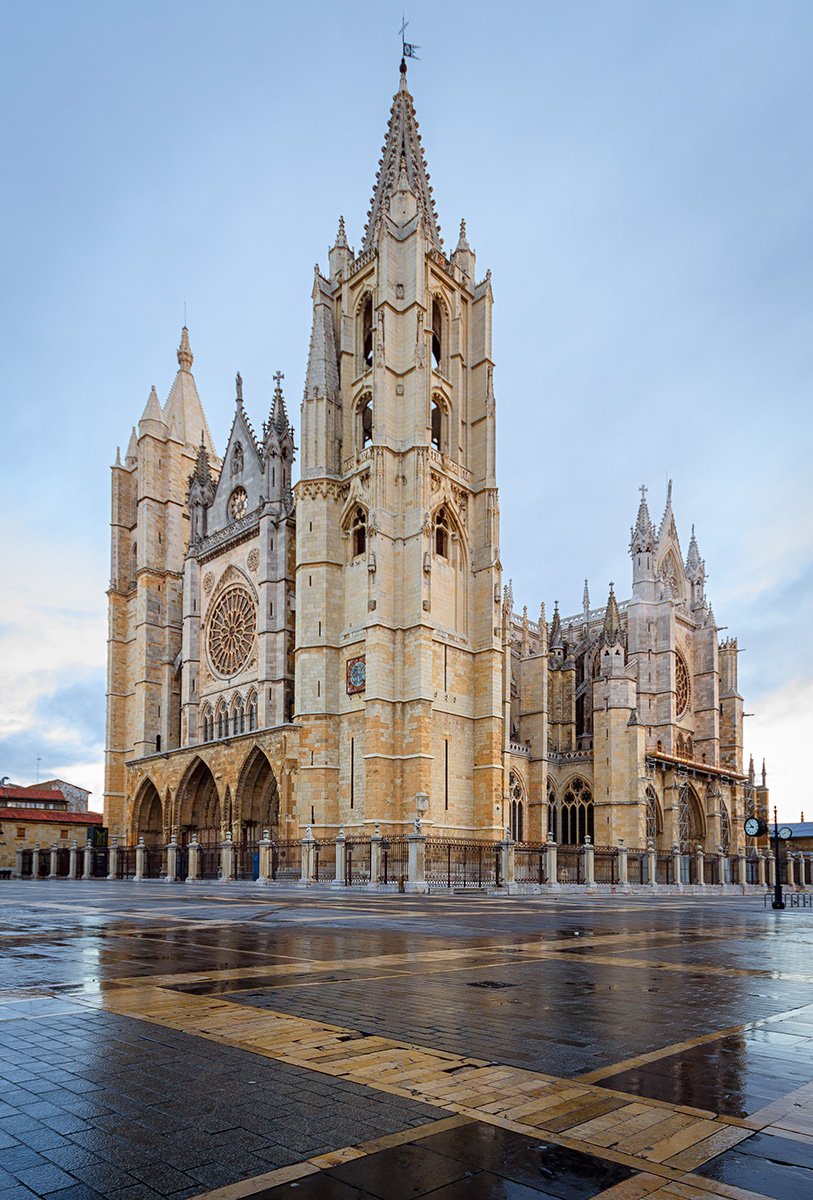

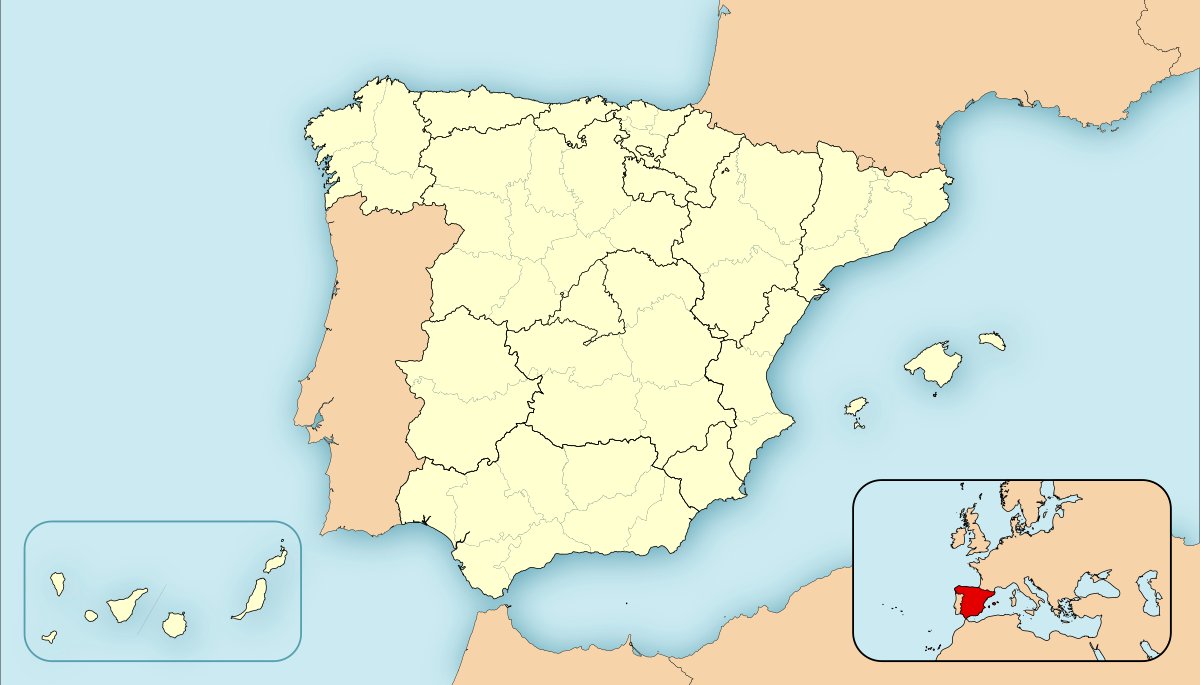
Located in the city of León, the Catedral de Santa María de Regla is known as the Pulchra Leonina, which means 'Beautiful Leonese'. Initiated in the 13th century, the cathedral is a masterpiece of the Gothic style with heavy French influences. Designed by Master Mason Enrique, the building was completed by the mid-15th century and is noted for taking the 'dematerialization' of Gothic art to the extreme, reducing walls to their minimum expression to be replaced by stained glass.
The church houses nearly 1,800 square meters of stained glass windows, the great majority of which date from the thirteenth to the fifteenth century. This makes it one of the largest collections of medieval stained glass in the world. Notable features include the Renaissance retrochoir with alabaster sculptures by Jusquin, Copin of Holland, and Juan de Malinas, as well as a Plateresque iron grillwork screen in the wall behind the sepulcher of King Ordoño.
The Cathedral Museum houses a large collection of sacred art, including almost 1,500 pieces. These include 50 Romanesque sculptures of the Virgin, works by Juan de Juni, Gregorio Fernández, and Mateo Cerezo, a triptych from the School of Antwerp, and a Mozarabic bible. The archives also contain the Nodicia de Kesos, the first manuscript in the Leonese language. The cathedral remains one of the three most important cathedrals on the Way of Saint James.
Sources: Wikipedia, OpenStreetMap, Wikidata, Wikimedia Commons
Written by Nicolo Ciampini
Discuss this with the author and others
No comments yet. Be the first to start the conversation.