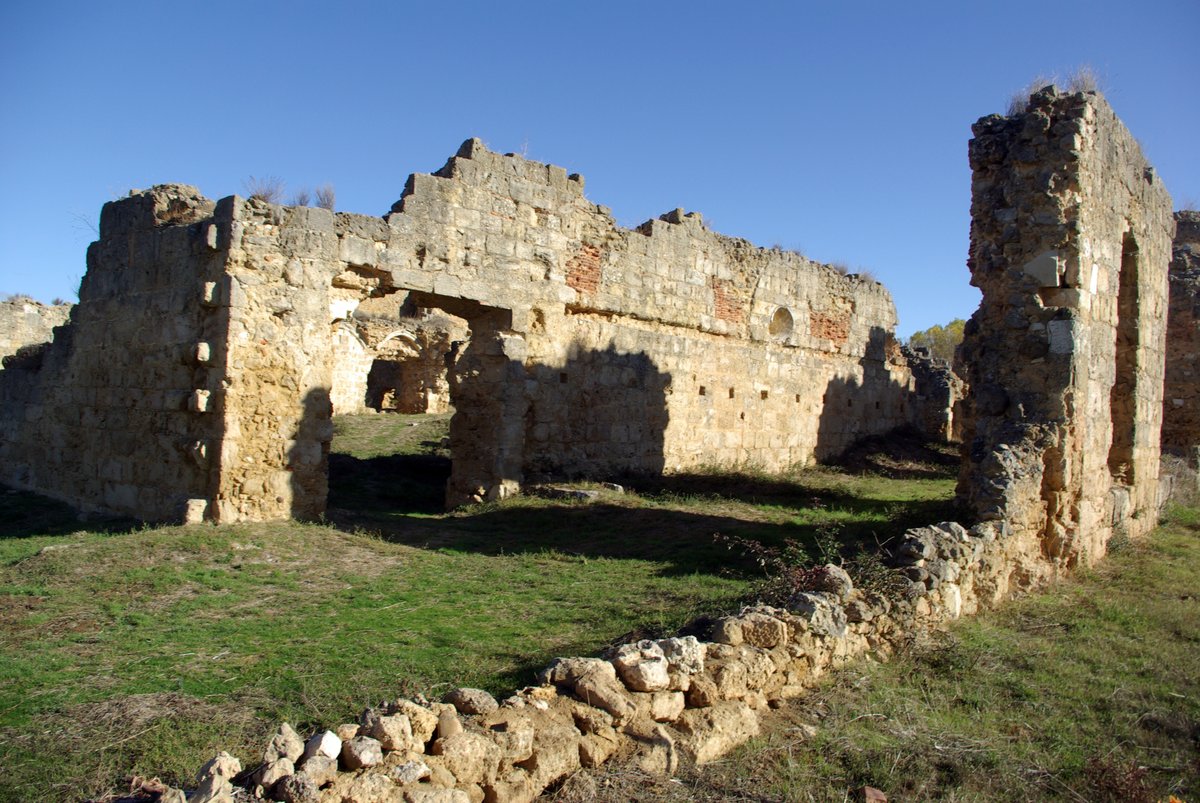

The Monastery of San Pedro de Eslonza, in Gradefes, dates back to the ninth century. King García I of León founded it in 912, making it the second most important monastery in the province, after the Monastery of San Benito in Sahagún. The Church of San Juan de Berbío, in Piloña council in Asturias, Spain, was donated by the Infanta Doña Urraca to the Monastery of San Pedro de Eslonza in 1099. The monastery met an unfortunate end in 988 when it was destroyed by Al-Mansur Ibn Abi Aamir, the Moorish ruler.
It was restored nine years later by Urraca of Zamora. The edifice fell into ruin once again in the 16th century, prompting extensive restorations that added three new Renaissance portals. The main façade was also added in Baroque style, but its niches once housing statues of saints now stand empty. Despite being declared a national monument in 1931, the monastery’s decline continued, with the loss of many of its relics and treasures.
Sources: Wikipedia, OpenStreetMap, Wikidata, Wikimedia Commons
Written by Nicolo Ciampini
Discuss this with the author and others
No comments yet. Be the first to start the conversation.