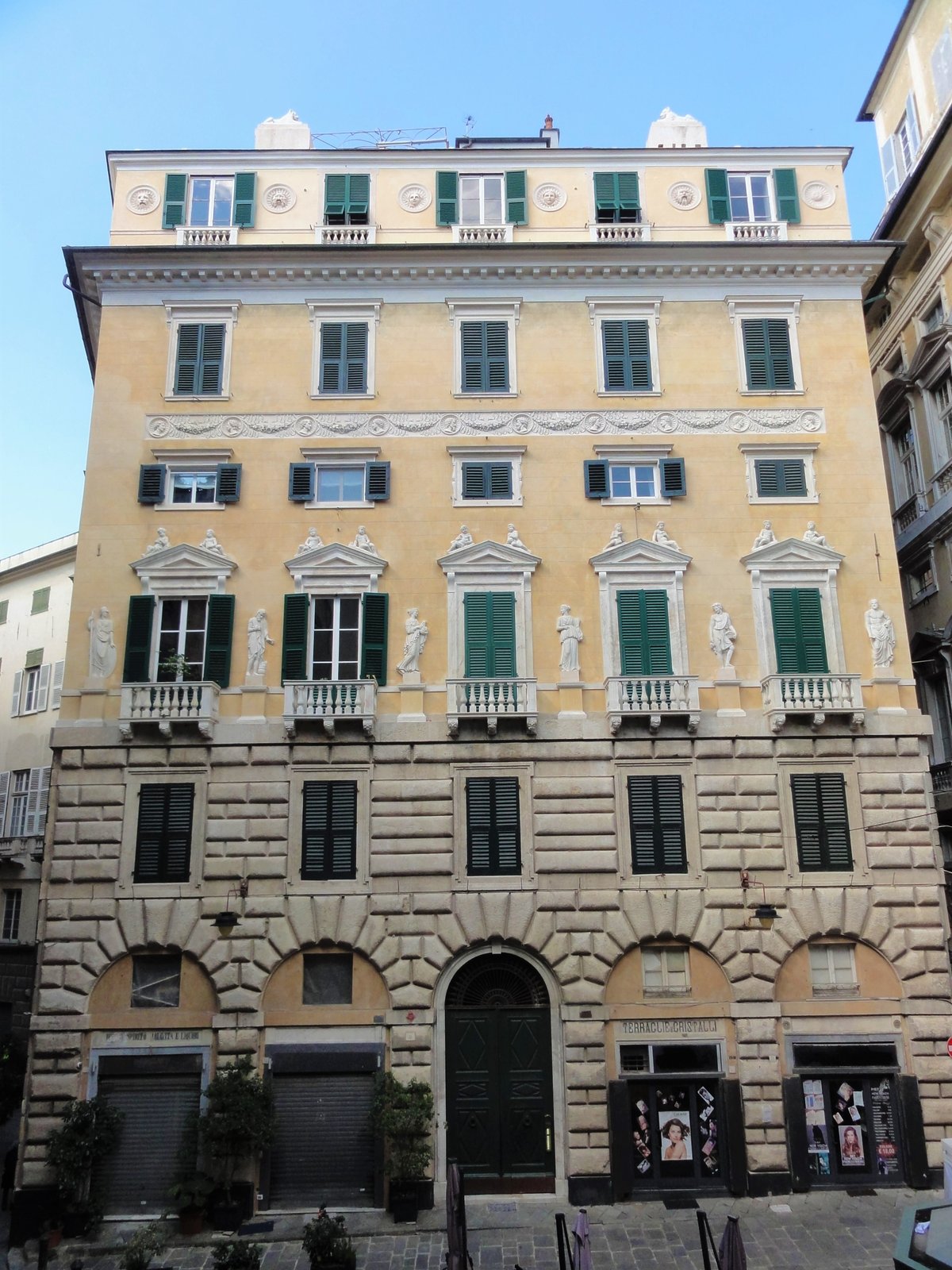

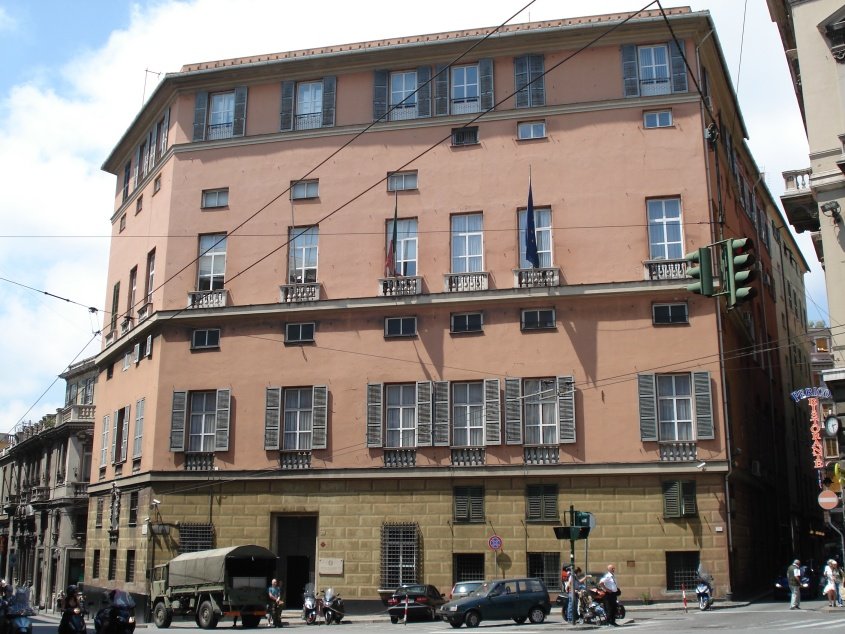
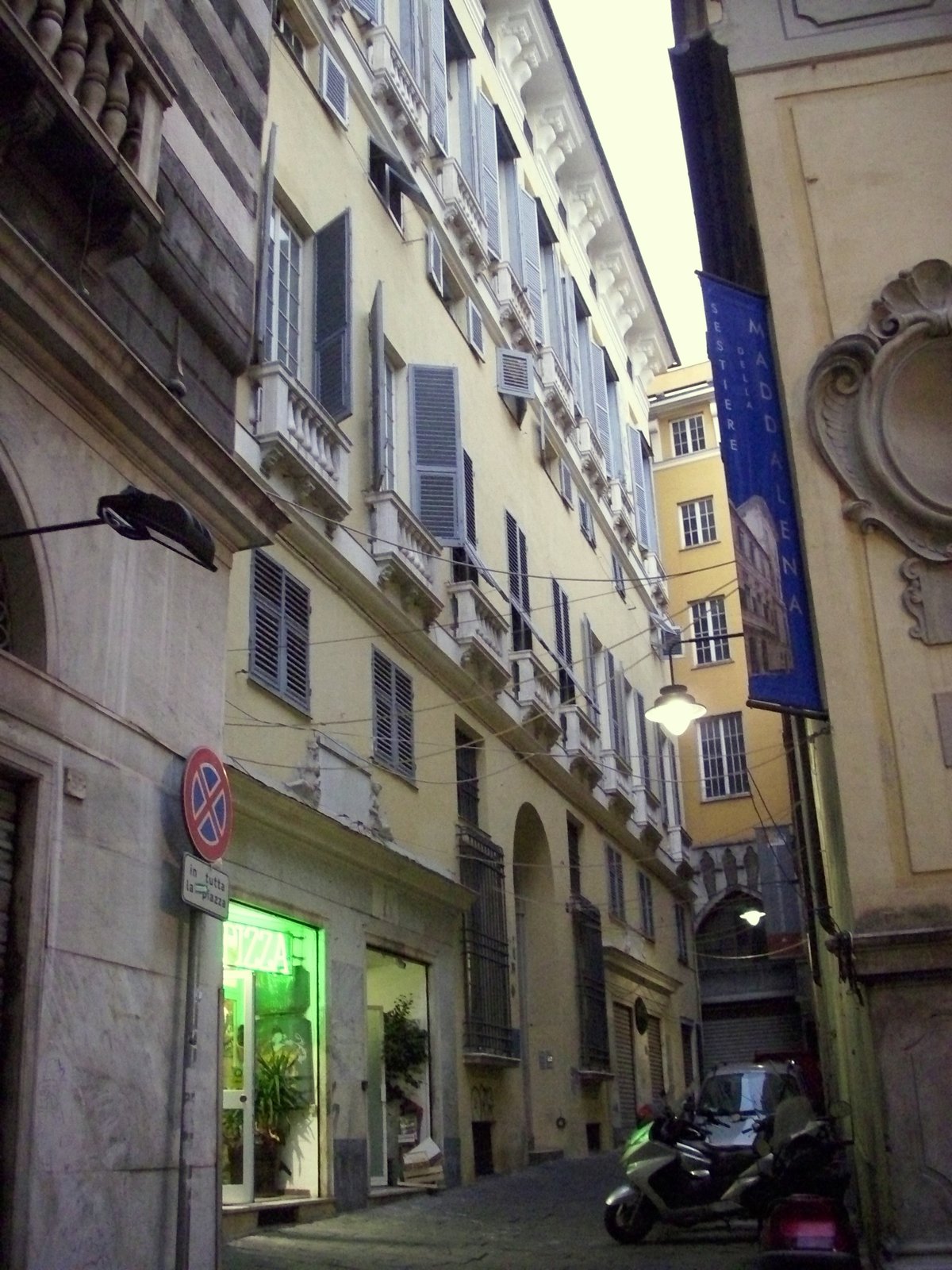
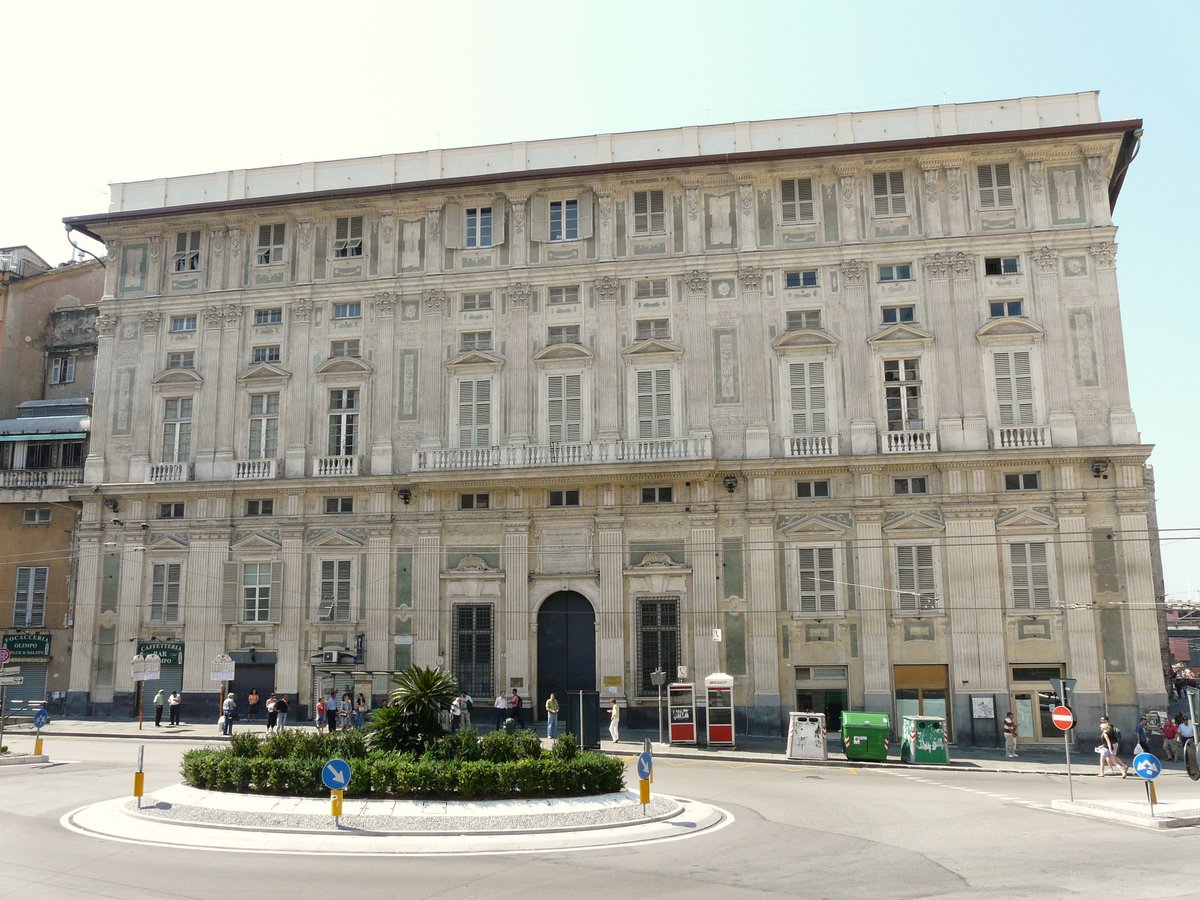
The Palazzo Cipriano Pallavicini, located at Piazza Fossatello 2 in Genoa, is one of the 42 palaces included in the UNESCO World Heritage site Le Strade Nuove e il Sistema dei Palazzi dei Rolli di Genova. Designated as a UNESCO World Heritage site on 13 July 2006, the site dates back to the 15th century when a residential construction consisting of two buildings side by side with water cisterns and workshops was erected.
In 1539, the crossroads where the building stood was transformed into a piazza by demolishing surrounding hovels. At this time, Cipriano Pallavicini - who was elected archbishop of Genoa in 1567 - along with his brothers Antoniotto and Gerolamo commissioned an anonymous author to design a new façade. This design was inspired by the Roman Palazzo Caprini by Donato Bramante.
Through the centuries, ownership passed to the Grillo family in 1713 and the Saporiti family in 1718, before going to Federico Rayper from Ticino in 1840. Rayper, a supplier to the Navy of the Kingdom of Sardinia, received permission to raise the building by two storeys. He carried out an invasive general renovation that emptied almost the entire shell, resulting in a building divided into flats with neoclassical decoration.
Sources: Wikipedia, OpenStreetMap, Wikidata, Wikimedia Commons
Written by Nicolo Ciampini
Discuss this with the author and others
No comments yet. Be the first to start the conversation.