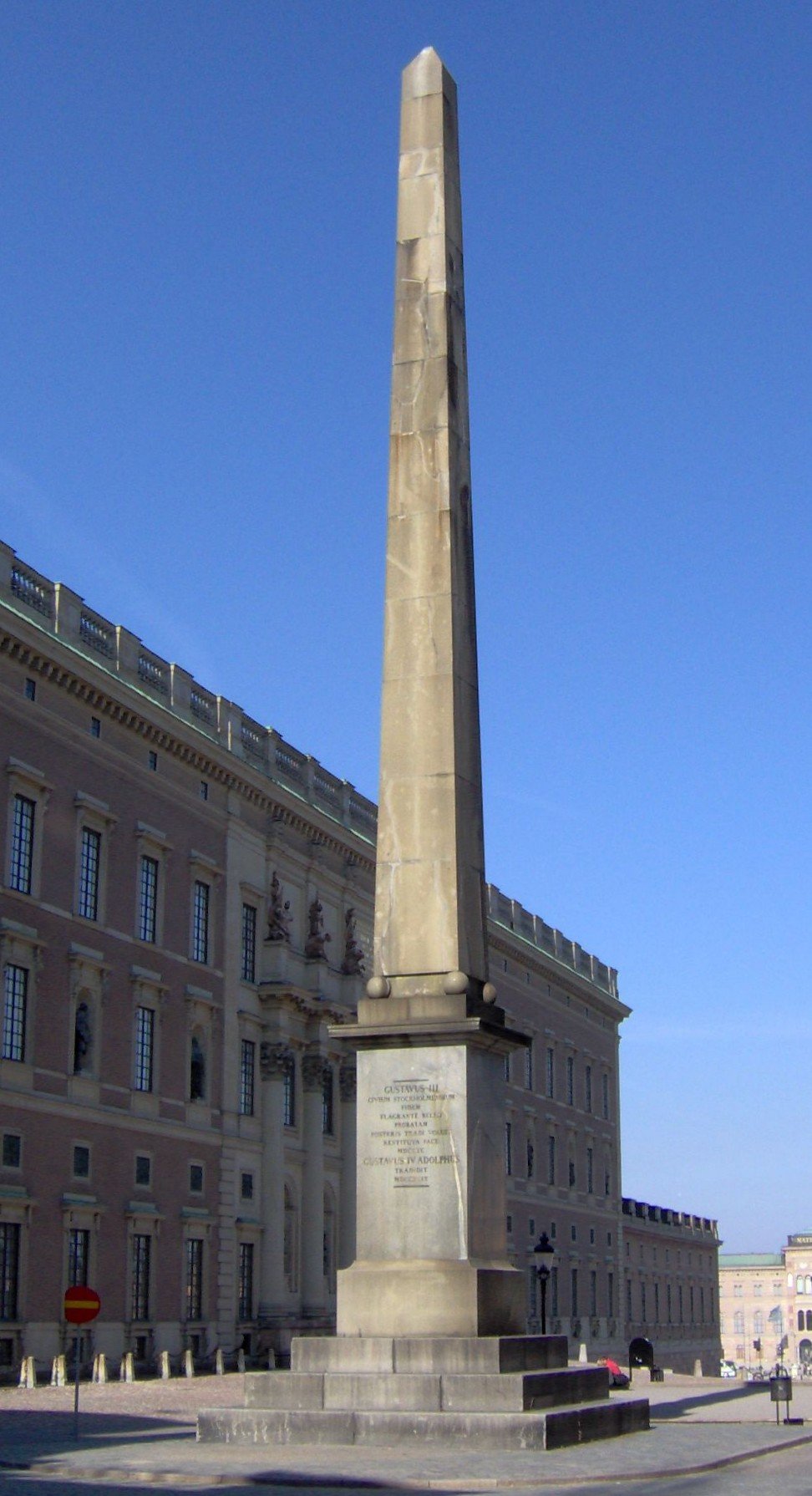

At nearly 30 metres high, the Obelisk at Slottsbacken is a prominent feature of the Old Town in Stockholm. Originally unveiled in 1800, it commemorates the deeds of Stockholm's citizenry during the Russo-Swedish War of 1788-1790. It is considered to be the very centre point of the Swedish capital city.
The original structure, weighing 150 tons, was made of 17 different pieces of granite. However, due to age - and weather-related damage, it was replaced in 2020 with a new structure that weighs 280 tons and is made of solid stone rather than stone drums.
The Obelisk's history is as intriguing as its design. It was commissioned by King Gustav III to show his gratitude to the burghers of Stockholm, unveiled by King Gustav IV Adolf, and features a neo-Egyptian design by the artist Louis Jean Desprez. Gustav III died before the monument was finished, and the construction was considered complicated since the obelisk was made of many heavy stone boulders.
In 2017, the original Obelisk was dismantled for repair and restoration work. The materials for the new Obelisk were quarried from an area near Hunnebostrand and processed by stonemason Ted Zaar at Zaarstone in Vilshult. From the Obelisk, all street numbers in Stockholm have their common origin - with only a handful of exceptions.
Sources: Wikipedia, OpenStreetMap, Wikidata, Wikimedia Commons




Written by Nik Frost
Discuss this with the author and others
No comments yet. Be the first to start the conversation.