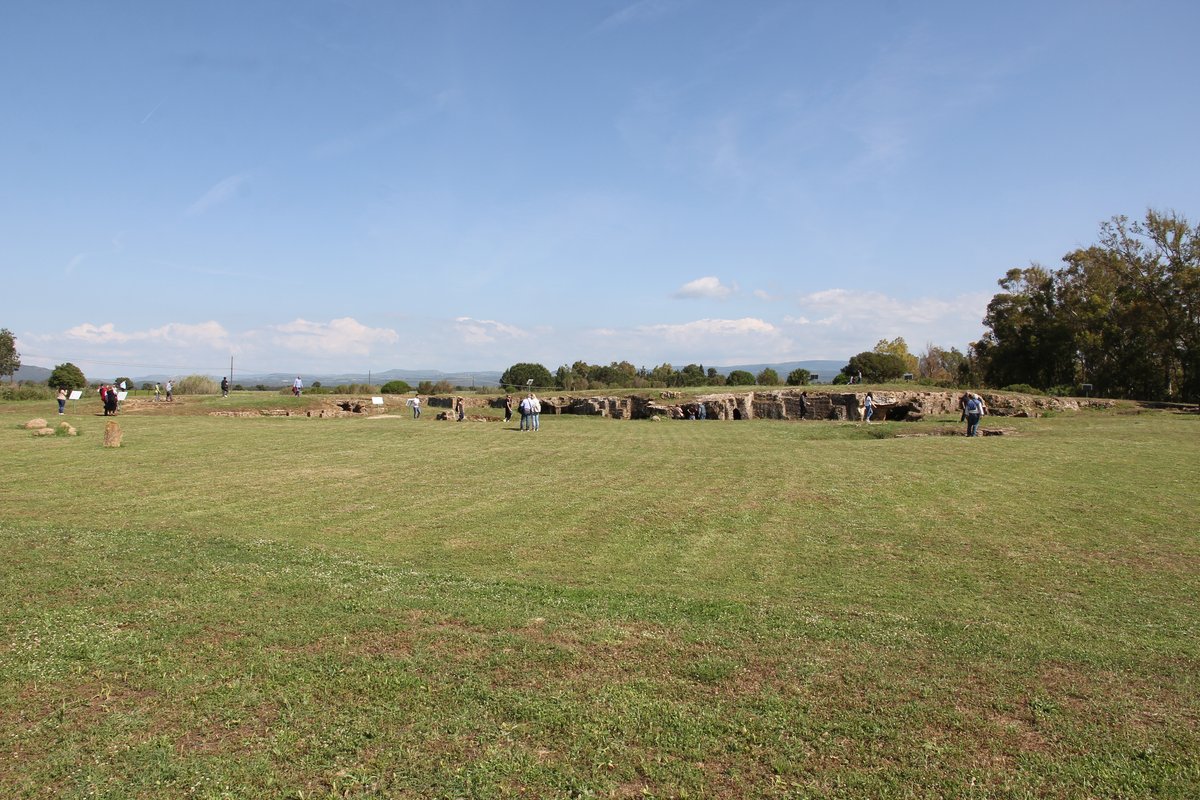
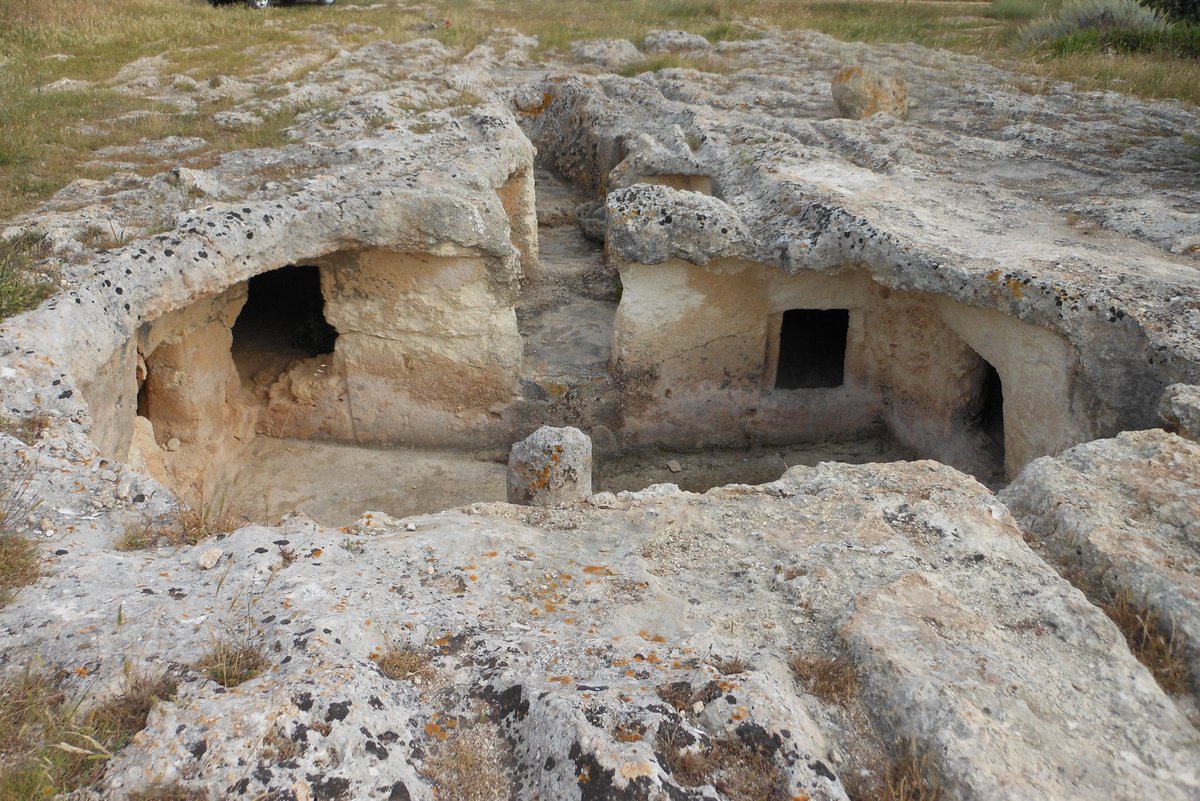
Located north of the city of Alghero in the Province of Sassari, the necropolis of Anghelu Ruju is the largest necropolis of pre-Nuragic Sardinia. This archaeological site was discovered accidentally in 1903 during excavations for a farmhouse in the Sella&Mosca winery, where a human skull and a tripod vessel were first found.
Following this discovery, archaeologist Antonio Taramelli carried out the first excavations the next year, uncovering ten domus de janas. Subsequent research led to the discovery of 21 more, bringing the total to 38 domus. The chambers contain various grave goods, including vases, statuettes of a hypothesized "mother goddess," weapons, and necklace beads.
These finds allow the site to be dated to the Late Neolithic (Ozieri culture 3200-2800 BC) and prove its use during the Copper and early Bronze Age (2800-1600 BC). The artifacts, such as flint tools and axes, suggest a culture emphasizing hunting and warrior prowess. Additionally, items like silver rings and copper daggers indicate that Sardinia was involved in significant international trade during this period.
One of the most striking features of the necropolis is the numerous carvings of long-horned bulls' heads found in and around at least three of the tombs. These carvings have been hypothesized to support the "Mother Goddess" theory, as well as to suggest a sort of Sun cult.
Sources: Wikimedia Commons, Wikidata, Wikipedia
Written by Sardinian
Discuss this with the author and others
No comments yet. Be the first to start the conversation.