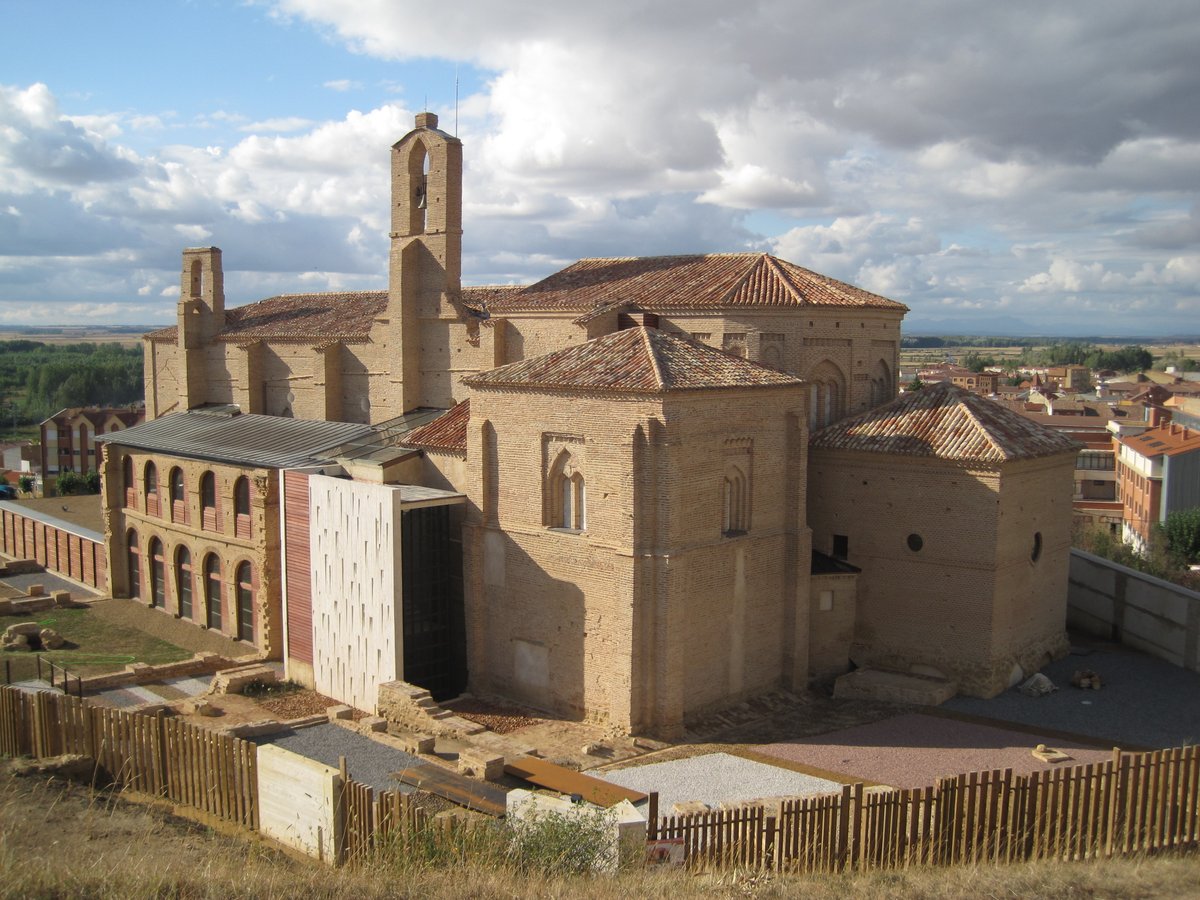

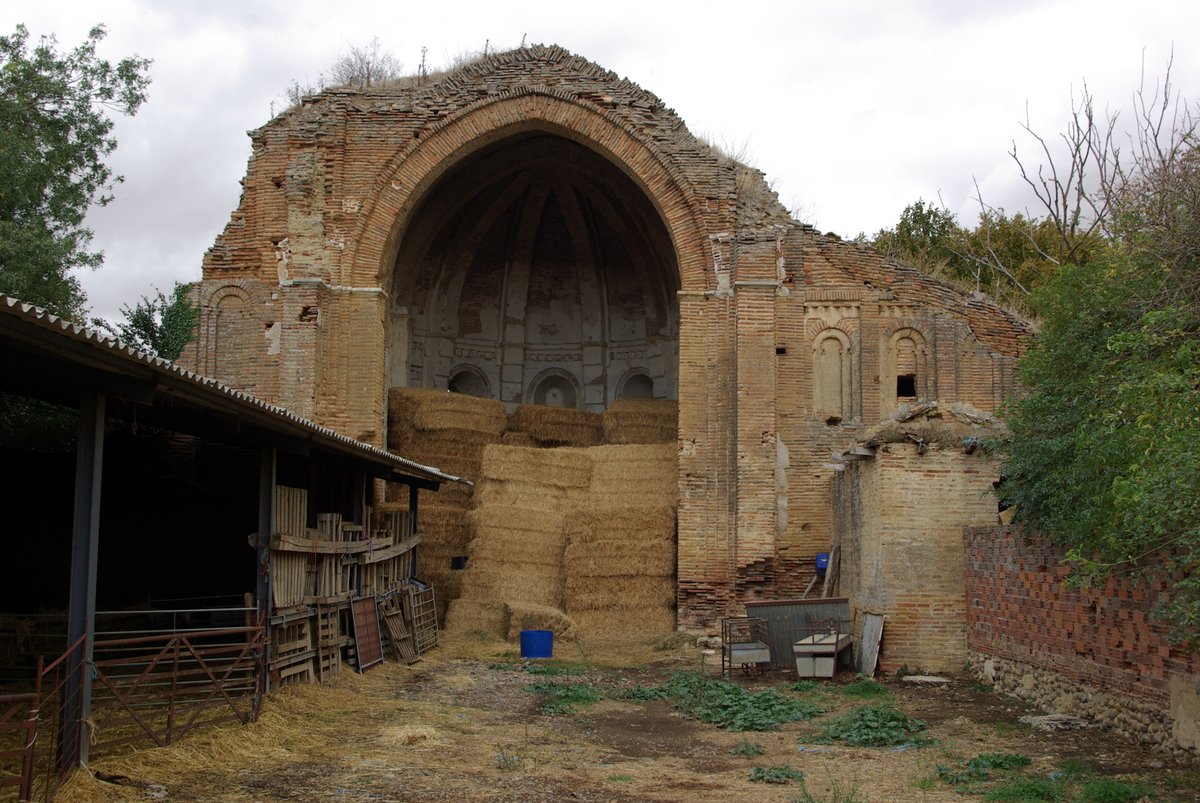
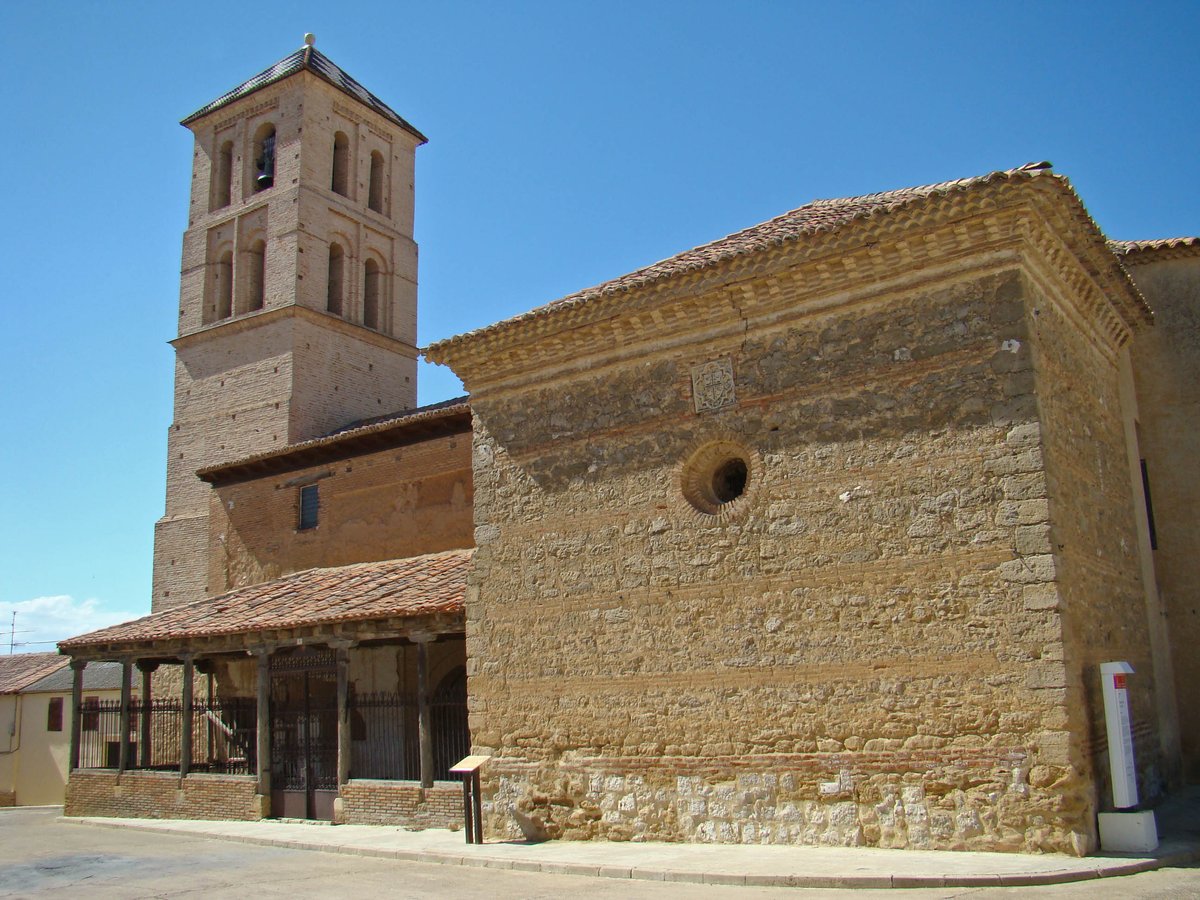
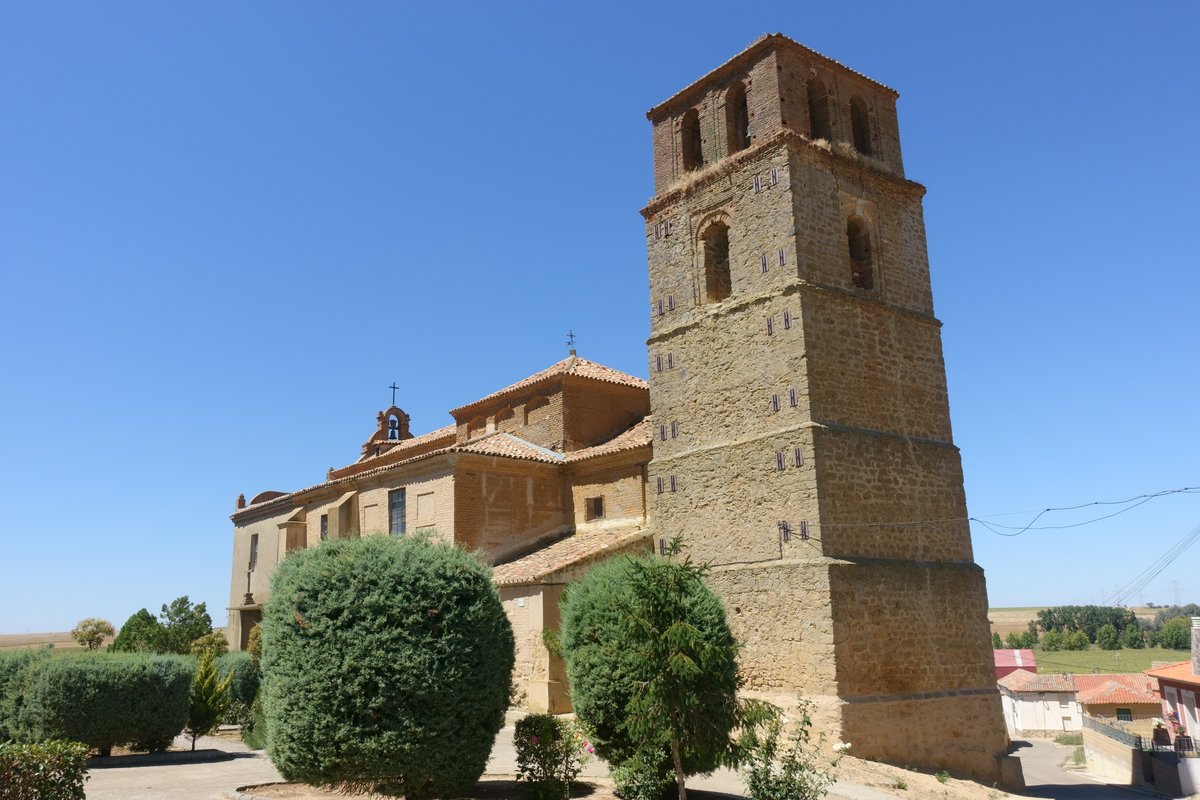
The Santuario de la Peregrina, located in the outskirts of Sahagún, sits on a hill at an altitude of 845 m. From this vantage point, the surrounding plain can be seen as far as the northern limits of the region and the Tierra de Campos region to the south. Originally founded as a Franciscan convent around 1257, the friars began to prepare the ground at the request of the Franciscan friars, with the approval of the father abbot of the Monastery of San Benito, Fray Nicolás I, and with the support of the bishop of León, Martín Fernández. The building is a perfect example of Sahagún Romanesque, characterized by the use of bricks instead of stone blocks, a style known as Mudéjar Romanesque.
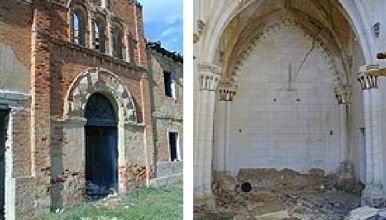
The current structure is the result of numerous reforms and additions. The exterior decoration features parts of the 14th-century walls, where the use of brick allows for blind archways with polylobed arches that show Toledan influence. Inside, the building maintains the austerity typical of the Franciscan order. A notable painting in the presbytery represents the 'abrazo de Roma' between two religious figures, symbolizing the fraternity between the Franciscan and Benedictine orders. To the right is the chapel of don Diego Gómez de Sandoval, which contains several pieces of Mudéjar plasterwork representing floral motifs and geometric patterns.
Throughout its history, the building has functioned as a church, a monastery, and a hospital for pilgrims. In 2006, a collaboration began to rehabilitate the sanctuary, transforming it into a documentation center for the Camino de Santiago. During the restoration work completed in 2011, a mummy, possibly from the 15th century, was discovered in the wall of the main altar. The sanctuary also historically housed a 17th-century image of the Virgin dressed as a pilgrim, which is now displayed in a nearby museum.
Sources: Wikipedia, OpenStreetMap, Wikidata, Wikimedia Commons
Written by Nik Frost
Discuss this with the author and others
No comments yet. Be the first to start the conversation.