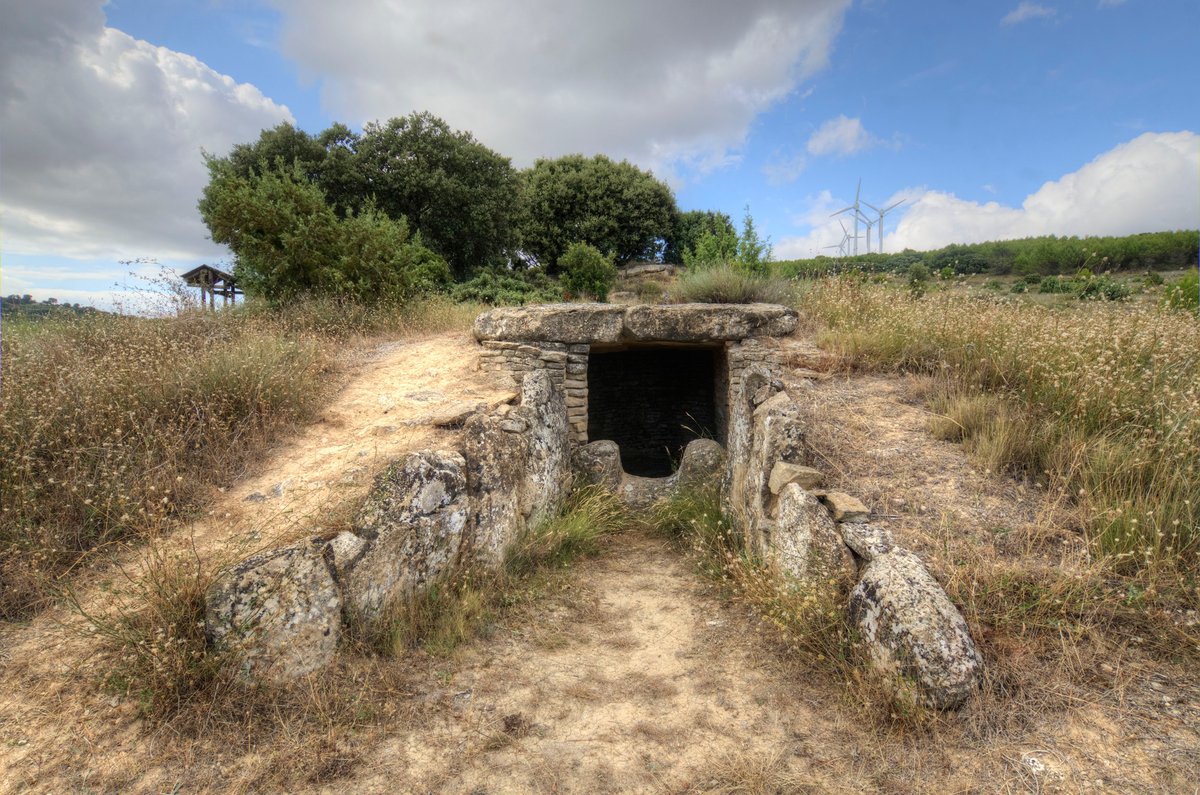

In the countryside of Viana, located on a side road from the Araser road near the village, lies a hidden chamber discovered during archaeological excavations in 1991, 1992, and 1993. Known as the Longarreko hipogeoa, it is a megalithic monument dating to the end of the Neolithic period. The chamber sits 750 meters above sea level and is positioned so that its facade overlooks the surrounding land. The entrance features two large limestone slabs, weighing nearly seven tons, which were partially buried over time.
Inside the chamber, 114 skeletons of men, women, and children were found. The remains were placed in a central area for a burial ritual that lasted for about 130 years, specifically between 2630 and 2500 BC. The bodies were placed in a fetal position with limbs tied with rope. While 4 out of 31 flint objects found with the bones show signs of trauma, the site has yielded evidence of stone tools and farming activities.
The hypogeum is a unique structure, being the only one of its kind in the Basque Country. It was used as a place for collective burial. The chamber features walls covered in irregular limestone chips and a floor of loose soil. Today, the hypogeum is part of the megalithism phenomenon spreading across the western coast of the continent, reflecting the prehistoric settlement of the region.
Sources: Wikipedia, OpenStreetMap, Wikidata, Wikimedia Commons
Written by Nik Frost
Discuss this with the author and others
No comments yet. Be the first to start the conversation.