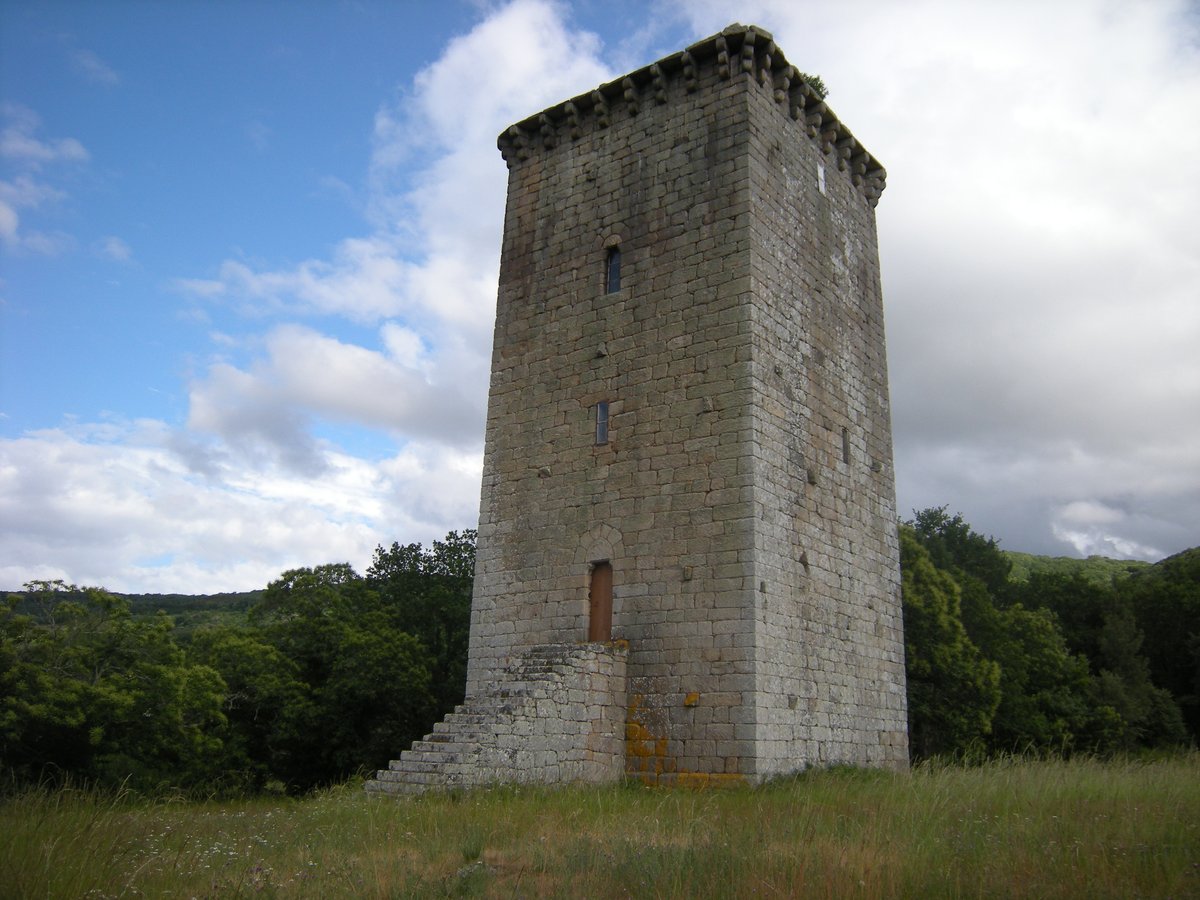

The Torre da Forxa stands in a valley, a chosen location for greater effectiveness in controlling the border with neighboring Portugal. Built in the 12th century as part of a larger castle, only this robust tower remains today. Its granite blocks are laid in regular rows.
In 1157, the tower moved into the hands of the bishopric of Ourense, and by 1204, it was sold for two thousand five hundred soldos. It served various owners, including the Monterrei family. In the second half of the 15th century, it suffered an attack from the Irmandiños who did not manage to destroy it.
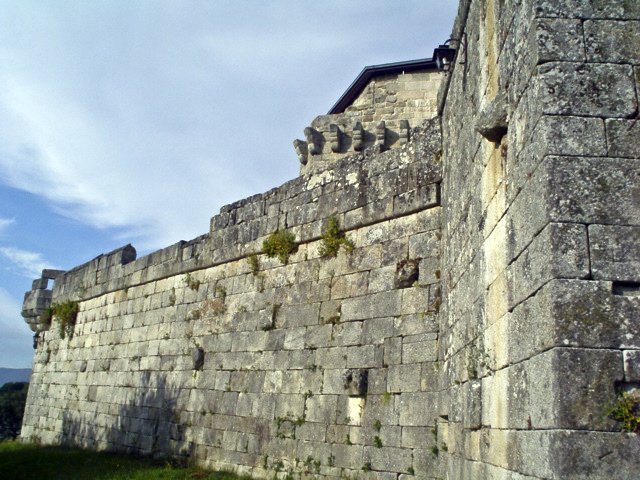
To enter the interior, you must climb a staircase of twenty steps to reach a door perched at a greater height from the ground. The construction is austere and robust, featuring a Romanesque door, arrow slits that defend the vertical entrance, and small windows. Simple corbels support its projecting machicolation.
Today, the tower is protected as a site of cultural interest and houses an interpretation center for the Vía Nova XVIII of the Antonino itinerary. Visitors can learn about the Roman road while standing inside a medieval fortress that has survived centuries of history.
Sources: Wikipedia, OpenStreetMap, Wikidata, Wikimedia Commons
Written by Nicolo Ciampini
Discuss this with the author and others
No comments yet. Be the first to start the conversation.