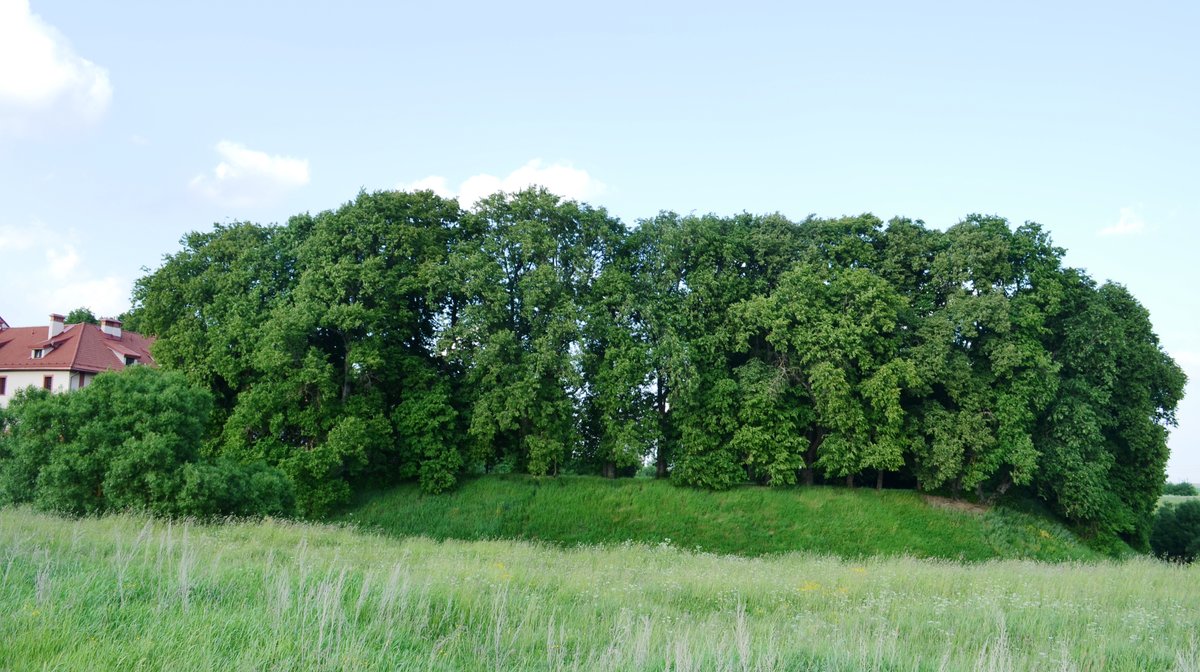
Senieji Trakai, located in Senieji Trakai, Lithuania, stands as a significant historical site. Constructed around 1316 by Grand Duke Gediminas, this is one of the first archaeological sites in Lithuania that was constructed as an enclosure-type brick castle, a critical piece in the Grand Duchy of Lithuania's strategic fortification against external threats, particularly from the Teutonic Order. It served as a pivotal historical site for Lithuanian dukes during the 14th century, hosting key family and political events that underscored its role in the Grand Duchy of Lithuania's governance.
After Gediminas's death, his son Kęstutis initiated the construction of a new stone castle in a nearby location, leading to the abandonment of Senieji Trakai Castle as the primary ducal residence. However, the site retained historical significance and was granted to the Benedictine monks in 1405, who established a monastery there.
Modern archaeological research on Senieji Trakai has revealed its original layout, including the masonry walls, buildings, and sacred structures within the enclosure. The research has also confirmed the presence of a rectangular enclosure measuring approximately 118 meters along the east-west axis, featuring foundations and massive stones and bricks laid in the Baltic (Gothic) bricklaying method. Today, the site's ruins offer an evocative setting for visitors. While the original enclosure no longer stands intact, the monastery complex that stands on the site allows a glimpse into Lithuania's early brick masonry architecture and the historical narrative of the Grand Duchy of Lithuania.
Sources: Wikipedia, OpenStreetMap, Wikidata, Wikimedia Commons
Written by Nicolo Ciampini
Discuss this with the author and others
No comments yet. Be the first to start the conversation.