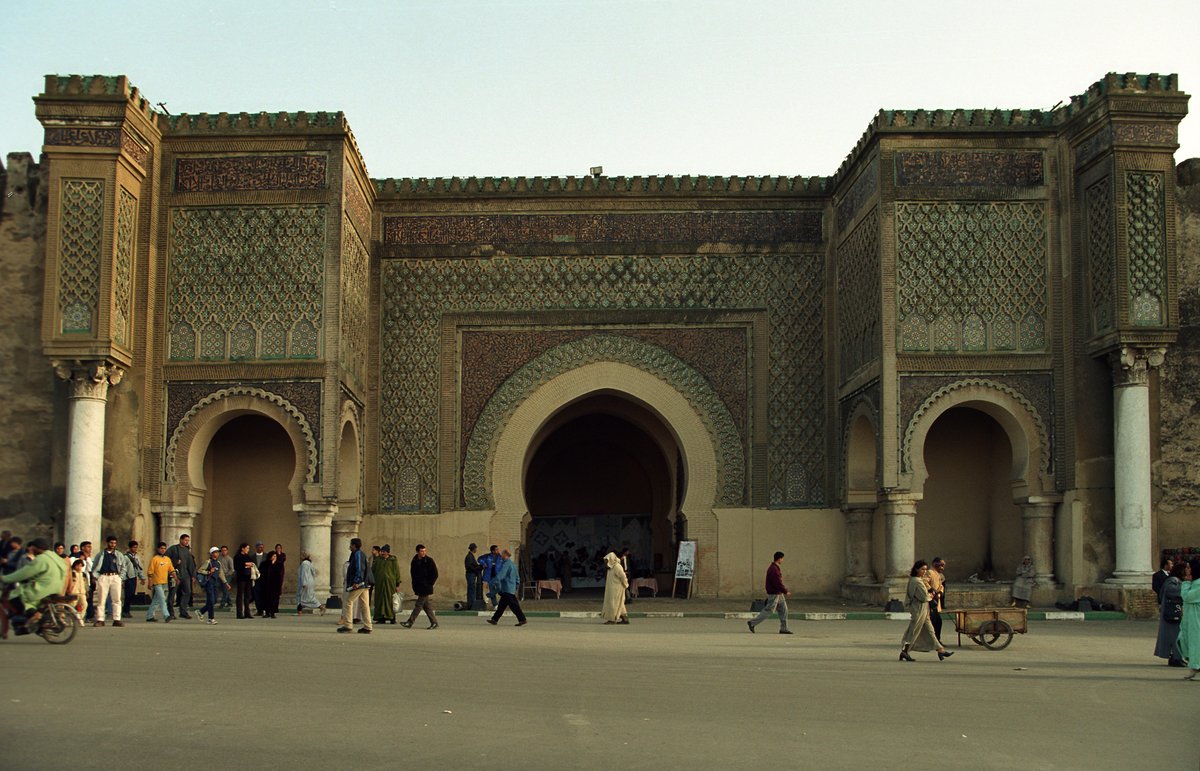

The mighty Bab Mansour stands as a monumental gate in the city of Meknes. It arose from the vision of Sultan Moulay Isma'il during the late 17th century, serving as the main ceremonial entrance to his royal citadel. Though his son finished the construction in 1732, the gate is named for its architect and designer, Mansour al-'Alj. He was a former Christian slave who converted to Islam and crafted this masterpiece of Moroccan skill.
The gate features massive marble columns of ancient Roman origin, probably from the nearby site of Volubilis, which support large projecting pilasters. The path within is a bent passage, turning 90 degrees twice to bridge the distance between the double walls of the Kasbah and grant access to Place Lalla Aouda.
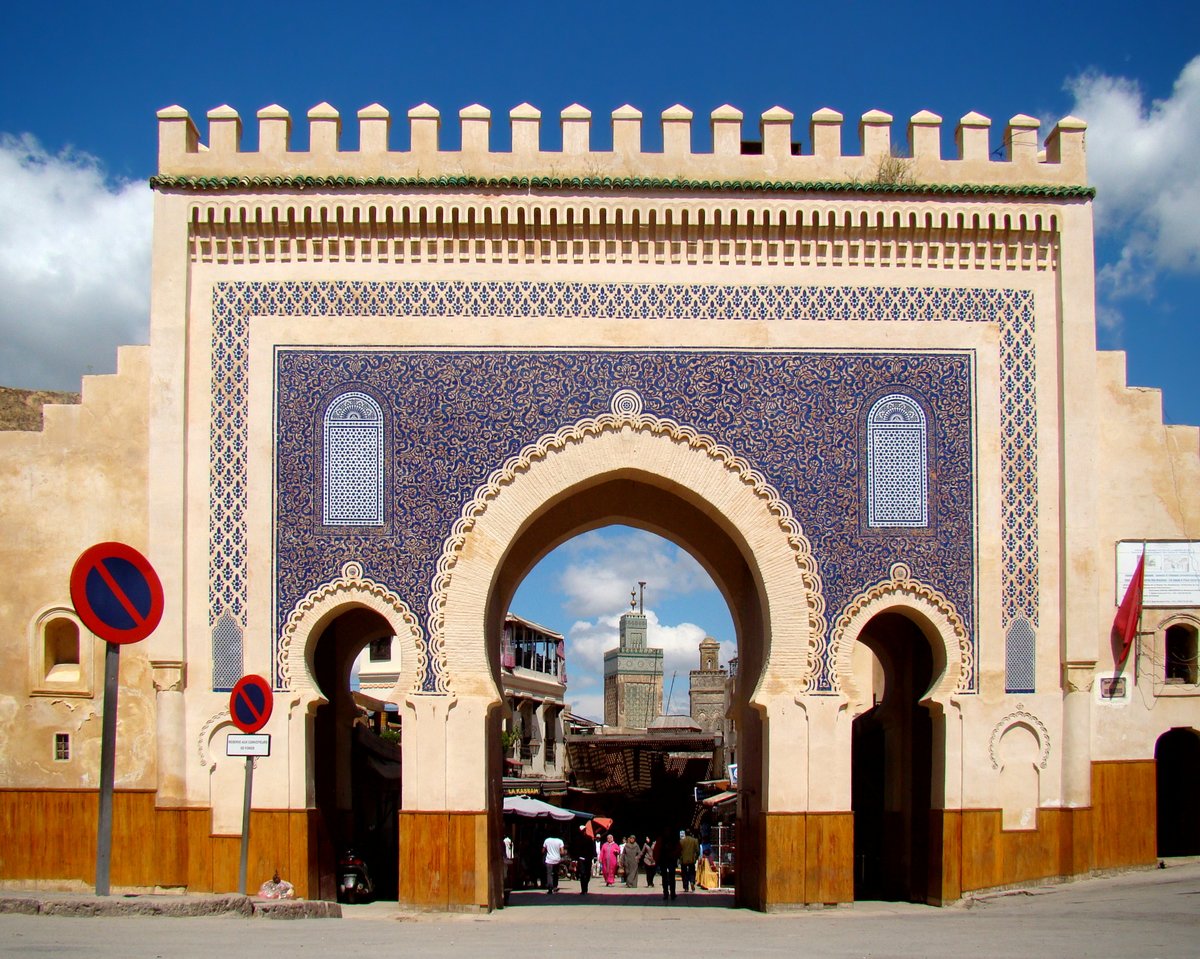
Almost the entire facade is covered in heavy decoration, including a repeating darj-wa-ktaf motif that frames the main archway. Vibrant polychrome zellij mosaic tilework fills the negative spaces of this motif, while the spandrels of the arches are filled with arabesque-painted tiles. At the very top, an elaborate Arabic inscription painted on tiles describes the construction of the gate.
Today, the gate is usually closed, though its interior is sometimes open to host exhibits. It remains one of the most famous and admired landmarks in the city, representing a transition in Moroccan architecture from Almohad prototypes to new features like the colorful mosaic work.
Sources: Wikipedia, OpenStreetMap, Wikidata, Wikimedia Commons
Written by Mutabor
Discuss this with the author and others
No comments yet. Be the first to start the conversation.