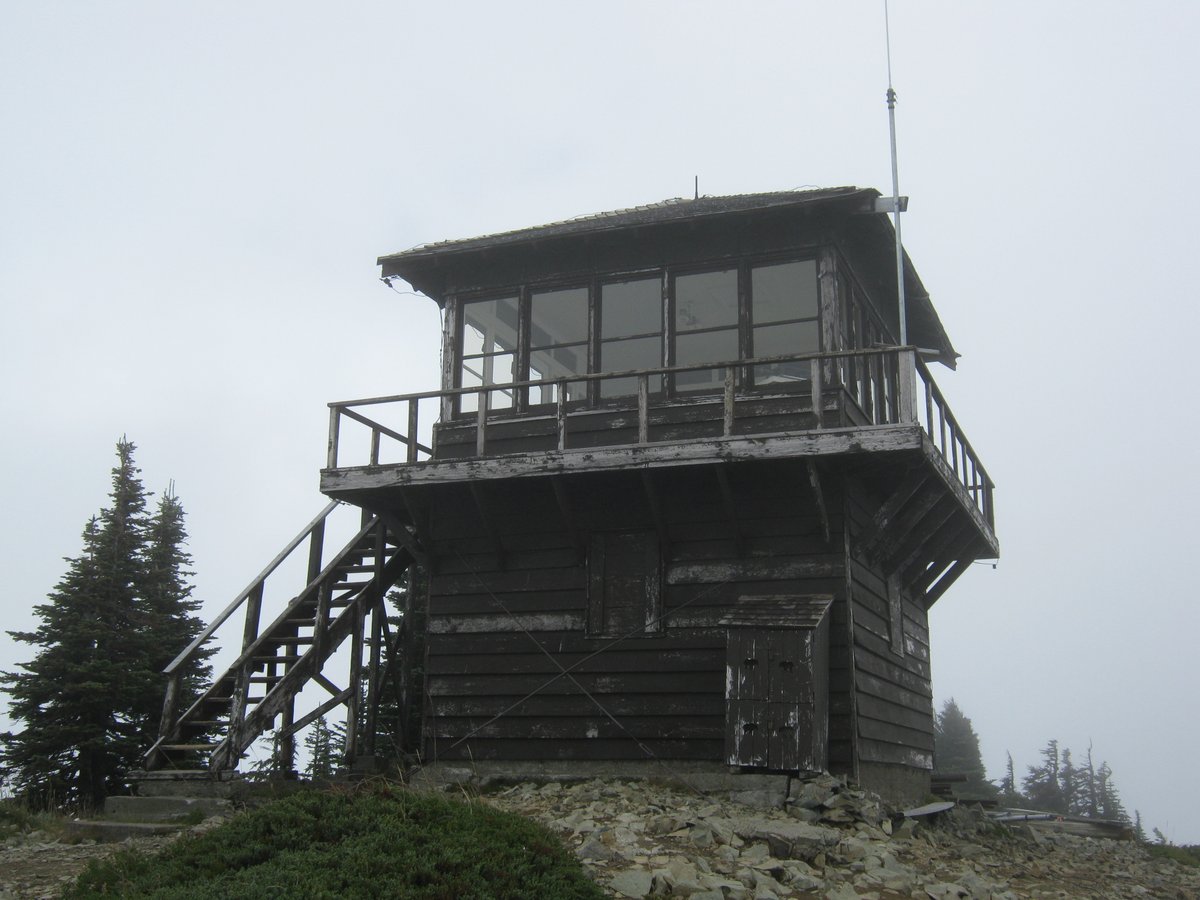
The National Park Service enjoys reciting some flowery propaganda regarding rustic architecture, and the Tolmie Peak Fire Lookout is their poster child. This two-story vantage point was constructed between 1932 and 1934 to detect forest fires with tactical precision. Instead, it served as a masterclass in how Washington winds can effectively neutralize your entire operational plan.
Under the command of Edwin A. Nickel, the wood-frame structure technically reached completion before a local windstorm performed an unauthorized extraction of the roof. Nature executed a logistical blunder of massive proportions. The NPS had to deploy for immediate damage control to patch the structure so it could actually perform its assigned mission.
To prevent the tower from attempting a tactical relocation during the next gale, the team anchored the building to the earth using cables attached to deadmen. This is a heavy-duty solution for a piece of infrastructure with a clearly rebellious streak. The upper level remains the designated lookout station while the ground floor serves as a supply depot.
Now listed as a landmark, the building functions as a weekend contact point for hikers. It stands as a piece of history that survived both the 1930s construction boom and its own early attempt at self-destruction.
Sources: Wikipedia, OpenStreetMap, Wikidata, Wikimedia Commons





Written by Kyle McLonely
Discuss this with the author and others
No comments yet. Be the first to start the conversation.