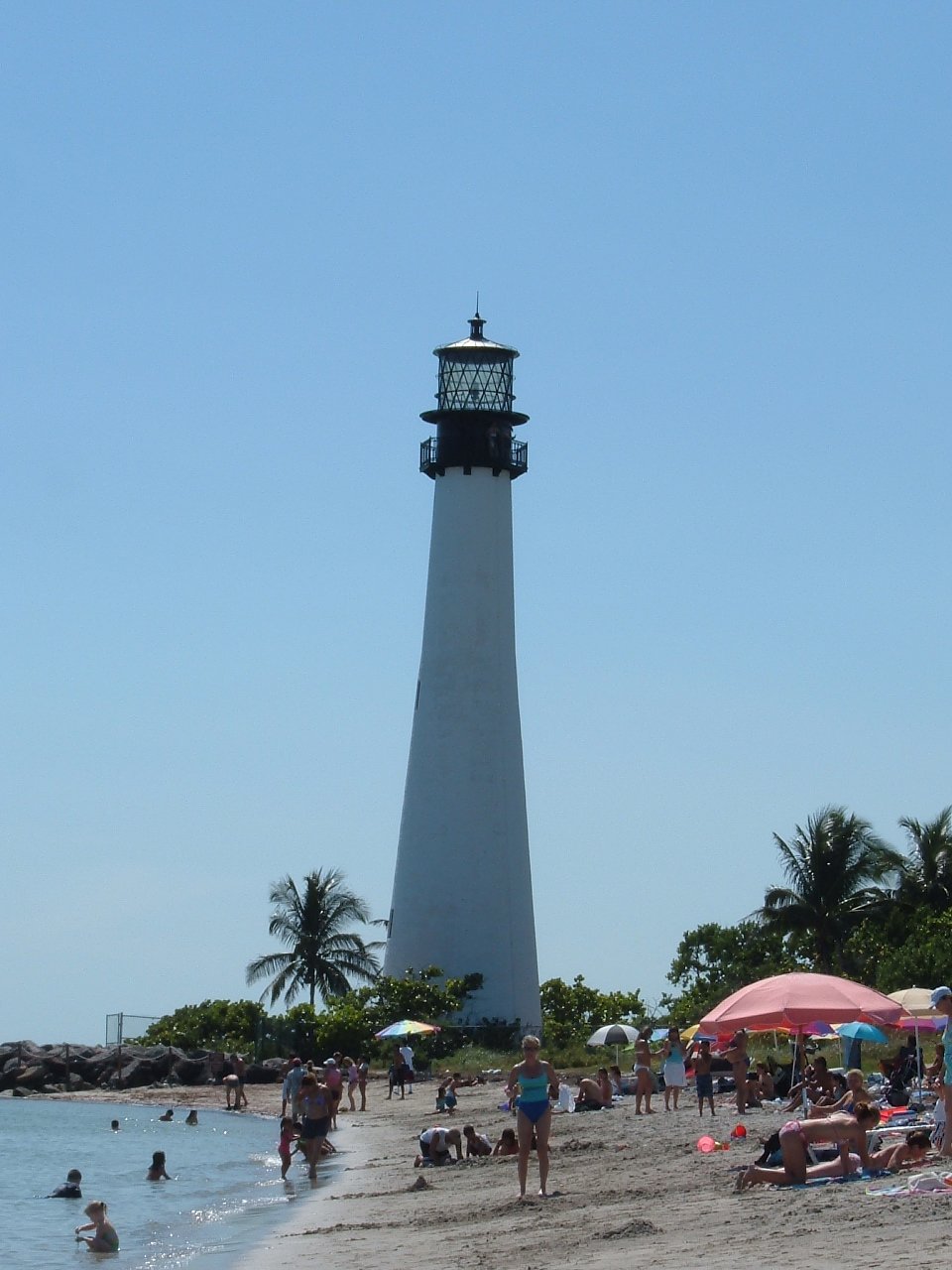
In 1825, the construction contract for the Cape Florida Light called for a tower with solid brick walls, five feet thick at the base. However, the contractor scrimped on materials and built hollow walls instead. The lighthouse was built at the south end of Key Biscayne to guide mariners off the Florida Reef. It was operated with interruptions until 1878, when it was replaced by the Fowey Rocks lighthouse.
Before the lighthouse was built, the location served as a departure point for the Saltwater Railroad. This was a migration of slaves and Black Seminoles fleeing to the Bahamas, a route that began when Spain transferred Florida territory to the United States. The lighthouse light compromised the secrecy of this migration. Today, the park is one of only two parks in Florida with the National Underground Railroad Network to Freedom Site distinction.
During the Second Seminole War in 1836, a band of Seminoles attacked the lighthouse tower. Assistant keeper John W. B. Thompson and an African American man named Aaron Carter were inside when the attackers set fire to the ground floor door and a boarded-up window. Rifle balls penetrated tanks holding 225 gallons of lamp oil at the bottom of the tower, causing the oil to catch fire and soak Thompson's clothing. Thompson and Carter retreated to the top of the tower with a keg of gunpowder, cutting away a part of the wooden stairway before being driven out by the flames.
Today, the lighthouse is part of the Bill Baggs Cape Florida State Park. It survived a major hurricane in 1835 that flooded the island under three feet of water. After being decommissioned in 1990, it was relit in 1996. The tower stands 29 meters tall as a reminder of the area's complex history as a site of migration and conflict.
Sources: Wikipedia, OpenStreetMap, Wikidata, Wikimedia Commons

Written by Kyle McLonely
Discuss this with the author and others
No comments yet. Be the first to start the conversation.