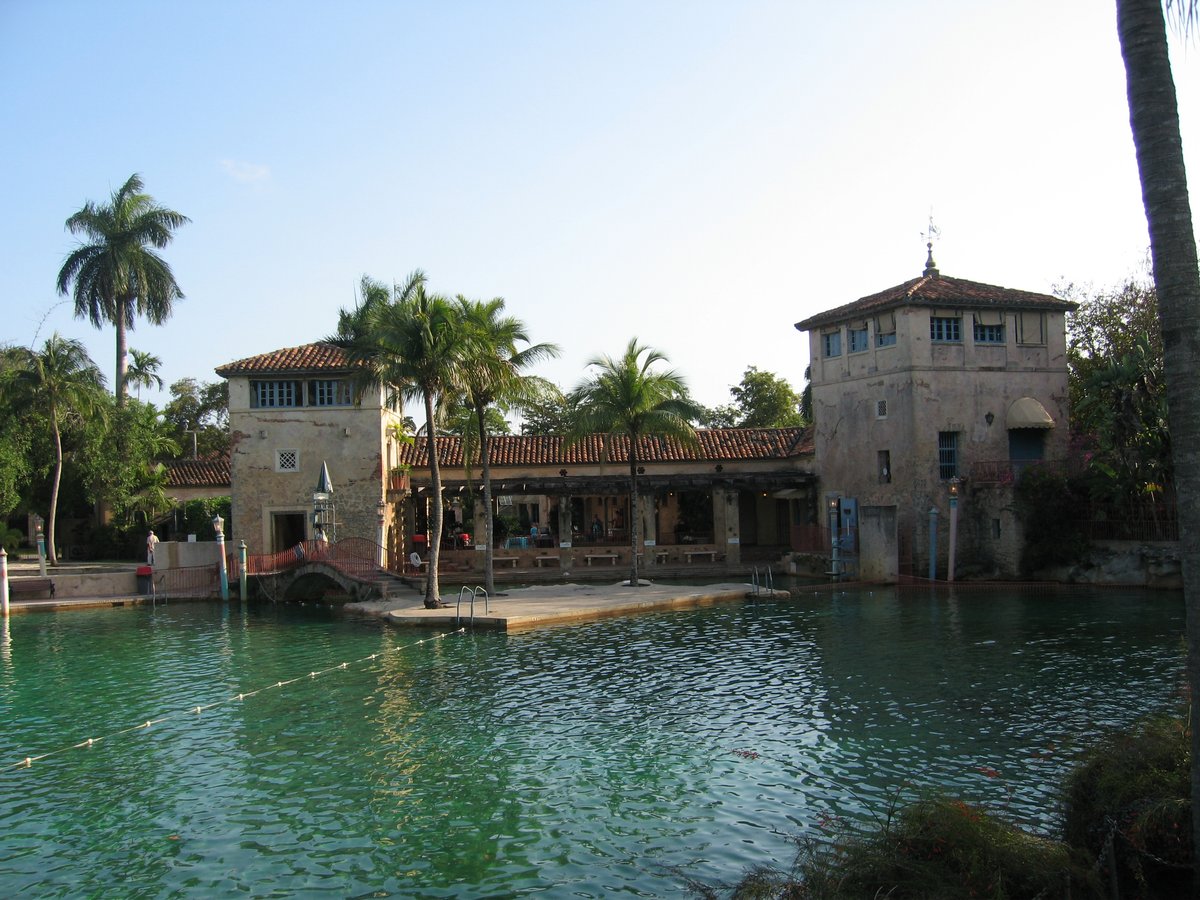
Listen up. Most civilians identify this as a mere swimming pool, but the reality is a 4-acre limestone quarry left behind by a construction crew in 1921. George Merrick saw a strategic opportunity in that hole and decided to salvage the terrain. In 1924, he rebranded the site as the Venetian Pool. He ordered a Mediterranean Revival aesthetic for Coral Gables, so he deployed Phineas Paist and Denman Fink to transform the quarry into a Venetian-style oasis.
The original objective was the Venetian Casino. The blueprints included a bridge, mooring posts, and a dedicated island for gondolas. If you find the current layout sophisticated, imagine a high diving platform looming over a massive waterfall. In the early days, the command even drained the entire basin so the Miami Symphony could perform inside. They exploited the natural acoustics of the quarry as if it were some kind of subterranean concert hall.
Currently, this site holds the rank of the largest freshwater pool in the United States. It operates with military precision by displacing 820,000 gallons of water daily from artesian wells. You can still scout the grotto with caves extending twelve feet into the hillside. It is the only swimming pool on the National Register of Historic Places, which is just a fancy way of saying it is a designated zone where most people just try not to drown.
Sources: Wikipedia, OpenStreetMap, Wikidata, Wikimedia Commons



Written by Kyle McLonely
Discuss this with the author and others
No comments yet. Be the first to start the conversation.