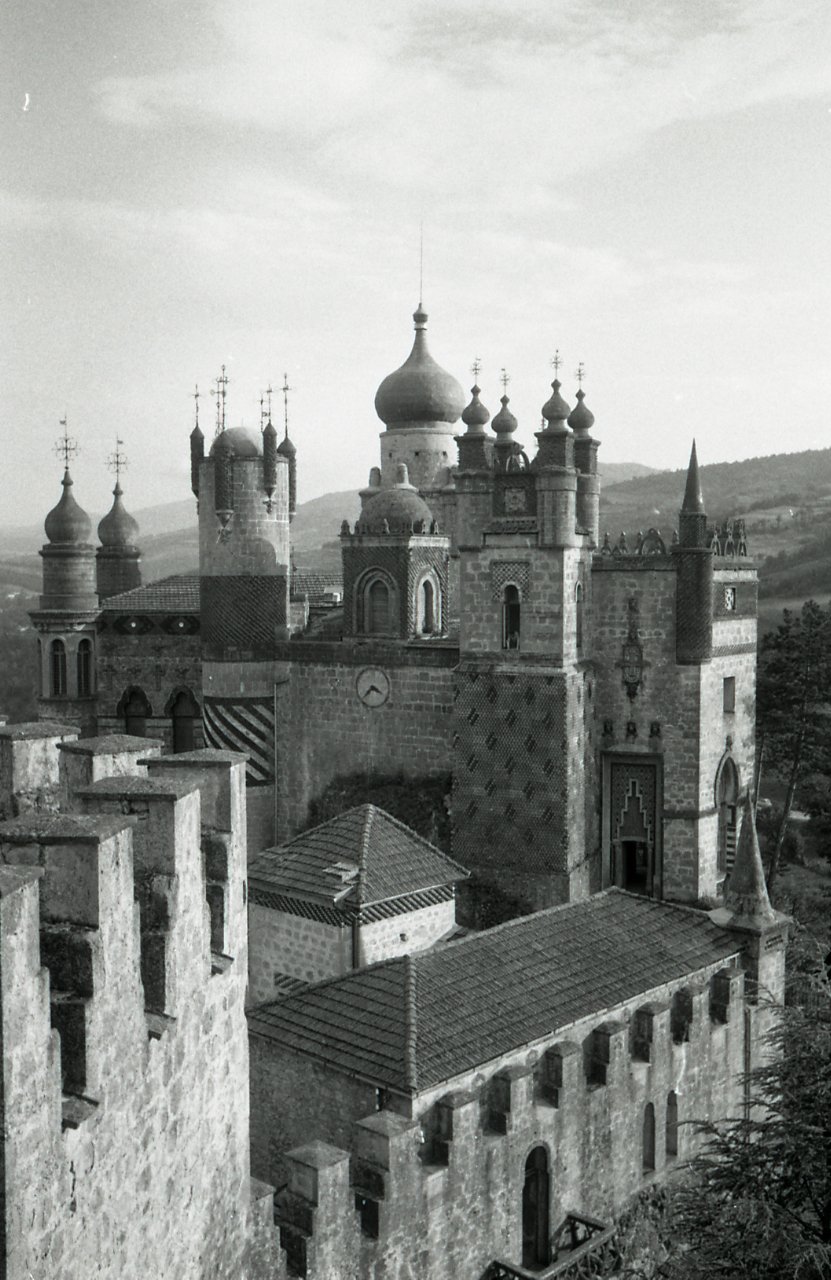

Rocchetta Mattei, a castle in Grizzana Morandi, Emilia-Romagna, Italy, was built on the ruins of an ancient building called Rocca di Savignano. Savignano was significant as it stood where roads, bridges, monastic possessions, and political jurisdictions converged. The importance of Savignano was linked to a wider network of bridges, routes, and territorial jurisdictions. It was situated close to the historical border between the Bolognese and Pistoiese territories.
Two major medieval trans-Apennine routes met in the area of Savignano; one followed the Reno and western Limentra valleys, the other followed the eastern Limentra valley. Count Cesare Mattei (1809–1896) purchased the ruins of Savignano in the 19th century and rebuilt the castle. Rocchetta Mattei now overlooks the confluence of the Reno and the eastern Limentra. Today, Rocchetta Mattei reopened to the public in 2015 as a museum and cultural venue. It is one of the most visited heritage sites in the Emilia-Romagna Apennines, with more than 73,000 visitors per year.
Sources: Wikipedia, OpenStreetMap, Wikidata, Wikimedia Commons
Written by Nicolo Ciampini
Discuss this with the author and others
No comments yet. Be the first to start the conversation.