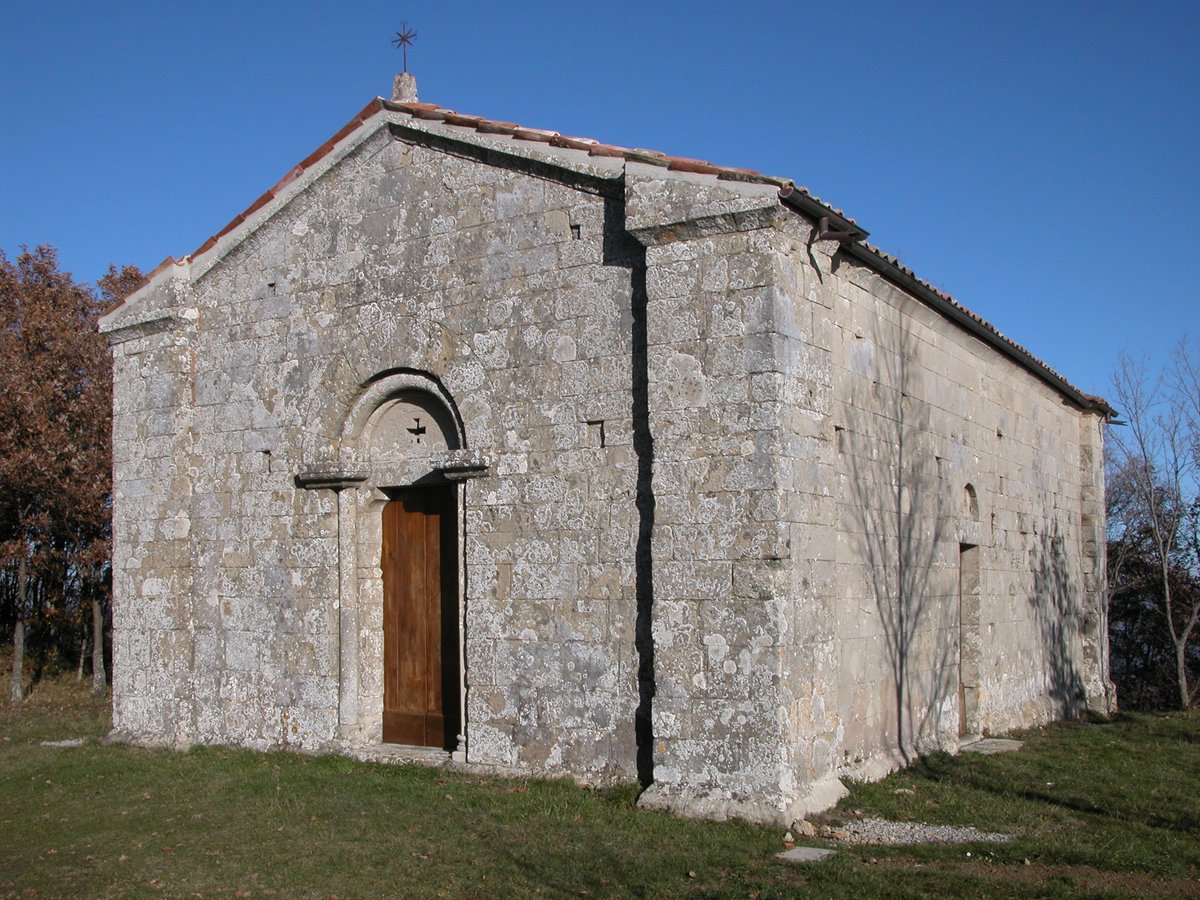

In the heart of Emilia-Romagna lies Montòvolo, a hillock adorned with a shape resembling a turning hill and boasting a French-Ligurian name. Overlooking the Reno valley, this picturesque landmark serves as more than just a scenic vista; it presides over two oratories. One honors Mary, while the other pays tribute to Catherine of Alexandria, each shrine constructed on the foundations of earlier churches. Montòvolo, known by various names throughout history - Sei Quaglie, Tornacol, and others - can trace its first documented appearance to the year 1054, revealed in a charter issued by the Bishop of Bologna to the Canons Regular. In spite of their ancient roots, Santa Caterina di Montovolo and Santa Maria della Consolazione di Montòvolo continue to operate as thriving places of worship today.
It is believed Montòvolo served as a place of worship even during the pre-Christian era. Perhaps the proximity of Montòvolo to the river Reno and the surrounding woodland contributed to its association with the legendary creatures who guard the water's edge, reflecting in the origins of its name, Sei Quaglie.
The oratories, despite being dedicated to distinct saints, share a common history. Both underwent reconstruction in the 13th century following the demolition of their original structures-one at the hands of a 13th-century pontiff, the other by Ghibellini soldiers, under the command of Frederick II of Hohenstaufen. Undergoing several renovations and restorations, the chapels now stand as a tribute to medieval craftsmanship, featuring preserved remnants of earlier buildings, 15th-century frescoes, and a meridian line on one of the campaniles.
Sources: Wikipedia, OpenStreetMap, Wikidata, Wikimedia Commons
Written by Nicolo Ciampini
Discuss this with the author and others
No comments yet. Be the first to start the conversation.