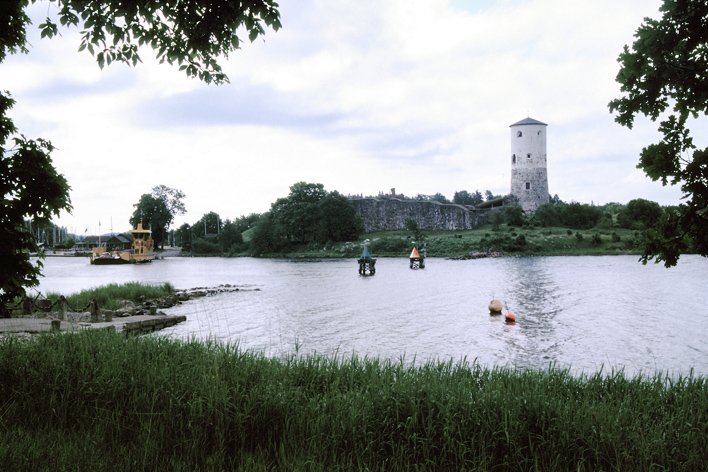

Stegeborg Castle is a ruin on a small island in eastern Sweden, but this unobtrusive monument belies a past of strategic importance. Its story begins in the 13th century, a time when nearby Söderköping was a bustling trading city. The castle's oldest part is a square brick tower in the southeast corner, built around the same time as the city. But Söderköping's success was not only due to its location; it owed a debt to Stegeborg's strategic position as well. Stegeborg sits on the narrowest point of the channel leading to the city, and it was once part of a network of piles submerged in the water surrounding the island, a system designed to block passing ships.
The oldest of the piling systems dates back to the 7th and 9th centuries, followed by more in the 11th. The wooden pillars were still visible in the 19th century. This historical defense system granted Söderköping immunity to would-be invaders and solidified its status as one of Sweden's wealthiest cities.
Sources: Wikipedia, OpenStreetMap, Wikidata, Wikimedia Commons
Written by Nik Frost
Discuss this with the author and others
No comments yet. Be the first to start the conversation.