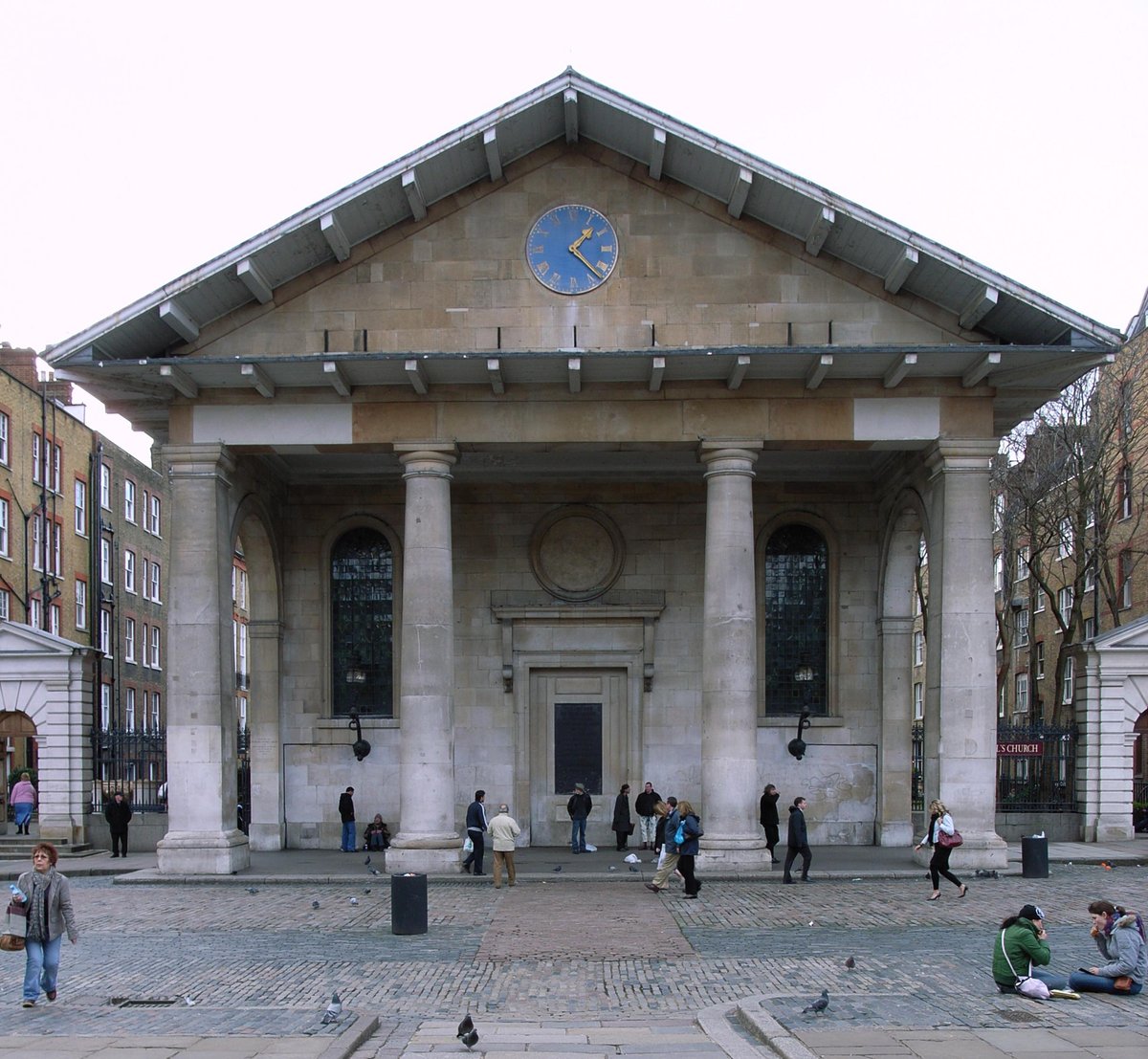

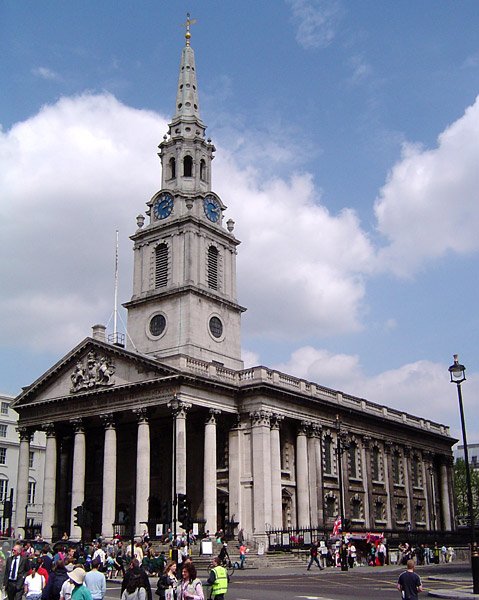
In 1631, the 4th Earl of Bedford commissioned Inigo Jones to build a church as part of a project to create buildings fit for gentlemen. According to a story recorded by Horace Walpole, the Earl asked Jones to design a simple church "not much better than a barn", to which the architect replied, "Then you shall have the handsomest barn in England". Completed in 1633, St Paul's was the first entirely new church built in London since the Reformation.
Jones's design closely follows the description of an Etruscan-style temple by the Roman architect Vitruvius. It has been described as a study in the strictly Vitruvian Tuscan Order and almost an archaeological exercise. The design reflects a deliberate primitivism, as the Tuscan order was associated by the Renaissance architect Palladio with agricultural buildings. The temple front with a portico on the square was not the main entrance, as the altar lies behind that wall. The main entrance is at the far end, through the plainer west front.
The building has a long history of alterations and preservation. It was burnt out by a fire in 1795, though the outer walls remained structurally sound. The pulpit, the work of Grinling Gibbons, was saved during this event. The pathway to the western entrance is named Inigo Place, after the architect, having been formerly called Church Place. Today, the church is known as the actors' church due to its long association with the West End theatre community.
Sources: Wikipedia, OpenStreetMap, Wikidata, Wikimedia Commons
Written by Nicolo Ciampini
Discuss this with the author and others
No comments yet. Be the first to start the conversation.