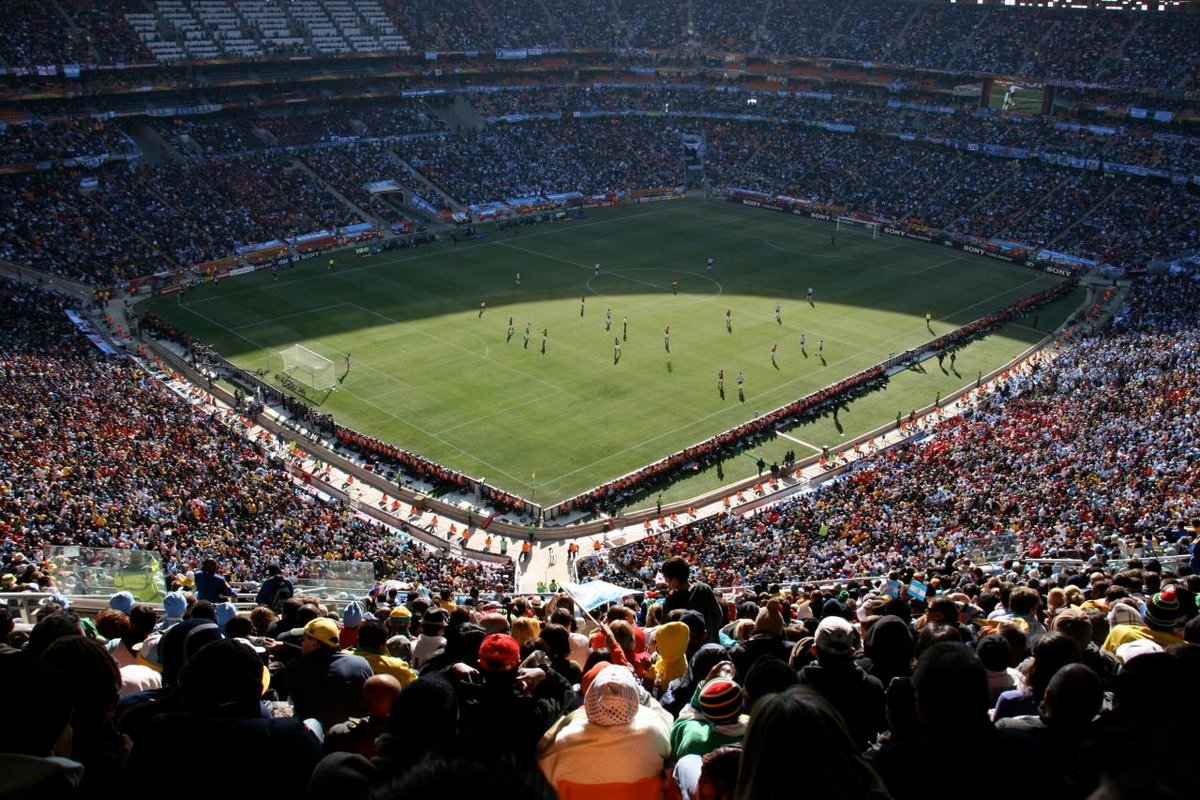

The FNB Stadium stands in Nasrec, bordering the Soweto area of Johannesburg, designed to resemble an African pot or gourd. Its outer cladding is a mosaic of fire and earthen colours with a ring of lights running around the bottom of the structure, simulating fire underneath the pot. No spectator is seated more than 100 metres from the field, and there are no restricted views in the stadium.
This ground served as a site for profound national moments. In 1993, it hosted the funerals of anti-apartheid activists Chris Hani and Oliver Tambo. It was the site of Nelson Mandela's first speech in Johannesburg in 1990 after his release from prison, and it hosted a memorial service for him in 2013. During the 2010 FIFA World Cup, the stadium hosted the final between the Netherlands and Spain, where the closing ceremony marked Mandela's final public appearance.
Hidden within the architecture are ten black vertical lines. While nine are aligned geographically with the other stadiums of the 2010 World Cup, a tenth line was added because nine is considered an unlucky number in South African traditional culture. This tenth line points toward Berlin's Olympic Stadium, which hosted the previous World Cup final in 2006, representing the road to the final.
Today, the stadium is the home of Kaizer Chiefs F.C. in the South African Premiership and the venue for key fixtures for the South Africa national football team. It serves as the largest stadium in Africa, with a capacity of 94,736, and remains a central landmark for both football and rugby union in the country.
Sources: Wikipedia, OpenStreetMap, Wikidata, Wikimedia Commons
Written by Mutabor
Discuss this with the author and others
No comments yet. Be the first to start the conversation.