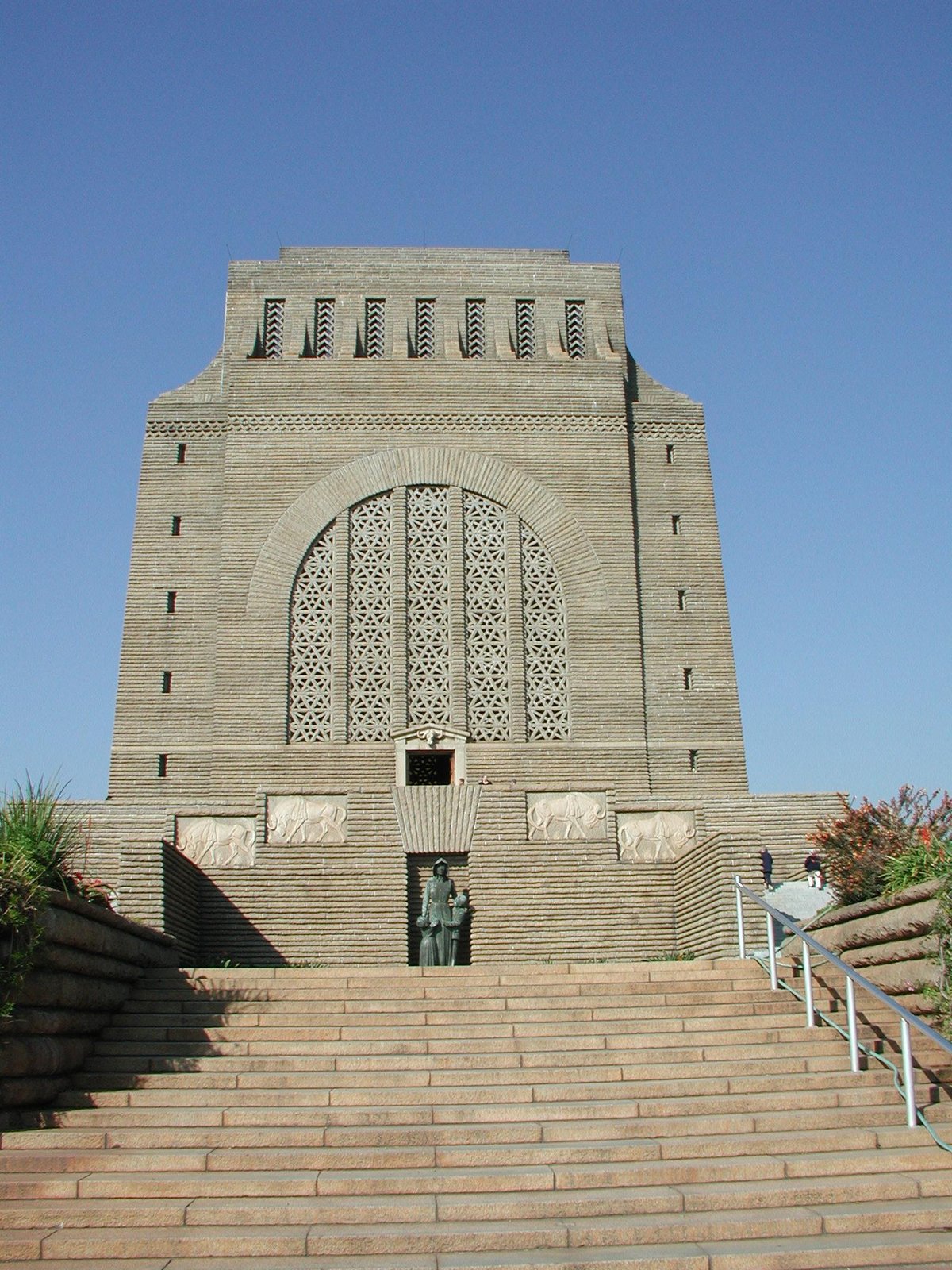

Nestled just south of Pretoria, the Voortrekker Monument towers over the South African landscape, a granite structure raised to commemorate the Voortrekkers who left the Cape Colony between 1835 and 1854. Designed by the architect Gerard Moerdijk, the monument was inaugurated on 16 December 1949. It was declared a National Heritage Site by the South African Heritage Resource Agency in 2011. The structure is 62 metres high, with a base of 40 metres by 40 metres, and features an amphitheatre to the north-east that can seat approximately 20,000 people.
The main entrance leads into the domed Hall of Heroes, a massive space featuring the world's largest marble frieze. This Historical Frieze consists of 27 bas-relief panels depicting the history of the Great Trek from 1835 to 1852, including scenes of everyday life, work methods, and religious beliefs. In the centre of the floor is a circular opening through which the Cenotaph in the Cenotaph Hall can be viewed. The Cenotaph is the central focus of the monument; every year on 16 December, a ray of sunlight shines through an oculus in the dome to strike the words 'Ons vir Jou, Suid-Afrika' on the Cenotaph.
The Cenotaph Hall is decorated with flags of the different Voortrekker Republics and contains wall tapestries and artefacts from the Great Trek. Against the northern wall is a niche with a lantern that has held a flame since 1938, the year of the Symbolic Ox Wagon Trek. To the east of the entrance lies the foundation stone, which holds a copy of the Trekker Vow of 16 December 1838, the anthem 'Die Stem', and a land deal between the Trekkers and the Zulus under King Dingane.
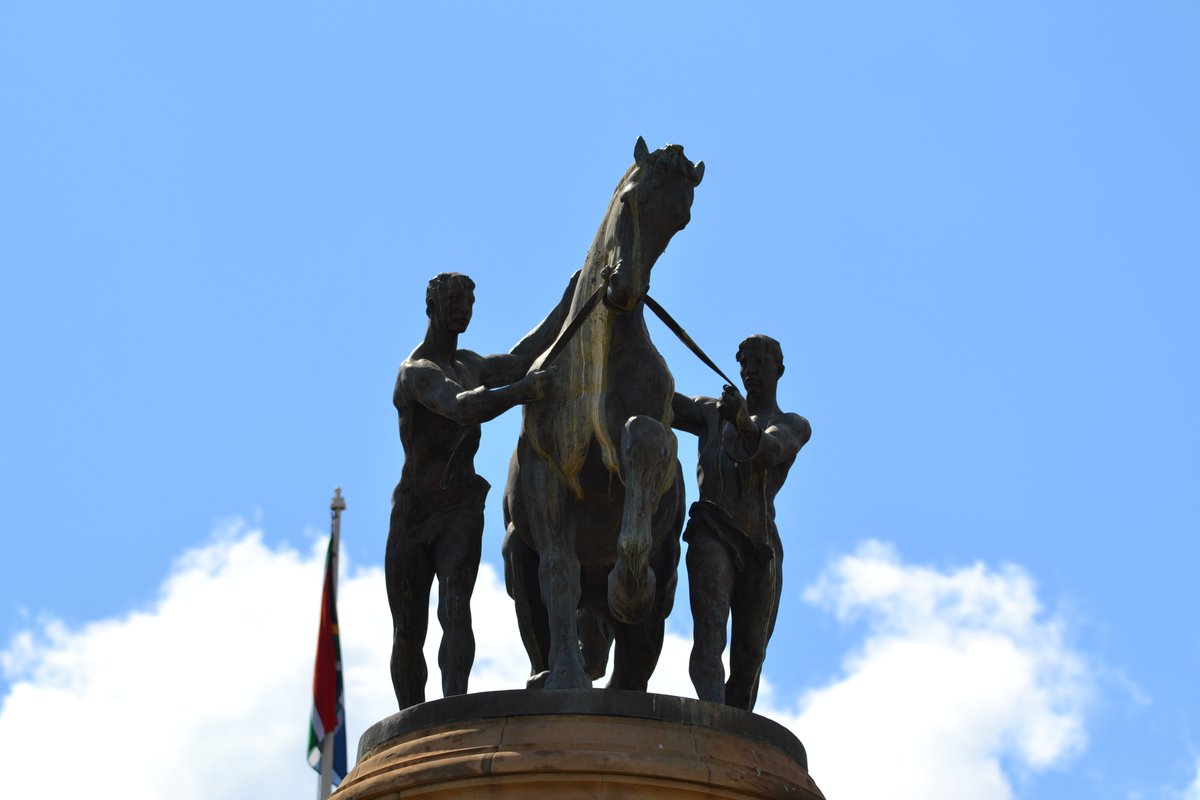
Visitors to the monument enter through a black wrought iron gate with an assegai motif, which leads into a big laager consisting of 64 ox-wagons made out of decorative granite. These represent the same number of wagons used at the Battle of Blood River. At the foot of the monument stands a bronze sculpture of a Voortrekker woman and her two children, with black wildebeest chiselled into the walls to symbolise the dangers of Africa. Each of the four outside corners of the monument features a statue weighing approximately 6 tons, representing Piet Retief, Andries Pretorius, Hendrik Potgieter, and an unknown leader.
Sources: Wikipedia, OpenStreetMap, Wikidata, Wikimedia Commons
Written by Friendly Jane
Discuss this with the author and others
No comments yet. Be the first to start the conversation.