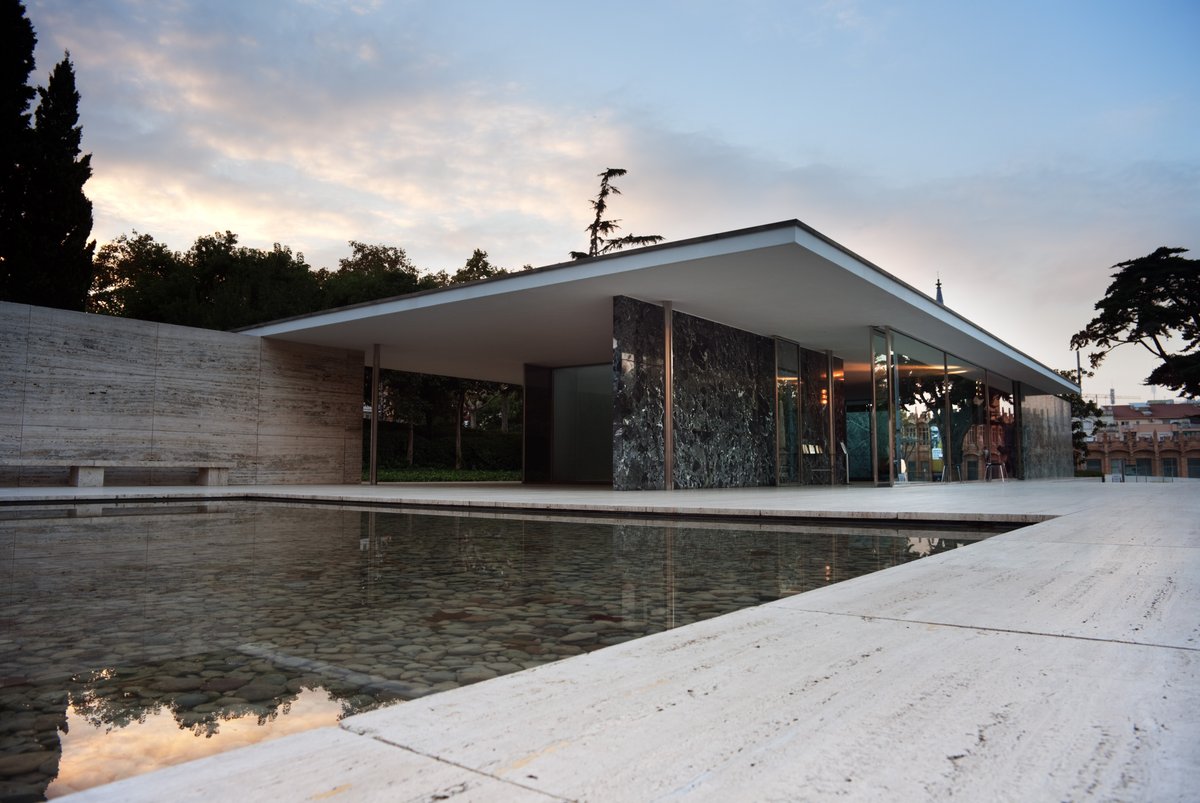

The German Pavilion, crafted by Ludwig Mies van der Rohe in 1929, is a building of monumental significance. Originally constructed for the International Exposition in Barcelona, Catalonia, Spain, the pavilion was used for the official opening of the German section of the exhibition. Other than offering a space for exhibits, the pavilion was designed as an 'ideal zone of tranquillity' for visitors, a testament to the modernist periods' emphasis on simplicity, functionality, and design aesthetics.
Mies had severe time constraints, as the commission was given in 1928 and he had to design the structure in less than a year. The German Republic entrusted Mies with the artistic management and erection of not only the Barcelona Pavilion, but also for the buildings for all the German sections at the 1929 International Exhibition. The building's design was intended to represent the new Weimar Germany: democratic, culturally progressive, prospering, and thoroughly pacifist; a self-portrait through architecture.
The Commissioner, Georg von Schnitzler said it should give 'voice to the spirit of a new era'. However, due to the political climate at the time, the pavilion was demolished in 1930 and later reconstructed in 1986 to showcase the design's enduring influence. The German Pavilion in Barcelona was a turning point in modernist architecture, inspiring many influential structures that followed.
Sources: Wikipedia, OpenStreetMap, Wikidata, Wikimedia Commons
Written by Nicolo Ciampini
Discuss this with the author and others
No comments yet. Be the first to start the conversation.