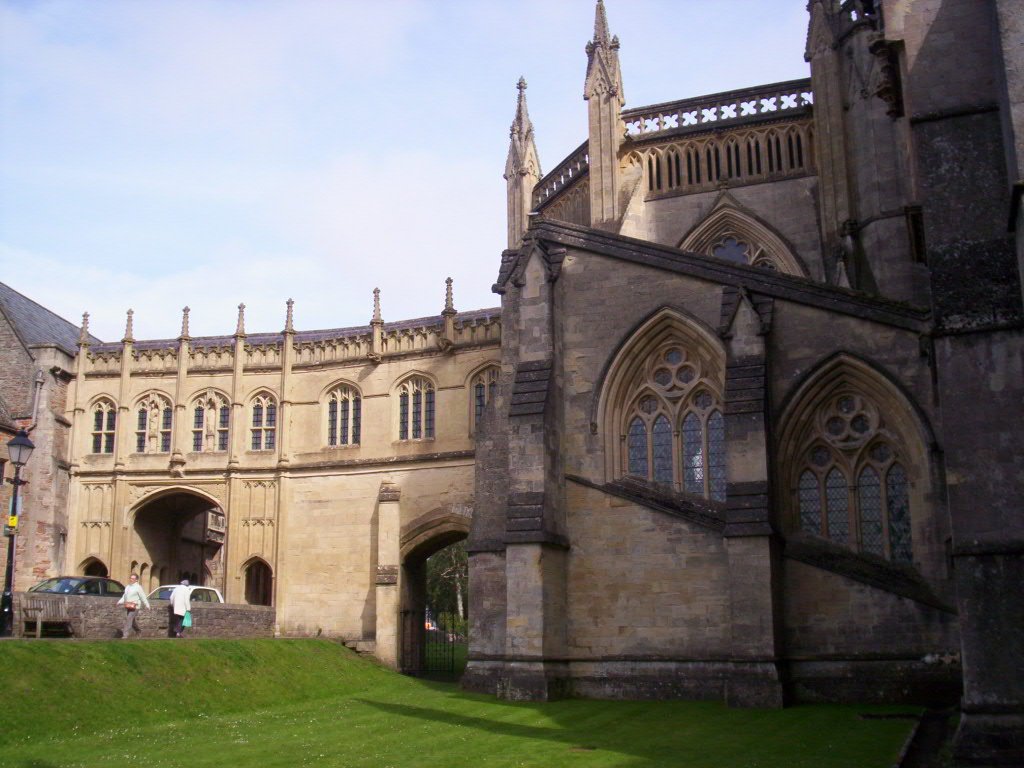

Who would want to face the public eye or a downpour? The Chain Gate was built around 1460 for Bishop Thomas Beckington to solve that exact problem. It served as a shortcut so the Vicars Choral could travel between the cathedral and Vicars' Close without ever stepping into the public realm. Is it not convenient? The vicars used it to reach the cathedral for services or meetings in the Chapter House with ease.
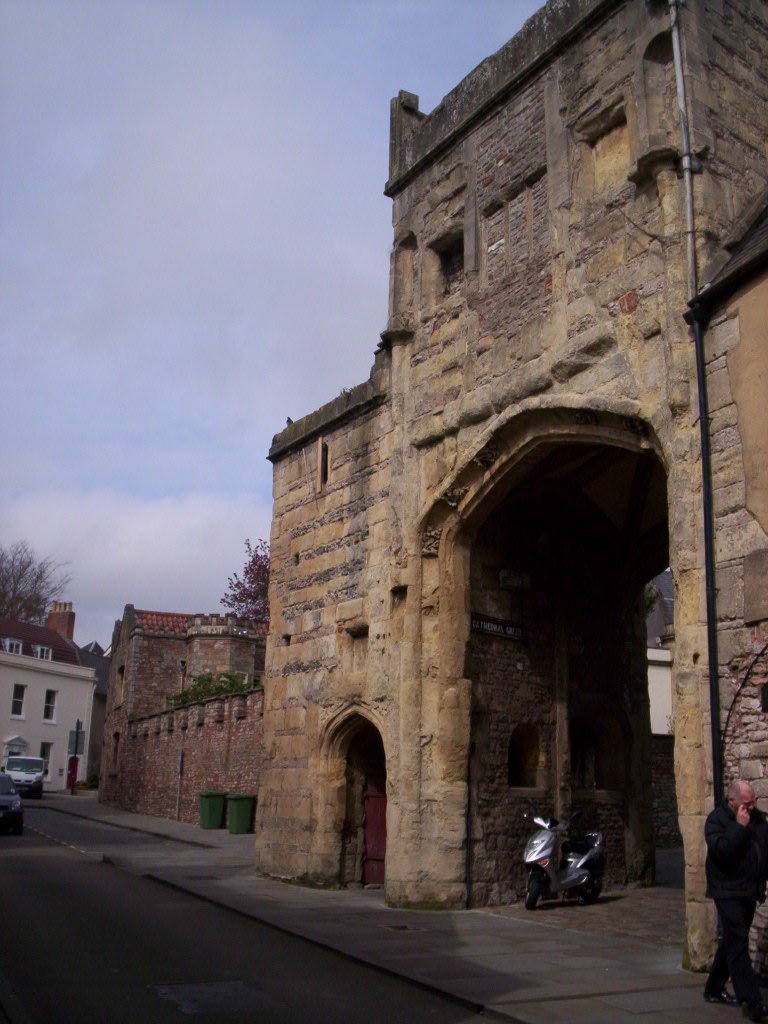
What is this structure made of? It is a two-storey building crafted from Doulting stone ashlar with a roof of Welsh slate. The bottom level features a wagon gate with pedestrian gates on either side. Does the upper level serve a purpose? It provides a passageway between the Chapter House of the cathedral and Vicars' Close. It stands on three arches, with one for carts, now cars, and two for people. Why is there a slight bend in the path? It exists because the entrance to the cathedral via the approach staircase past the Chapter House and the entrance in Vicars Hall are not perfectly opposite each other.
Can you see the defensive details? It is topped by a battlemented parapet. What lies in the walls? There are niches with statues of saints and a shield showing the arms of Bishop Beckington. Is it a significant site? This Grade I listed building is an entrance gateway next to the north side of Wells Cathedral. It controls access from St Andrew Street to the Cathedral Green within the Liberty of St Andrew.
What does history hide? An undated sketch by Henry Edridge (1768–1821) shows the Chain Gate in the late 18th or early 19th century. Does the drawing match our reality? It reveals a much taller wall alongside the road approaching the gate than what stands there today.
Sources: Wikipedia, OpenStreetMap, Wikidata, Wikimedia Commons
Written by Nicolo Ciampini
Discuss this with the author and others
No comments yet. Be the first to start the conversation.