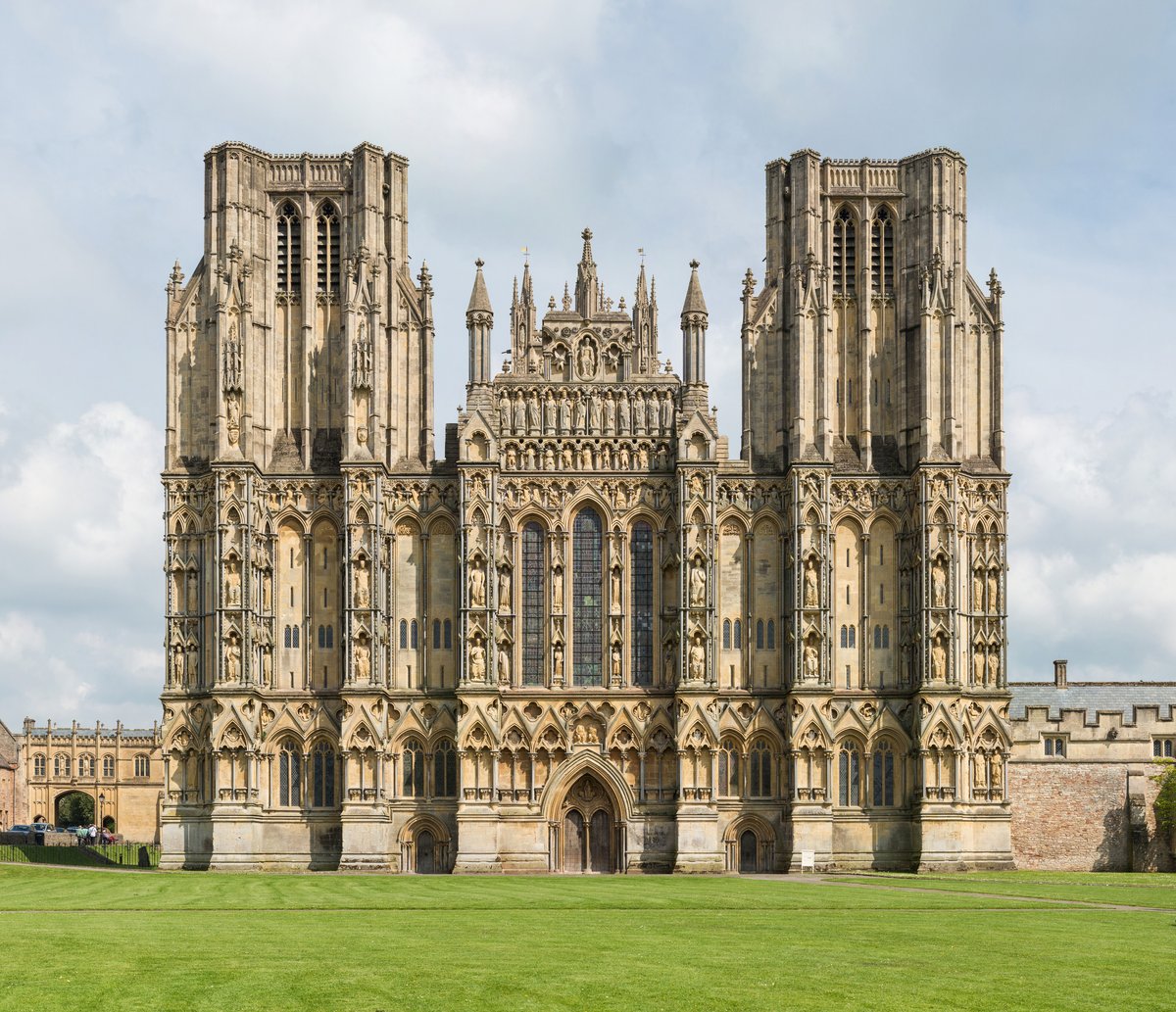

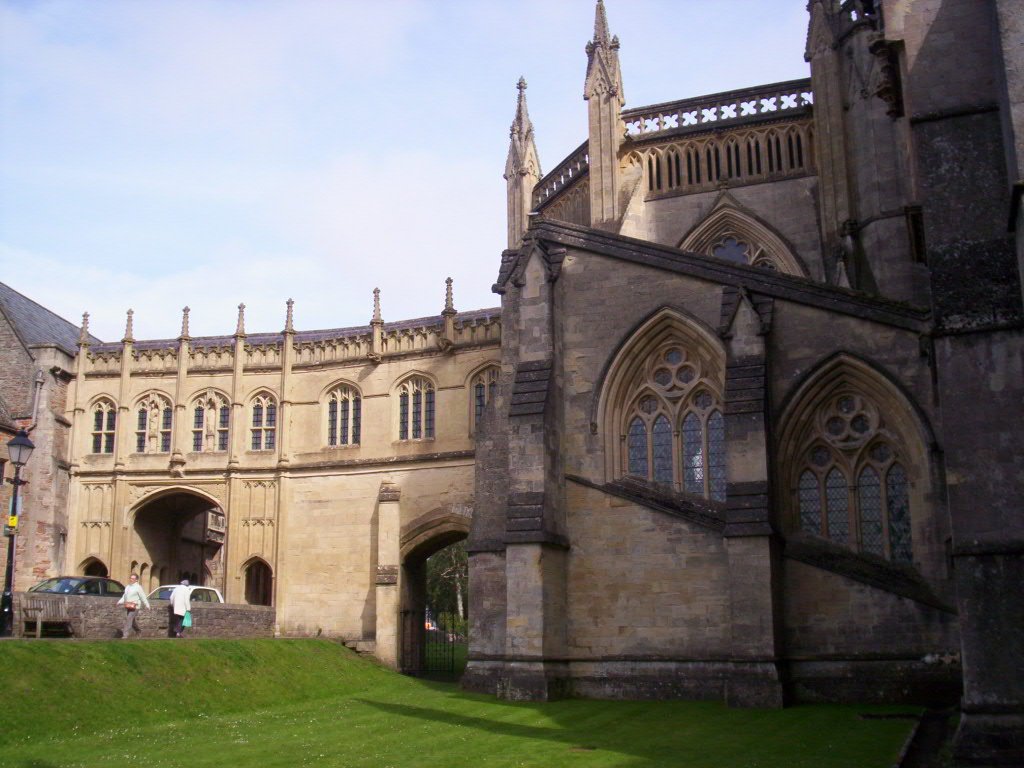
Perched on Cathedral Green, the Anglican cathedral known as Wells Cathedral is a place of deep historical significance. It serves as the seat of the bishop of Bath and Wells and the mother church of the diocese. The present cathedral has a cruciform plan with a chapter house attached to the north and a cloister to the south, representing a major building programme that took place primarily between the 12th and 14th centuries.
The building programme was conceived and commenced in about 1175 by Reginald Fitz Jocelin, who was the bishop at the time. The work continued under his successor, Jocelin of Wells, and involved the master mason Adam Locke, who served from about 1192 until 1230. The cathedral was designed in the new style with pointed arches, later known as Gothic, which was introduced at about the same time at Canterbury Cathedral.
The western half of the cathedral, including the nave and western transepts, belongs primarily to the first building phase and is constructed in the Early English style of Gothic architecture. The west front, which contains 300 sculpted figures, has been described by architectural historian John Harvey as the supreme triumph of the combined plastic arts in England. To this day, the cathedral remains one of the most beautiful and poetic of English cathedrals.
Sources: Wikipedia, OpenStreetMap, Wikidata, Wikimedia Commons
Written by Nicolo Ciampini
Discuss this with the author and others
No comments yet. Be the first to start the conversation.